
Planting Seeds - Food & Farming News from CDFA

California and Secretary Ross welcome $21.5 million investment from USDA to strengthen supply chain and local and regional food systems

From a USDA News Release

The U.S. Department of Agriculture’s (USDA) Agricultural Marketing Service (AMS) today announced it has partnered with the California Department of Food and Agriculture (CDFA) to award $21.5 million for 117 projects through the Resilient Food Systems Infrastructure Program (RFSI) to build resilience across the middle of the supply chain and strengthen local and regional food systems.

“Projects funded through the Resilient Food Systems Infrastructure program are building strength and resilience in California’s food system, diversifying agricultural markets, creating new revenue streams for small and mid-sized producers, and providing economic opportunities for local communities,” said USDA Agricultural Marketing Service Administrator Bruce Summers. “USDA is grateful for California’s support strengthening local and regional agricultural supply chains.”

Through this program, CDFA will fund 117 projects, including seven Infrastructure Grants and 110 Equipment Grants to support middle of the supply chain infrastructure. CDFA is still reviewing 11 additional projects – nine Infrastructure Grants and two Equipment Grants totaling $9.0 million – which will be awarded in the coming months, bringing California’s total awarded to $30.5 million.

“This is an innovative, much-needed program from the USDA, and we are so appreciative of their vision in bringing it forward,” said CDFA Secretary Karen Ross. “This is an investment to advance the California State Board of Food and Agriculture’s strategic goals for Ag Vision – to foster climate-smart, resilient and local food systems by addressing gaps in the supply chain and to provide more opportunities for California’s small farms while contributing to healthy, local communities with expanded access to the bounty of flavorful, nutritious food we grow in our state.”

Examples of Funded Projects:

  • North Coast Growers Association in Arcata, Calif., is receiving an Infrastructure Grant to partner with the Del Norte and Tribal Lands Community Food Council to create a local food distribution system across rural Northwestern California. This project will include purchasing delivery vans to increase distribution; acquiring cold storage nodes to efficiently collect, store, and distribute produce; and purchasing kitchen and processing equipment to add value to farm products, sourcing products from local and regional producers. This project is expected to create three new jobs, train 12 employees, benefit 100 local and regional producers, process 12 new local and regional products, develop 20 new value-added products, and establish 14 new market outlets.
  • Twin Peaks Orchards in Newcastle, Calif., recently experienced an onsite fire, losing 95% of their infrastructure, including a delivery vehicle. With an Equipment Grant, they will be able to restore their lost delivery vehicle and increase distribution of organic fruits and vegetables in and around Placer County, including working with local growers to source and deliver their produce. This project is expected to benefit 15 local and regional producers, establish six new market outlets, and distribute six new local and regional products.
  • Induchucuiti Organic Farm, an Indigenous woman-owned farm in Salinas, Calif., is receiving an Equipment Grant to increase the long-term viability of its small-scale, diversified vegetable operation. It will also support local farmers’ markets, restaurants, and schools that will be the recipients of the produce. Furthermore, this work will inspire other small-scale Spanish-speaking farmers of color in the Salinas area to transition to direct-marketing strategies, ultimately benefiting a localized food system. Through this purchase and related efforts, Induchucuiti Organic Farms will help up to 30 additional local and regional producers in need of a reliable and efficient distribution method. Additionally, 17 new agricultural products will be aggregated and distributed and eight new markets will be established.

This awarded funding is part of the $420 million available through the Resilient Food Systems Infrastructure grant program to build capacity within the middle of the supply chain and support local and regional producers. It is funded by President Biden’s American Rescue Plan. Through this program, AMS has entered into cooperative agreements with state agencies, commissions, or departments responsible for agriculture, commercial food processing, seafood, or food system and distribution activities or commerce activities in states or U.S. territories. 

For more information, visit the AMS Resilient Food Systems Infrastructure webpage. The status of each state and territory’s RFSI program is available on the program’s State Grant Webpage

Posted in Uncategorized | Leave a comment

A First for California — CDFA employee recognized by national fertilizer organization for work on advancements in fertilizer

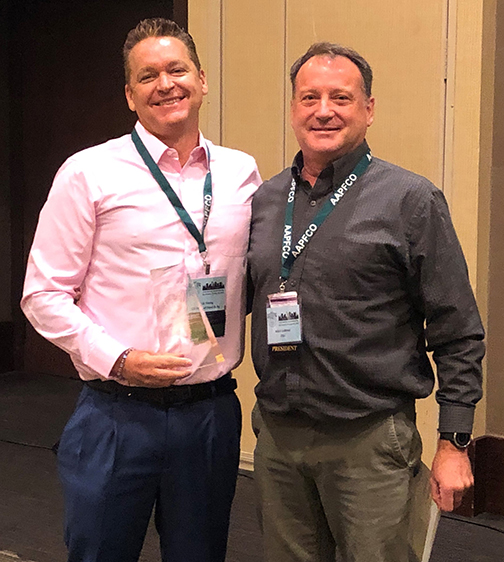
Nick Young, left, receives his award from the Association of American Plant Food Control Officials (AAPFCO)

CDFA Fertilizing Materials Inspection Program Manager Nick Young was recently awarded the Presidential Distinguished Service Award by the Association of American Plant Food Control Officials (AAPFCO) — the first person from California to receive the award in the organization’s 77-year history.

Young received the award for providing outstanding service to the association over the past 12 years, including a stint as president in 2019. During this time, Young was instrumental in influencing perceptions about biostimulants, materials that improve nutrition profiles for plants. An example is seaweed extract derived from algae, which can stimulate root growth, enhance stress tolerance, and improve nutrient uptake. Young’s commitment to a uniform understanding of biostimulants among state regulators led to an AAPFCO initiative to formally recognize them, which is part of a process now underway to establish a productive regulatory framework nationally.

“For the benefit of the fertilizing industry selling plant biostimulant products, consumers purchasing them and inspectors regulating them, Nick’s determination helped all involved have a shared definition of what the term means,” said Inspection Services Division Director Natalie Krout-Greenberg. “This award signifies CDFA’s efforts toward innovation, national uniformity and standardization for the benefit of a shared understanding, as well as Nick’s professionalism and perseverance in helping achieve that.”

Posted in Uncategorized | Leave a comment

Helping for the Holidays — CDFA staff volunteer at Sacramento Food Bank and Family Services

CDFA staff members recently took part in the 2024 California State Employees Food Drive by volunteering at the Sacramento Food Bank and Family Services.

The CDFA team separated bulk elbow macaroni into one-pound bags, vacuum-sealed them, then applied stickers to the packages and boxed them. In total, the team prepared 1,456 bags of macaroni. 

Participating CDFA staff members were from the Executive Office and the Inspection Services Division’s Center for Analytical Chemistry, as well as the division’s Feed, Fertilizer and Livestock Drugs Regulatory Services Branch and Inspection and Compliance Branch.

CDFA leads the annual employees food drive, raising food, funds, and awareness about hunger issues in California. Everybody is encouraged to visit https://www.fooddrive.ca.gov/donate/ to find a food bank in your county to donate food or volunteer hours.

Posted in Uncategorized | Leave a comment

Antimicrobial Use and Stewardship — CDFA efforts continue to moderate antibiotics in animal care

CDFA’s Antimicrobial Use and Stewardship Program, created by legislation in 2017, provides leadership in animal health circles for innovative approaches to antibiotic resistance and responsible use of medications.

The program looks closely at antibiotic sales, surveys producers about on-farm practices, and analyzes veterinary feed directives. These activities improve the understanding of the use of antibiotic drugs in livestock and guide the development of relevant materials to promote stewardship and
judicious use.

In 2023, the program collected and reviewed 631 veterinary feed directives, and that is part of a body of work that includes engagement of 112 different farms for outreach purposes, as well as 391 inspections of retailers for compliance with California laws and regulations for antibiotic sales and use.

The program is also active on the research side, with animal management strategies including an aquaculture study on dietary models for white sturgeon to help with disease management and stewardship efforts.

You can read more about the Antimicrobial Use and Stewardship Program in its annual report.

Posted in Uncategorized | Leave a comment

Healthy Soils Week — Farm Tour in Yolo County for State Legislative Staff and Stakeholders

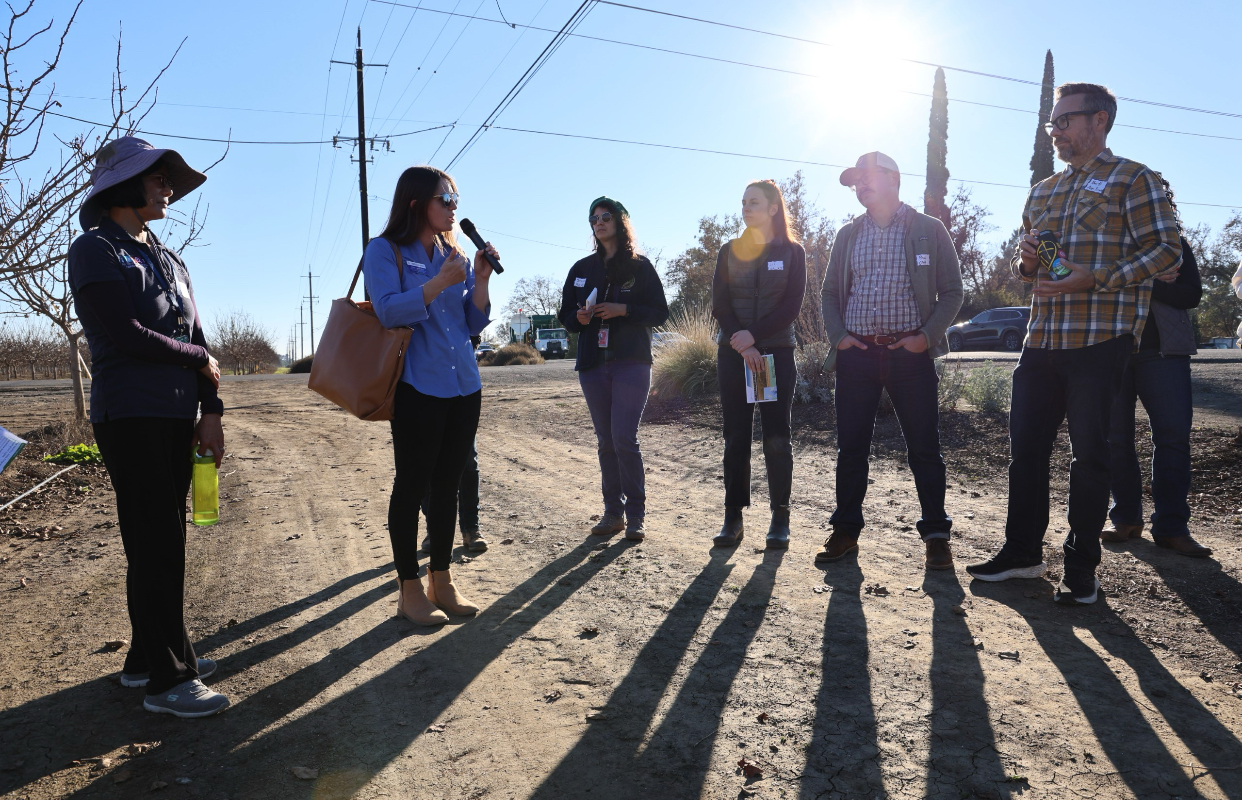
Hope Zabronsky, a climate-smart ag specialist with UC ANR, speaks during the Yolo County farm tour.

In honor of Healthy Soils Week (December 2-6), CDFA joined legislators, their staff members, and stakeholders for a tour of farms in Yolo County to see greenhouse gas-reducing healthy soil practices in action. Farmers who have received healthy soils grants from CDFA’s Office of Environmental Farming and Innovation showed successful implementation of mulching and cover crop practices on adjacent farms and discussed their importance in improving soil structure, fertility, and water retention. The tour also included compost application and a well-established, low-maintenance hedgerow line — a thriving habitat for pollinator species.

Each farmer emphasized the critical support provided by the Healthy Soils Program, and how the funding enabled them to adopt these practices.

Tour attendees included representatives from the Community Alliance with Family Farmers (CAFF), the California Climate and Agriculture Network (CalCAN), University of California Agriculture and Natural Resources (UC ANR), the offices of Assemblymembers Cecilia Aguiar-Curry and Jacqui Irwin, and the Senate Committee on Agriculture. The collaboration of these farmers, policymakers and climate-smart agriculture advocates continues to make the Healthy Soils Program a success.

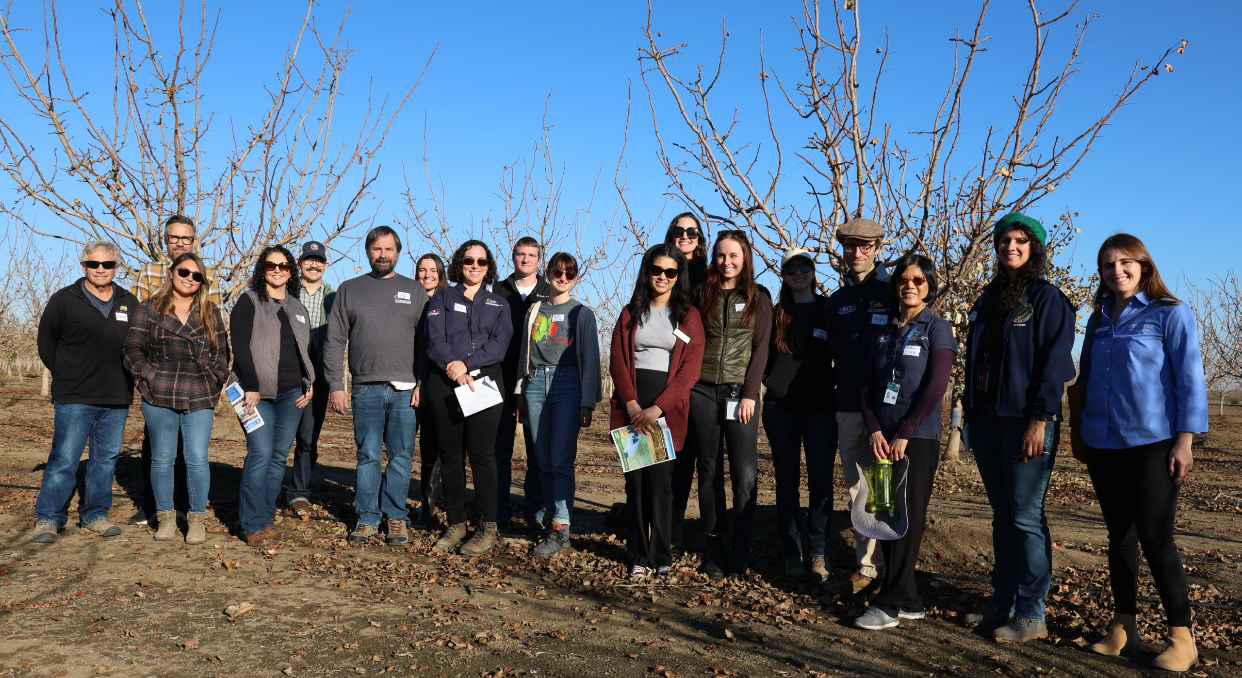
The Yolo County farm tour group.
Posted in Uncategorized | Leave a comment

Video — Secretary Ross kicks off Healthy Soils Week

Healthy Soils Week is underway! We’re celebrating the incredible role that soil plays in California’s sustainable agriculture. This year’s theme, “A Circular Economy for Healthy Soils,” spotlights how transforming waste into valuable resources can strengthen soil health for generations to come.

Check out this video from Secretary Ross as we dive into practices that nourish our soil, support farmers, and sustain the California food we love. Stay tuned for more stories and tips on soil health throughout the week. Visit CDFA’s Healthy Soils Week 2024 webpage for info:  https://www.cdfa.ca.gov/healthysoilsweek/

Posted in Uncategorized | Leave a comment

New members join California State Board of Food and Agriculture

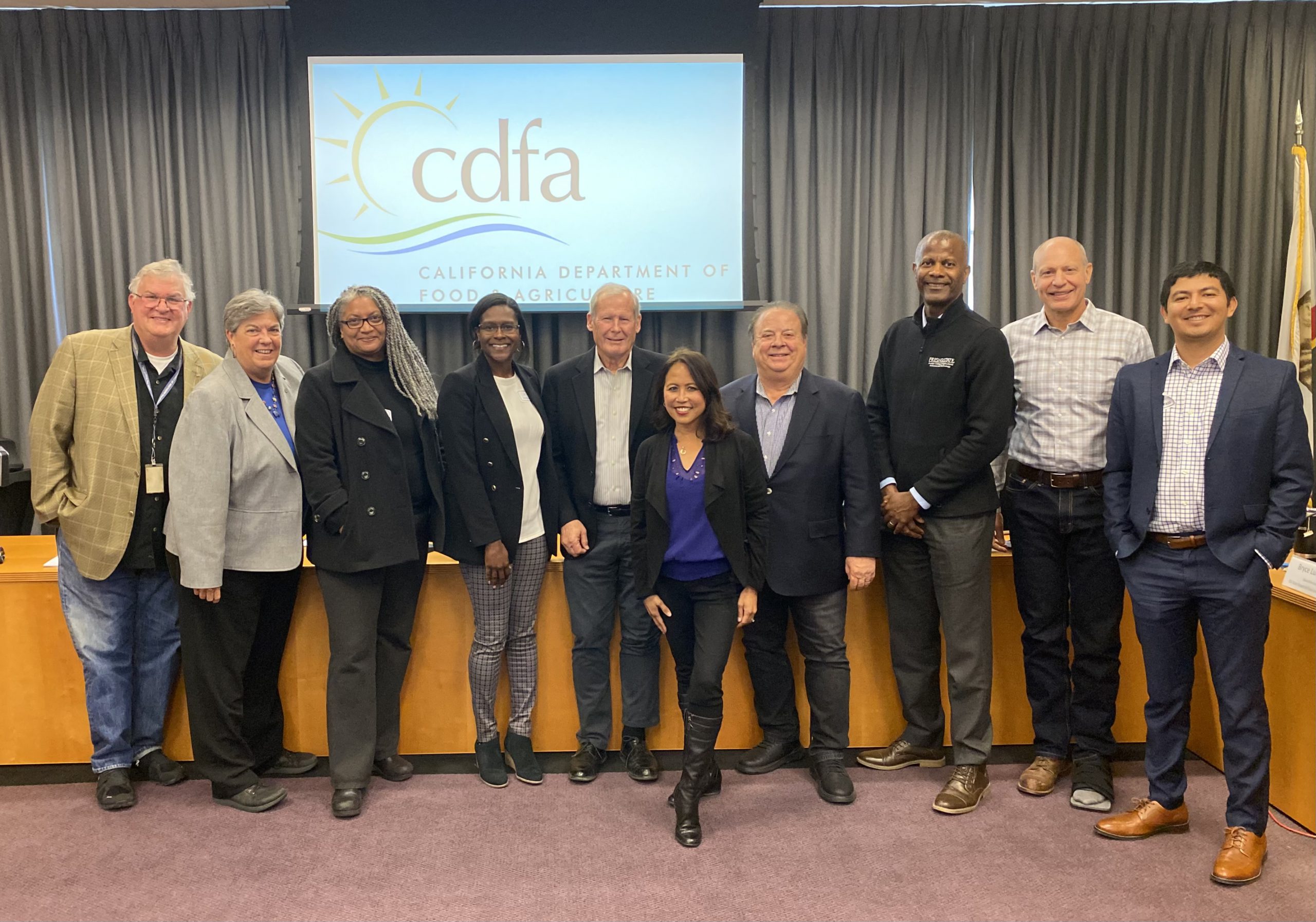
The California State Board of Food and Agriculture met today at CDFA headquarters and welcomed three members who have joined the board in recent months — David Shabazian, who was appointed in September, and Rolston St. Hilaire and Hernan Hernandez, who were appointed last month. Board members, from left to right — Bryce Lundberg, Glenda Humiston, Doria Robinson, Jenet Decosta, board president Don Cameron, Rachelle Arizmendi, Mike Gallo, St. Hilaire, Shabazian, and Hernandez. Learn more about the State Board here.

Posted in Uncategorized | Leave a comment

CDFA participates in 10th annual Latino Farmer Conference in Monterey County

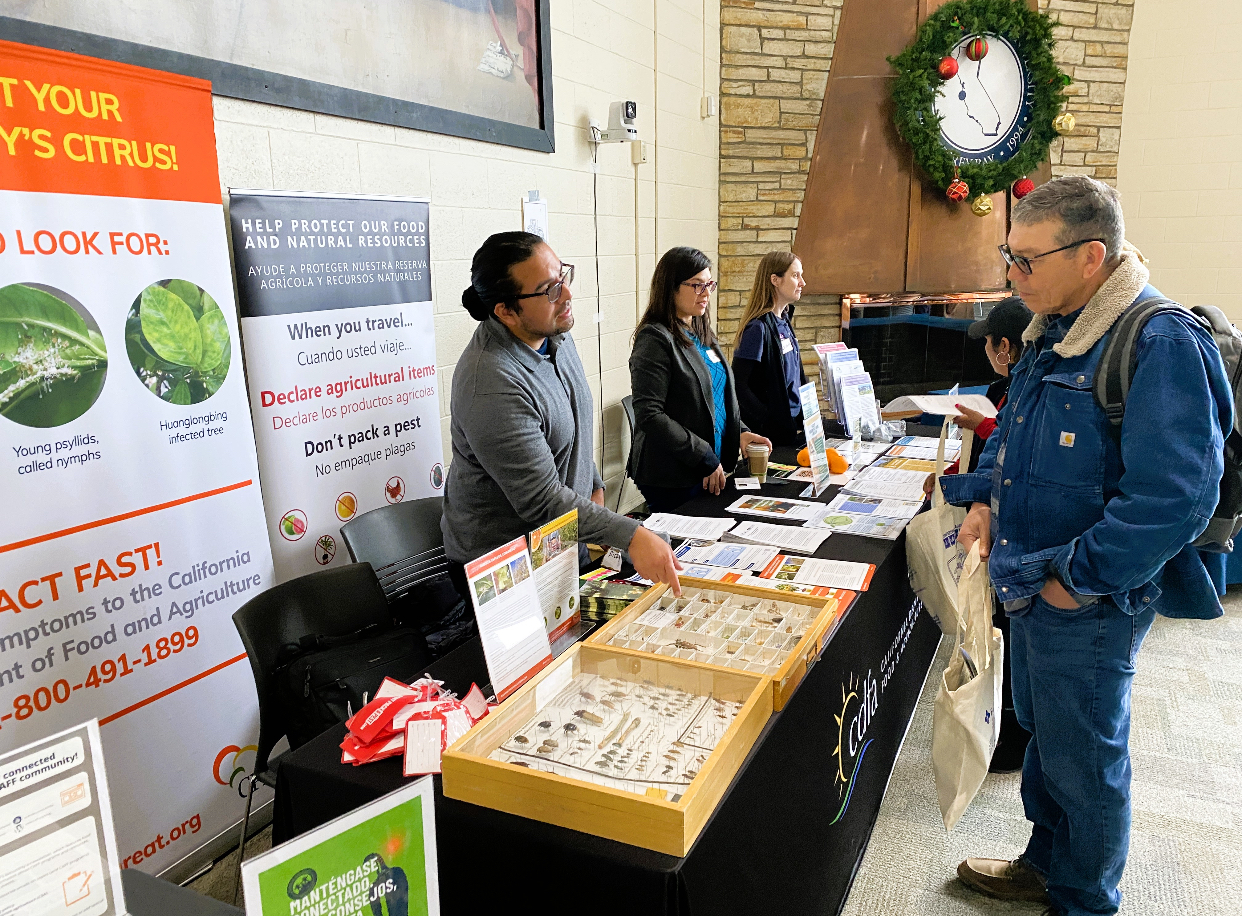
Dr. Ricky Lara with CDFA’s Plant Health and Pest Prevention Services Division (L) shares information at this year’s conference. Also pictured are Dr. Sara Garcia and Elizabeth Hessom with the agency’s Office of Environmental Farming and Innovation.
 

Representatives from across CDFA divisions and programs participated in the 10th annual Latino Farmer Conference, held this week at California State University, Monterey Bay. The two-day event, hosted by the National Center for Appropriate Technology and the U.S. Department of Agriculture, brought together Spanish-speaking farmers and ranchers to discuss sustainable agriculture, equity, and resources for underserved communities.

This year’s conference featured farm site tours in the Monterey Bay Area, with stops at four farms showcasing diverse production systems and on-farm conservation practices. Farmers shared their experiences with cover crops, wildlife habitat, and other climate-smart approaches that enhance sustainability and resilience. These tours provided attendees with practical insights into innovative agricultural methods.

CDFA hosted two booths during the conference, featuring staff and information from the Farm Equity Office, the Plant Health and Pest Prevention Services Division, the Office of Environmental Farming and Innovation (OEFI), and the Animal Health and Food Safety Services Division, the Fertilizer Research and Education Program, and Farmer & Farmworker Mental Health Resources.

Workshops conducted in Spanish focused on access to land, beneficial agreements and contracts, cooperative marketing strategies, conservation practices and cover crops for healthy soils, berry production, irrigation management, and also included a session about poultry production and profitability, in which Dr. Ricardo Gaitán, with CDFA’s Animal Health and Food Safety Services Division, gave a presentation about Highly Pathogenic Avian Influenza (HPAI), which is impacting dairy and poultry farms in the Central Valley.

The Latino Farmer Conference facilitates networking opportunities with other farmers and ranchers, produce buyers, industry and equipment specialists, and technical service providers. The conference underscores CDFA’s ongoing commitment to supporting all farmers and ranchers through collaboration and education.

Posted in Uncategorized | Leave a comment

California Agricultural Neighbors report highlights next steps for building proactive food safety culture in Salinas Valley

CDFA and the Monterey County Farm Bureau are announcing the joint release of the report “California Agricultural Neighbors: Building a Proactive Food Safety Culture.”

California Agricultural Neighbors (CAN) was formed in January 2021 to bring together members of the Salinas Valley agriculture community to review what could be done to help reduce outbreaks of pathogenic Escherichia coli (E. coli) O157:H7 associated with leafy greens.

CAN initially facilitated discussions to enhance food safety practices between neighboring farms when various agricultural operations are adjacent to one another. An Action Report released in 2022 touched on neighbor-to-neighbor best practices.

Four work groups then focused on those practices to develop the new report, which offers next steps to continue to build a proactive food safety culture:

  • Communication to broaden engagement that is supportive of a proactive food safety culture
  • Expanded research partnerships and leveraging data science to fill information gaps essential for more effective action
  • Engagement of additional partners and collaborators, including the California Longitudinal Study, a joint effort between CDFA and the FDA, to accelerate translation of new information to action.
  • Investing in the future expertise and capacity to enhance transfer of knowledge from research into applied practice

Click here to view “California Agricultural Neighbors: Building a Proactive Food Safety Culture.”

Click here to view a flyer about the report and its Next Steps.

Posted in Uncategorized | 1 Comment

Spotlight on Pixca Farm – Day of the Dead: Culture, Community and Marigolds

Erik Rodriguez, farmer with Pixca Farm, holds marigolds.

In recognition of the cultural tradition of Day of the Dead (Día de los Muertos), November 1 and 2, Pixca Farm is proud of celebrating through its sustainable agricultural practices.

Erik Rodriguez’s journey into farming began in Rosarito, where he grew up at his family’s bookstore on the main boulevard. His mother, however, wanted him to experience life away from town, and so he would spend his days at his godfather’s ranch, helping harvest cilantro, radishes, and calabazas (pumpkins). Working on the land sparked a love for farming in Erik that would one day lead him to co-manage Pixca Farm in the Tijuana River Valley of San Diego County.

Years later, Erik was furloughed from his job at the YMCA during the COVID-19 pandemic. Gardening had always been a passion, and while volunteering at Pixca Farm, he found himself at a crossroads—try to return to his job or take a leap into full-time farming. Erik chose farming and reconnected with Leonard Vargas, a founding member of Pixca with more than 30 years of agricultural experience. Together, they focused on Pixca Farm, which has since become a source of fresh, pesticide-free vegetables, flowers, and herbs for the San Diego community.

Growing Marigolds and a Community Connection

One of the farm’s key crops is marigolds, or cempasúchil, known for their vibrant orange color and cultural significance, especially during the Day of the Dead celebration. Erik and his team prepare around 500 bunches of marigolds, handpicked and bound into bunches of nine to ten stems. While the flowers are in high demand, especially around this time, Pixca Farm grows the marigolds without pesticides, which Erik shares with his customers.

Pixca Farm contributes to California’s dominance in marigold production. According to the most recent data from the USDA National Agricultural Statistics Service, in 2019, California led the nation in marigold production with $10.5 million in wholesale and retail sales.

“The marigolds serve more than just a decorative purpose; they play a significant role in natural pest management on the farm,” said Erik. By rotating flowers, including marigolds and sunflowers, through each plot, Erik minimizes pest issues and maximizes soil health. “We try to win with numbers and know that pests are going to happen. We do a rotation with marigolds through every section of the farm within one to two years, including sunflowers,” explained Erik. Pixca Farm has marigolds growing all season long and he throws them into mixed bouquets.

Operating on just half an acre, Pixca Farm produces a diverse range of vegetables like carrots, beets, radishes, cilantro, zucchini, and even tomatoes in bumper crop quantities. They sell these at a farm stand, which has become popular.

Pixca Farm’s mission, symbolized by its name—a take on the Spanish word for “pick”—is not only to provide healthy food but also to foster a deeper connection with the land. Erik’s call to action for consumers is: “Support local agriculture, support small businesses.” He emphasizes that with San Diego having the largest number of farms in California, it’s essential to support smaller, family-operated farms in California.

Posted in Uncategorized | Leave a comment