-
Recent Posts
- Secretary Karen Ross Introduces California’s Plan to Help Agriculture Thrive in a Changing Climate
- Celebrating Women Leaders in Agriculture: A Conversation with Secretary Ross and California Farm Bureau President Shannon Douglass
- CDFA Secretary Karen Ross inspires future leaders at 98th California FFA State Leadership Conference in Ontario
- Women Farmers Shaping the Future: Luciana Jonkman’s Story
- Strengthening Partnerships with Punjabi American growers at the 2026 Kisan Mela in Madera
Recent Comments
- John Chiu on CDFA Farm to School grant fosters lifelong connections to healthy food for Orange County students
- Micah on Secretary Ross on Water, Workforce, and the Future of California Agriculture — from AgNet West
- CA agriculture value surpasses $60B | Western Livestock Journal on Value of California Ag production tops $60 billion for first time
- Kathy de Contreras on CDFA IT department honored at “Best of California” awards
- El costo económico de las deportaciones masivas ya es visible en California - Espanol News on Nine California Counties Make Top-10 List for Ag Sales in the U.S.
Archives
- April 2026
- March 2026
- February 2026
- January 2026
- December 2025
- November 2025
- October 2025
- September 2025
- August 2025
- July 2025
- June 2025
- May 2025
- April 2025
- March 2025
- February 2025
- January 2025
- December 2024
- November 2024
- October 2024
- September 2024
- August 2024
- July 2024
- June 2024
- May 2024
- April 2024
- March 2024
- February 2024
- January 2024
- December 2023
- November 2023
- October 2023
- September 2023
- August 2023
- July 2023
- June 2023
- May 2023
- April 2023
- March 2023
- February 2023
- January 2023
- December 2022
- November 2022
- October 2022
- September 2022
- August 2022
- July 2022
- June 2022
- May 2022
- April 2022
- March 2022
- February 2022
- January 2022
- December 2021
- November 2021
- October 2021
- September 2021
- August 2021
- July 2021
- June 2021
- May 2021
- April 2021
- March 2021
- February 2021
- January 2021
- December 2020
- November 2020
- October 2020
- September 2020
- August 2020
- July 2020
- June 2020
- May 2020
- April 2020
- March 2020
- February 2020
- January 2020
- December 2019
- November 2019
- October 2019
- September 2019
- August 2019
- July 2019
- June 2019
- May 2019
- April 2019
- March 2019
- February 2019
- January 2019
- December 2018
- November 2018
- October 2018
- September 2018
- August 2018
- July 2018
- June 2018
- May 2018
- April 2018
- March 2018
- February 2018
- January 2018
- December 2017
- November 2017
- October 2017
- September 2017
- August 2017
- July 2017
- June 2017
- May 2017
- April 2017
- March 2017
- February 2017
- January 2017
- December 2016
- November 2016
- October 2016
- September 2016
- August 2016
- July 2016
- June 2016
- May 2016
- April 2016
- March 2016
- February 2016
- January 2016
- December 2015
- November 2015
- October 2015
- September 2015
- August 2015
- July 2015
- June 2015
- May 2015
- April 2015
- March 2015
- February 2015
- January 2015
- December 2014
- November 2014
- October 2014
- September 2014
- August 2014
- July 2014
- June 2014
- May 2014
- April 2014
- March 2014
- February 2014
- January 2014
- December 2013
- November 2013
- October 2013
- September 2013
- August 2013
- July 2013
- June 2013
- May 2013
- April 2013
- March 2013
- February 2013
- January 2013
- December 2012
- November 2012
- October 2012
- September 2012
- August 2012
- July 2012
- June 2012
- May 2012
- April 2012
- March 2012
- February 2012
- January 2012
- December 2011
- November 2011
- October 2011
- September 2011
- August 2011
- July 2011
- June 2011
Categories
- AG Vision
- Agricultural Education
- Agricultural Marketing
- Alternative Fuels
- Animal health
- Animal Welfare
- Asian Citrus Psyllid
- Biodiversity
- Biosecurity
- Border stations
- BSE
- Cannabis
- Cannella Panel
- Citrus
- Climate Change
- Climate Smart Agriculture
- Community-based Food System
- Conservation
- Dairy
- Drought
- Environment
- Fairs
- Farm Bill
- Farm Labor
- Farmers' Markets
- Fertilizer
- Food Access
- Food Safety
- Food Waste
- Glassy-winged Sharpshooter
- Growing California
- Healthy soils
- HLB
- Hydrogen
- Integrated Pest Management (IPM)
- International Year of the Woman Farmer
- Invasive Species
- Legislation
- Light Brown Apple Moth
- Livestock ID
- Measurement Standards
- Nutrition
- Organic agriculture
- Pierce's Disease
- Pollinators
- Poultry
- Specialty Crops
- State Board of Food and Agriculture
- Succession Planning
- Trade
- Uncategorized
- Water
Pages

World Food Day a reminder of everyday challenges with food access
It is encouraging to see World Food Day observed today, a designation made possible by the inspiring work of the Food and Agriculture Organization of the United Nations. The goal of this day is to reach a point in time when people are no longer going hungry. The world produces enough food to feed everyone on the planet. We must find solutions to the ongoing problem of food access.
At CDFA, we work in this area every day in a number of different programs. Our Certified Farmers’ Market program helps with access through the mere presence of farmers’ markets. As the number of markets statewide continues to grow, they make valued contributions to their communities with fresh, nutritious food directly from farms. The fact that many of them now accept CalFresh cards means that some of California’s neediest families are getting the access they need, and CDFA’s Senior Farmers Market Nutrition Program helps provide these foods to needy senior citizens.
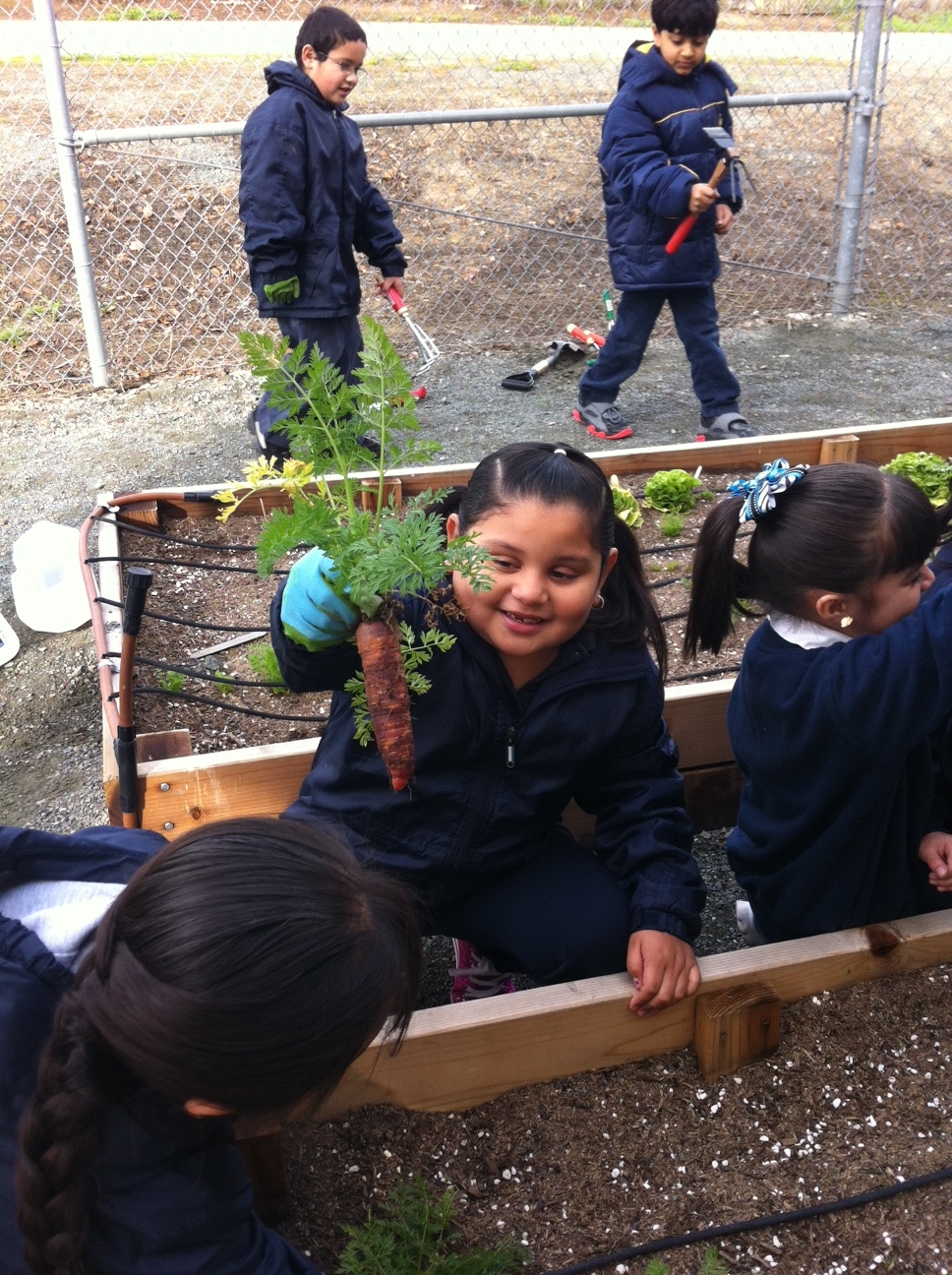
CDFA’s Office of Farm to Fork improves food access from another angle – working with school districts to develop and solidify connections with local farmers, and then helping teachers provide nutrition education to their students. I was very pleased to see these efforts play a role in bringing a truly exceptional honor this week to a group of Contra Costa County students – they were invited to the White House garden to meet First Lady Michelle Obama and help harvest vegetables for the White House kitchen!
Another program that helps with food access and education is CDFA’s Specialty Crop Block Grant Program, which provides USDA Farm Bill funds through a competitive grant process for a number of projects benefiting specialty crops. In 2014, California received nearly $20 million for grant distribution. Examples of food-access projects funded this year include programs in Chico and Sacramento seeking to improve access through community gardens for low-income residents and educational opportunities in both nutrition and urban production.
We work with the California State Board of Food and Agriculture to generate donations to our state’s food banks. We declare each December as Farm-to-Food Bank Month and ask our farmers and ranchers to make a donation or a pledge. Last year, they donated more than 127 million pounds of food. That’s great, and much appreciated! However, we still have some ground to cover to reach our goal of 200 million pounds by next year.
We want to thank our partners at California Grown for its commitment to the food bank effort with its “Snap a Selfie” program. California Grown is donating a pound of food to California food banks for every #cagrown selfie that is posted on Instagram, Twitter or Facebook by end of this month. Participants are asked to take a photograph of the CA Grown logo or anything grown or produced in California and then use #cagrown in their post.
In California, it’s believed that almost four-million people are food insecure, which means they could not afford enough food at least once in the previous year. In a state as bountiful as ours, we know we have the means to provide for these families. World Food Day is a reminder that we must do it.
Posted in Uncategorized
Leave a comment
Pumpkin farmer sets North American record in annual Half Moon Bay contest – from NBC Bay Area
A California farmer broke a North American record on Monday when his large, bulbous gourd clocked in at 2,058 pounds during the annual Half Moon Bay pumpkin weigh-off, which has been drawing veteran growers and hobbyists alike since 1974.
The giant squash, dubbed by festival organizers as the “colossal ghost,” grown by John Hawkley of Napa — especially large for a drought year — was about 265 pounds shy of claiming the world record for largest pumpkin. That record was set Sunday in Germany, when Swiss grower Beni Meier turned in a pumpkin that weighed 2,323 pounds.
Still, Hawkley’s magnificent white pumpkin broke sacred ground statewide: It was the first time a pumpkin had smashed the ton-mark at the Half Moon Bay Safeway World Championship Pumpkin Weigh-Off, which has been running the contest for 41 years. Hawkley’s record also beat Tim Mathison’s 2,032-pound pumpkin at a nearby Uesugi Farms pumpkin weighoff this weekend.
Posted in Uncategorized
Leave a comment
Farm-to-School – Northern California elementary school students to visit White House Garden
Tomorrow, five students from the Pittsburg Unified School District in Contra Costa County will join First Lady Michelle Obama and students from schools in Arizona, Ohio and Washington D.C. to harvest vegetables from the White House Garden and work with chefs to turn them into a healthy meal.
Pittsburg’s students are attending the event in recognition of the Farm to School programs the district has implemented. The district now has eight school gardens, incorporates local produce in school cafeterias, and provides nutrition education in the classroom as well as after-school programs.
The students visiting the White House all come from Pittsburg’s Willow Cove Elementary School. The school’s garden began last year, when second-grade teacher Elba Ramirez requested milk crates to start a small classroom garden. Instead, district child nutrition director Matthew Belasco offered to build a larger garden with raised beds. Ms. Ramirez and her students planted and cared for the garden throughout the year and then harvested the vegetables, which were served in the cafeteria.
CDFA’s Office of Farm to Fork has been working closely with Pittsburg Unified’s Food Service Department to develop these programs and incorporate more locally grown food in district cafeterias. The office is also working with Pittsburg and surrounding school districts to directly connect them with nearby farmers to provide local food.
“I am so pleased that the White House has recognized the Pittsburg Unified School District for all the hard work it has put into its amazing farm to school program,” said CDFA Secretary Karen Ross. “It helps connect our students with food grown right here in California and, to the extent possible, from Contra Costa and surrounding counties. CDFA and its Office of Farm to Fork is committed to these types of programs. They teach our kids about where their food comes from while giving them access to healthy foods, and they support California farmers and ranchers.”
Posted in Uncategorized
Leave a comment
California drought in perspective – from Drovers Cattle Network
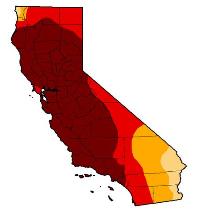
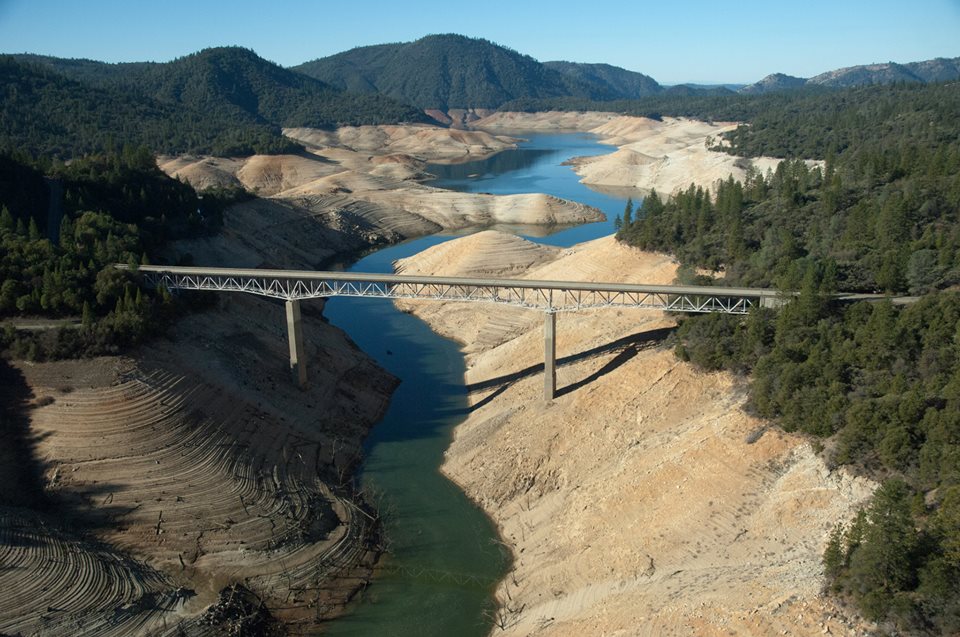
In January, the Drought Monitor first began to report areas of exceptional drought in California. Thirty-seven weeks later, the drought continues to rage.
According to the latest Drought Monitor report, currently 58 percent of California is in exceptional drought, unchanged for the 11th consecutive week. Last week, temperatures soared to 6 to 10 degrees above normal, and dry conditions dominated.
Just how dry is it?
With the beginning of a new water year on Sept. 30, the National Weather Service in Sacramento, Calif., issued some preliminary numbers to help put the state’s drought into perspective.
According to the National Weather Service, the 2014 Water Year came in as the fourth driest in terms of runoff dating back to 1906. It fell behind 1977, 1924 and 1931 respectively.
“No doubt about it, though, an above-normal Water Year is sorely needed to stave off even further depletion of surface and ground water supplies,” Mark Svoboda with the National Drought Mitigation Center wrote in this week’s report.
On Monday, the U.S. Energy Information Administration (EIA) issued a news release explaining the impact California’s drought has had on its hydropower.
“On average, hydropower accounted for 20 percent of California’s in-state generation during the first six months of each year from 2004 to 2013,” the EIA explained in a report here. “During the first half of 2014, however, hydropower accounted for only 10% of California’s total generation.”
Looking ahead, temperatures will likely remain between 3 and 6 degrees above normal across most of the West through Oct. 14. The Climate Prediction Center’s U.S. Seasonal Drought Outlook showed persist drought to dominate more than two-thirds of California through the end of the year.
Full article: “California drought in perspective” from Drovers Cattle Network
Posted in Uncategorized
1 Comment
Drought cuts California food exports – from the Sacramento Business Journal
By Allen Young
Exports of California food products took a dive in August, with fruit and tree nuts decreasing by 8 percent when compared to the same time last year and vegetables dropping by 7.8 percent, according to data released Friday by Beacon Economics.
The cause is fairly obvious, said Beacon trade expert Jock O’Connell. An unprecedented drought has led to fallowed fields and less food available for export. Ultimately, California can expect a rise in agricultural imports, O’Connell predicted, as grocers are unable to maintain volumes of locally-sourced produce.
“If production is down in California, Safeway and other chains will have to source from somewhere,” O’Connell said. “Ultimately we will get into a nasty dispute about whether we should use our water to grow crops for other people (in foreign countries).”
The value of California fruit and nut exports was approximately $706 million in August and the value of vegetables was $133 million.
Troubles in the ag export market have been compounded by a strengthening U.S. dollar across the world, O’Connell said. The European Union’s concerns over Russian aggression, Africa’s Ebola epidemic, Hong Kong’s political unrest — all play a factor and “there’s nothing to suggest that trend of a strengthening dollar will be reduced,” O’Connell said.
On a more positive note, California’s overall export market rebounded from July to August, with merchandise trade up 2.4 percent to $14.55 billion when compared to the same month last year. The gains were led by exports of manufactured goods, which rose by 2.7 percent to $9.60 billion.
“California’s economy still has an active and competitive manufacturing sector, despite what much of the rhetoric might have us believe, ” Christopher Thornberg, founding partner of Beacon, said in a statement. He added that much of the growth is occurring in Southern California.
Posted in Uncategorized
3 Comments
USDA report outlines opportunities in the emerging bioeconomy
Agriculture Secretary Tom Vilsack announced that the U.S. Department of Agriculture (USDA) has released a comprehensive report synthesizing current literature that explores opportunities in the emerging bioeconomy. The report, entitled Why Biobased?, was created as a precursor for a more comprehensive economic study to be released in the coming months by the USDA BioPreferred program on the economic impacts of the biobased products industry.
“This new report presents the opportunities U.S. agriculture and forests have in the emerging bioeconomy,” said Vilsack. “The recent inclusion of mature market products into the BioPreferred program strengthens our commitment to the U.S. biobased economy and brings together two of the most important economic engines for rural America: agriculture and manufacturing.”
Synthesizing findings from existing government, academia, and non-governmental organizations, the new report explores how government policies and industry business-to-business sustainability programs are driving the biobased economy. The report further demonstrates that the biobased economy is, in fact, growing and it offers great potential for increased job creation in numerous sectors across the U.S.
For instance, one report cited concludes that biobased chemicals are expected to constitute over 10 percent of the chemical market by 2015. Another report in the study concludes that there is a potential to produce two-thirds of the total volume of chemicals from biobased materials, representing over 50,000 products, a $1 trillion annual global market.
On the heels of this completed study, the USDA BioPreferred program has awarded a contract for a more in-depth economic study of biobased products and economic impacts, including research on job creation and economic value. It will be the first federally sponsored economic report of its kind targeting the biobased products industry in the U.S. Congress mandated the upcoming study in the 2014 Farm Bill.
The USDA BioPreferred program works to increase the purchase and use of designated biobased products through a preferred procurement initiative for federal agencies. Designated products may also carry the voluntary consumer label.
The voluntary “USDA Certified Biobased Product” label is designed to promote the broad-scale marketing of biobased products to consumers. As of September 2014, USDA has certified over 1,940 biobased products in more than 187 product categories for the label. Certified and designated products include construction, janitorial, and grounds keeping products purchased by Federal agencies, to personal care and packaging products used by consumers every day.
The Biotechnology Industry Organization (BIO) has estimated that U.S.-based jobs for the renewable chemicals sector will rise from approximately 40,000 jobs in 2011, which represents 3%-4% of all chemical sales, to over 237,000 jobs by 2025. This employment level would represent approximately 20% of total chemical sales.
To access the Why Biobased? report, visithttp://www.biopreferred.gov/files/WhyBiobased.pdf.
Posted in Uncategorized
Leave a comment
USDA Expands Access to Credit to Help More Beginning and Family Farmers
WASHINGTON, Oct. 7, 2014 – Agriculture Deputy Secretary Krysta Harden today announced that the U.S. Department of Agriculture (USDA) will improve farm loans by expanding eligibility and increasing lending limits to help more beginning and family farmers. As part of this effort, USDA is raising the borrowing limit for the microloan program from $35,000 to $50,000; simplify the lending processes; updating required “farming experience” to include other valuable experiences; and expanding eligible business entities to reflect changes in the way family farms are owned and operated. The changes become effective Nov. 7.
“USDA is continuing its commitment to new and existing family farmers and ranchers by expanding access to credit,” said Harden. “These new flexibilities, created by the 2014 Farm Bill, will help more people who are considering farming and ranching, or who want to strengthen their existing family operation.”
The microloan changes announced today will allow beginning, small and mid-sized farmers to access an additional $15,000 in loans using a simplified application process with up to seven years to repay. These efforts are part of USDA’s continued commitment to small and midsized farming operations, and new and beginning farmers.
In addition to farm related experience, other types of skills may be considered to meet the direct farming experience required for farm loan eligibility such as operation or management of a non-farm business, leadership positions while serving in the military, or advanced education in an agricultural field. Also, individuals who own farmland under a different legal entity operating the farm now may be eligible for loans administered by USDA’s Farm Service Agency (FSA). Producers will have an opportunity to share suggestions on the microloan process, and the definitions of farming experience and business structures through Dec. 8, 2014, the public open comment period.
FSA is also publishing a Federal Register notice to solicit ideas from the public for pilot projects to help increase the efficiency and effectiveness of farm loan programs. Comments and ideas regarding potential pilot projects will be accepted through Nov. 7, 2014.
Since 2010, USDA has made a record amount of farm loans through FSA — more than 165,000 loans totaling nearly $23 billion. More than 50 percent of USDA’s farm loans now go to beginning farmers. In addition, USDA has increased its lending to socially-disadvantaged producers by nearly 50 percent since 2010.
These programs were made possible by the 2014 Farm Bill, which builds on historic economic gains in rural America over the past five years, while achieving meaningful reform and billions of dollars in savings for taxpayers. Since enactment, USDA has made significant progress to implement each provision of this critical legislation, including providing disaster relief to farmers and ranchers; strengthening risk management tools; expanding access to rural credit; funding critical research; establishing innovative public-private conservation partnerships; developing new markets for rural-made products; and investing in infrastructure, housing and community facilities to help improve quality of life in rural America.
Posted in Uncategorized
Leave a comment
Fingerprint of climate change on California drought – from the Washington Post
By Angela Fritz
Researchers studying the fingerprint of human-caused climate change on extreme weather events in 2013 have found that it played a role in half of the events that they looked at, including the California drought and extreme heat events.
Climate change attribution — figuring out what role climate change is playing in our weather events — is a very difficult science. There are so many moving parts: ground-level weather conditions, large-scale atmospheric patterns, and global teleconnections, like El Nino, that influence weather worldwide. And a changing climate can influence all of them (or none of them) in any given moment.
Nonetheless, given how costly weather disasters have become, the question of how extreme events could be changing is possibly the most important question to ask in climate change. So each year, scientists take a look back at the way change change could have impacted a few notable extreme events, and publish their findings in the Bulletin of the American Meteorological Society.
One study in the report, which was released on Monday, concluded that “global warming has very likely increased the probability” of the large-scale atmospheric patterns that have played a role the current, historic California drought – a strong, persistent ridge of high pressure over the western U.S. has essentially blocked the region from being impacted by storms coming off the Pacific.
That ridging pattern, which lead to few precipitation events, was made more likely by the presence of human greenhouse gas emissions, the study says.
Two other studies that dug in to similar aspects of California drought were less eager to point the finger at human-caused climate change. Both studies looked at the role of warm ocean waters in the Pacific, and its relationship to California precipitation. While warm sea surface temperatures in the northeast Pacific would cause the dry ridging pattern over the western U.S., it would also act to cause heavier precipitation events over California by increasing the humidity.
While that’s not the outcome California saw in 2013 and the beginning of 2014, scientists say its enough of a question mark to remain uncertain on whether or not this event would have occurred without global warming.
However, it’s important to note that these studies looked at very specific, individual factors of the drought. California could be looking at its warmest year on record in 2014, but heat — which has a much more clear link with climate change, and acts to intensify and prolong a drought – was not considered in any of the studies looking at the California dry spell.
While drought remains somewhat of a question mark, scientists are most confident that the risk of 2013′s extreme heat events was made larger by human-caused climate change. All of the studies that looked at the extremely hot summers or heat waves around the globe concluded that climate change played some role in dialing up the temperature.
Australia, in particular, was severely impacted by heat extremes in the southern hemisphere summer of 2012-2013. The year was the hottest on record for the country, and subjected Australians to numerous heat waves and a drought that cost the government approximately $300 million USD. All of the studies that examined Australia’s summer temperatures found that climate change played a significant role in the heat, with one study even concluding that it has increased the risk of the event by two to three-fold.
“The results from the Australia studies are rather striking,” said Peter Stott of the Met Office Hadley Center in the U.K., and an editor in the report compilation in a press briefing. “It’s almost impossible, it’s very hard to imagine, those temperatures in a world without climate change.”
Hot summers and heat waves in New Zealand, Korea, China, and Japan were also examined, and determined to be influenced by climate change, and one group suggested that the Korea summer heat wave was made 10 times more likely by human-driven climate change.
The link between heavy precipitation events and human-caused climate change in 2013 appear to be more ambiguous.
Researchers who looked at the extreme precipitation events of 2013 found varying results — two studies found that human-caused climate change increased the likelihood of heavy precipitation events in the U.S. and India, while another two found no discernible link between the extreme precipitation events in Europe and climate change. One study, which addressed the extreme flooding event in Colorado in September 2013, found that the probability of such an event has even decreased in climate change.
Unsurprisingly, scientists found that the occurrence of cold waves — long periods of abnormally cold weather — have become much less likely in the presence of global warming. In particular, scientists looked at the extremely cold winter of 2013 in the U.K., finding that the probability of that event has dropped 30-fold.
Posted in Uncategorized
Leave a comment
Growing California video series – Apple Hill
This is a reprise post from our Growing California video series. Apple Hill is now open for its annual fall run in El Dorado County.
This video content is no longer available.
Posted in Uncategorized
Leave a comment