


-
Recent Posts
- Secretary Karen Ross Introduces California’s Plan to Help Agriculture Thrive in a Changing Climate
- Celebrating Women Leaders in Agriculture: A Conversation with Secretary Ross and California Farm Bureau President Shannon Douglass
- CDFA Secretary Karen Ross inspires future leaders at 98th California FFA State Leadership Conference in Ontario
- Women Farmers Shaping the Future: Luciana Jonkman’s Story
- Strengthening Partnerships with Punjabi American growers at the 2026 Kisan Mela in Madera
Recent Comments
- John Chiu on CDFA Farm to School grant fosters lifelong connections to healthy food for Orange County students
- Micah on Secretary Ross on Water, Workforce, and the Future of California Agriculture — from AgNet West
- CA agriculture value surpasses $60B | Western Livestock Journal on Value of California Ag production tops $60 billion for first time
- Kathy de Contreras on CDFA IT department honored at “Best of California” awards
- El costo económico de las deportaciones masivas ya es visible en California - Espanol News on Nine California Counties Make Top-10 List for Ag Sales in the U.S.
Archives
- April 2026
- March 2026
- February 2026
- January 2026
- December 2025
- November 2025
- October 2025
- September 2025
- August 2025
- July 2025
- June 2025
- May 2025
- April 2025
- March 2025
- February 2025
- January 2025
- December 2024
- November 2024
- October 2024
- September 2024
- August 2024
- July 2024
- June 2024
- May 2024
- April 2024
- March 2024
- February 2024
- January 2024
- December 2023
- November 2023
- October 2023
- September 2023
- August 2023
- July 2023
- June 2023
- May 2023
- April 2023
- March 2023
- February 2023
- January 2023
- December 2022
- November 2022
- October 2022
- September 2022
- August 2022
- July 2022
- June 2022
- May 2022
- April 2022
- March 2022
- February 2022
- January 2022
- December 2021
- November 2021
- October 2021
- September 2021
- August 2021
- July 2021
- June 2021
- May 2021
- April 2021
- March 2021
- February 2021
- January 2021
- December 2020
- November 2020
- October 2020
- September 2020
- August 2020
- July 2020
- June 2020
- May 2020
- April 2020
- March 2020
- February 2020
- January 2020
- December 2019
- November 2019
- October 2019
- September 2019
- August 2019
- July 2019
- June 2019
- May 2019
- April 2019
- March 2019
- February 2019
- January 2019
- December 2018
- November 2018
- October 2018
- September 2018
- August 2018
- July 2018
- June 2018
- May 2018
- April 2018
- March 2018
- February 2018
- January 2018
- December 2017
- November 2017
- October 2017
- September 2017
- August 2017
- July 2017
- June 2017
- May 2017
- April 2017
- March 2017
- February 2017
- January 2017
- December 2016
- November 2016
- October 2016
- September 2016
- August 2016
- July 2016
- June 2016
- May 2016
- April 2016
- March 2016
- February 2016
- January 2016
- December 2015
- November 2015
- October 2015
- September 2015
- August 2015
- July 2015
- June 2015
- May 2015
- April 2015
- March 2015
- February 2015
- January 2015
- December 2014
- November 2014
- October 2014
- September 2014
- August 2014
- July 2014
- June 2014
- May 2014
- April 2014
- March 2014
- February 2014
- January 2014
- December 2013
- November 2013
- October 2013
- September 2013
- August 2013
- July 2013
- June 2013
- May 2013
- April 2013
- March 2013
- February 2013
- January 2013
- December 2012
- November 2012
- October 2012
- September 2012
- August 2012
- July 2012
- June 2012
- May 2012
- April 2012
- March 2012
- February 2012
- January 2012
- December 2011
- November 2011
- October 2011
- September 2011
- August 2011
- July 2011
- June 2011
Categories
- AG Vision
- Agricultural Education
- Agricultural Marketing
- Alternative Fuels
- Animal health
- Animal Welfare
- Asian Citrus Psyllid
- Biodiversity
- Biosecurity
- Border stations
- BSE
- Cannabis
- Cannella Panel
- Citrus
- Climate Change
- Climate Smart Agriculture
- Community-based Food System
- Conservation
- Dairy
- Drought
- Environment
- Fairs
- Farm Bill
- Farm Labor
- Farmers' Markets
- Fertilizer
- Food Access
- Food Safety
- Food Waste
- Glassy-winged Sharpshooter
- Growing California
- Healthy soils
- HLB
- Hydrogen
- Integrated Pest Management (IPM)
- International Year of the Woman Farmer
- Invasive Species
- Legislation
- Light Brown Apple Moth
- Livestock ID
- Measurement Standards
- Nutrition
- Organic agriculture
- Pierce's Disease
- Pollinators
- Poultry
- Specialty Crops
- State Board of Food and Agriculture
- Succession Planning
- Trade
- Uncategorized
- Water
Pages

Drought concerns surface at State Board of Food and Agriculture meeting on water – From KCRA-3 TV
Posted in Uncategorized
Leave a comment
Remembering 9-11 at Cal Expo Memorial
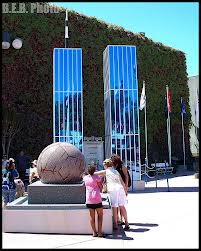
In observance of the twelfth anniversary of the September 11th attack, Cal Expo officials have announced the California State Fair 9/11 Memorial Plaza will be open to the general public on Wednesday, September 11 to honor the victims lost twelve years ago.
The memorial will be open from 8:00AM – 6:00PM, and is located inside the Main Gate on the fairgrounds in Sacramento. Admission and parking will be free. No formal ceremony is planned.
Central to the exhibit is a beautiful fountain which includes a granite ball inscribed with all of the names of the September 11th victims. Additional features include a massive 125,000 pound steel I-beam from the World Trade Center extracted from Ground Zero, which had been a horizontal support beam from the North Tower and a carillon bell tower, pictorial reflections of the World Trade Center and individual memorials offering tribute to American Airlines Flight 77, which crashed into the Pentagon, and United Airlines Flight 93, which aborted in a field in Pennsylvania.
Posted in Uncategorized
Leave a comment
Growing California video series – Reedley’s Gold
The next segment in the Growing California video series, a partnership with California Grown, is “Reedley’s Gold,” a story about the olive oil program at Reedley College in Fresno County.
Posted in Uncategorized
1 Comment
Governor Brown Issues Proclamation Declaring Admission Day
http://www.gov.ca.gov/news.php?id=18193
9-9-2013
SACRAMENTO – Governor Edmund G. Brown Jr. today issued a proclamation declaring September 9, 2013 as Admission Day in the State of California.
The text of the proclamation is below:
PROCLAMATION
BY THE GOVERNOR OF THE STATE OF CALIFORNIA
Soon after the outbreak of war in 1846, United States forces invaded the Mexican province of Alta California. Seven months later, on January 13, 1847, representatives of both countries signed the Treaty of Cahuenga in the San Fernando Valley, ending the fighting. For three years thereafter, California remained under American martial law. During this period, our population exploded following the discovery of gold, giving impetus to the demand that California be admitted to the Union. In 1849, leaders from around the future state met in Monterey to draft the first constitution, which was approved on November 13 of that year by a vote of 12,064 to 811. Peter Burnett was elected governor, and in January, 1850, the State Legislature began its first two-year session.
As our lawmakers went about establishing the basic institutions of state governance, the United States Congress argued about whether to admit California to the Union as a slave or free state or as two separate states, one slave and one free. The issue was resolved by the famous Compromise of 1850, and on September 9th of that year California was admitted to the Union as the 31st state.
The observance of Admission Day was once prominent in the civic life of our state and nation. On September 9, 1924, by order of President Coolidge, the Bear Flag flew over the White House in honor of California’s admission to the Union. In 1976, I vetoed a measure to remove the observance of Admission Day as a state holiday, writing: “For 125 years California has celebrated its admission into the Union on September 9th. To change now comes a bit late in our history and hardly seems in keeping with the Bicentennial Spirit.” In 1984, however, Governor Deukmejian signed legislation eliminating our traditional observance of Admission Day on September 9th in favor of a “personal” holiday—convenient to some but in no way respectful of our storied founding.
California’s early history is too often neglected in schools and among our citizens. For that reason, I call upon Californians to pause and celebrate Admission Day this year by reflecting on how it was that California became the 31st state.
NOW THEREFORE I, EDMUND G. BROWN JR., Governor of the State of California, do hereby proclaim September 9th, 2013, as “Admission Day.”
IN WITNESS WHEREOF I have hereunto set my hand and caused the Great Seal of the State of California to be affixed this 6th day of September 2013.
___________________________________
EDMUND G. BROWN JR.
Governor of California
ATTEST:
__________________________________
DEBRA BOWEN
Secretary of State
Posted in Uncategorized
Leave a comment
Governor Brown Issues Proclamation Declaring September as California Wine Month
http://www.gov.ca.gov/news.php?id=18187
9-3-2013
SACRAMENTO – Governor Edmund G. Brown Jr. today issued a proclamation declaring September, 2013, as California Wine Month in the State of California.
The text of the proclamation is below:
PROCLAMATION BY THE GOVERNOR OF THE STATE OF CALIFORNIA
The first vineyard in Spanish California was not planted within the area that would become our state, but rather at the short-lived Misión San Bruno in what is now the Mexican state of Baja California Sur. The Italian Jesuit priest Eusebio Francisco Kino established this mission in 1683 at the beginning of his long career exploring and proselytizing in the region that would become the Southwestern United States. Although a drought caused him to abandon San Bruno less than two years after its establishment, the vines that Padre Kino planted—optimistically, perhaps—speak to the great cultural and religious significance of grapes and wine in the Mediterranean cultures that produced our state’s first European settlers.
In 1768, King Carlos III expelled all Jesuits from New Spain, and administration of the Baja California missions passed to the Franciscan order. That same year, the Catalan Franciscan friar Junípero Serra, beatified by Pope John Paul II in 1988, embarked on his historic expedition to Alta California and established the first mission in the future Golden State at San Diego in 1769. While there is some dispute as to when and where the first vines were planted, it is clear that California viticulture was flourishing by the late 1770s. The first winery was established at Mission San Gabriel during this period. Nearly all grapes grown in California at the time were of a hardy, disease-resistant strain that came to be known as the “mission grape,” a mainstay of the early commercial industry that is still used in some fine California wines and sherries today.
In the 19th century, Americans and Europeans arriving in California expanded viticulture beyond the missions and brought grape varietals and winemaking traditions from various parts of the Old World. The “good pirate” Joseph Chapman, who was captured in a raid on Monterey in 1818 and settled in California after his release from prison, founded the territory’s first commercial vineyard in Los Angeles in 1824. The Frenchman Jean-Louis Vignes was first to introduce French vines in the 1830s, and his products quickly surpassed the mission-grape wines in quality. However, much of the credit for the amazing diversity of Vitis vinifera grapes grown in our state today goes to the Hungarian Count Agoston Haraszthy, who introduced scores of varietals that may have included Zinfandel, one of the most iconic California wine grapes. Haraszthy was the founder of the Buena Vista Winery—the oldest winery in the state that still makes wines—in Sonoma in 1857.
The first cultivated grapevines in Napa Valley are thought to have been planted in 1836 by the early settler George Calvert Yount, in the area that would come to be called Yountville. Noticing a large number of native Californian grapes growing on his property, Yount decided to try his hand at viticulture, setting in motion the chain of events that led to the establishment of one of the world’s most acclaimed wine-growing regions. Some of the best-known names in the valley today date back to this era, beginning with Charles Krug, a former employee of Haraszthy, who is credited with founding the first commercial winery in Napa Valley in 1861.
By then, the Gold Rush and subsequent population booms had created a large market for wine within the young state. As the quality of our industry’s products improved, foreign markets took note, setting California on the path to becoming one of the world’s top exporters of wine. A Frenchman, Captain Gustave Niebaum, founded the Inglenook Winery in Rutherford in 1879 to produce the state’s first Bordeaux, and ten years later these wines won gold medals at the World’s Fair of Paris. By the turn of the 20th century, California wines were already world-renowned and had won medals at numerous European and other international competitions.
The greatest setback in the development of our modern wine industry occurred during the federal prohibition of alcohol from 1920 to 1933. Much of the diversity and quality that the industry’s founders had built was lost during this period as growers replaced wine varietals with table grapes. Others shipped concentrated products for the home production of grape juice, accompanied by “warnings” detailing the steps one would avoid if one did not wish the product to ferment into wine. The industry also returned to its religious roots, in a way, as shipments of sacramental wine increased substantially under the new laws. Some California vintners were able to remain in continuous operation by shifting production to this market.
After the repeal of Prohibition, the industry did not recover quickly. The majority of Americans drank beer or spirits, and fine wine was still the province of high society on the one hand and, on the other, ethnic and religious groups that maintained their Old World traditions. Even as the industry made great technical strides and the quality of some California wines became superb in the mid-twentieth century, the bulk of sales were still of low-quality fortified wines. It is a testament to the pioneering efforts of industry leaders like Robert Mondavi that today, the number of Americans identifying wine as their alcoholic beverage of choice is on a par with the number who choose beer. Our public universities have also played a prominent role in advancing the science and technology that have helped make wine one of the Golden State’s most successful and beloved industries.
This month, millions of tourists will come to our state from around the world to sample our vintages and enjoy the many other attractions that our several distinct wine regions have to offer. I hope that many Californians will join me in raising a glass to the pioneers, beginning with Padre Kino, who helped bring this amazing bounty to California, and the many diligent and innovative workers today who help the industry continue to thrive.
NOW THEREFORE I, EDMUND G. BROWN JR., Governor of the State of California, do hereby proclaim September, 2013, as “California Wine Month.”
IN WITNESS WHEREOF I have hereunto set my hand and caused the Great Seal of the State of California to be affixed this 21st day of August 2013.
________________________________________
EDMUND G. BROWN JR.
Governor of California
ATTEST:
________________________________________
DEBRA BOWEN
Secretary of State
Posted in Uncategorized
Leave a comment
California Ag Production Exceeds $44 billion in 2012 – From the USDA’s National Agricultural Statistics Service
California’s 80,500 farms and ranches received a record high $44.7 billion for their output last year. The State’s agriculture revenues increased 3 percent for 2012 from the revised 2011 income level of $43.3 billion, according to USDA’s National Agricultural Statistics Service and Economic Research Service. California’s cash receipts represented 11.3 percent of the U.S. total for 2012 …
… California remains the number one dairy state in the nation, producing 20.9 percent of the nation’s milk supply last year … Twelve California products exceeded $1 billion in receipts for 2012, one more than in 2011. Nine of the twelve commodities registered an increase in value. The commodity with the largest percentage increase with receipts over $1 billion was Pistachios, at a 27 percent increase in value. All three of the major nut crops, almond, walnuts, and pistachios exceeded the billion dollar threshold.
Posted in Uncategorized
Leave a comment
Mother Lode Fairgrounds Serve as Key Community Resource During Rim Fire

American Red Cross volunteers at work at the emergency evacuation center at the Mother Lode Fairgrounds in Sonora.
As the Rim Fire near Yosemite National Park has captured international attention, one of the many problems it has caused is the displacement of a number of Sierra Nevada residents. With emergency shelter options at a premium, the Mother Lode Fair in Sonora served as an evacuation facility for residents and their pets, in partnership with the American Red Cross. As firefighters continue to make substantial progress on this fire, we are relieved that the evacuation order in the area has been lifted, and that people are being allowed to return to their homes.
Providing emergency shelter is one of many ways California’s network of fairs steps in to serve communities. Fairs have also housed livestock during emergencies, and have frequently served as emergency command centers for firefighters and other emergency response personnel. Fairs are committed to this role even though they’re contending with budget reductions that have resulted in layoffs and losses of local programs. They are to be commended for maintaining this essential level of community service with fewer resources.
The California Department of Food & Agriculture’s Division of Fairs & Expositions provides fiscal and policy oversight to the network of California fairs and ensures compliance with laws and regulations. California’s 78 fairs are located throughout the Golden State from early spring to the fall of each year. We are proud to call them our partners.
Posted in Uncategorized
Leave a comment
Pigs may explain how European hunter-gatherers became farmers – From the Los Angeles Times
In northwestern Europe, hunter-gatherers may have acquired domestic pigs from neighboring agricultural communities, according to a study published (August 27) in the journal Nature Communications. The pigs’ coats might have looked similar to that of this modern-day Bentheimer pig.(Ben Krause-Kyora / Christian-Albrechts University /August 27, 2013)
By Melissa Pandika
How did ancient Europeans make the switch from hunting and gathering their food to raising it on farms? They learned it from their neighbors, German archaeologists say — and they’ve got the pigs to prove it.
Archaeologists have argued for decades over whether the hunter-gatherers who lived along the western Baltic coast 14,000 years ago had much interaction with agricultural communities in northwestern Europe. Members of the so-called Ertebølle culture had been hunting seals and wild boar when farmers migrated from the Middle East and settled nearby, bringing domesticated animals such as sheep, goats, cattle and pigs with them.
The two communities seem to have maintained distinct cultures, although recent evidence suggests that they occasionally traded stone tools and pottery. But whether hunter-gatherers adopted farming practices from their neighbors has remained “hotly debated,” archaeologists from Christian-Albrechts University in Germany and other institutions wrote Tuesday in the journal Nature Communications.
To settle the debate, the researchers sequenced DNA from the bones and teeth of 26 pigs excavated from three Ertebølle sites to determine whether they came from the same herds that agricultural communities were raising further south.
The researchers first analyzed a short segment of DNA that’s known to be correlated with geographic origin. The sequence shows that wild boars have European ancestry while domesticated pigs are from the Middle East. They were first raised in the Fertile Crescent, an area that includes present-day Syria, Turkey and Iraq.
The DNA from the three pigs recovered in Ertebølle settlements had Middle Eastern lineage. This was a clear sign that the hunter-gatherers acquired the pigs from their agricultural neighbors, the archaeologists wrote.
The researchers then looked at a gene called MC1R, which influences coat color in pigs. Wild boars have dark gray fur that helps them blend in with their surroundings and avoid predators. In contrast, domesticated pigs typically have spotted, multicolored fur. Among the three pigs with Middle Eastern ancestry, one had light fur with dark spots. That pig must have come from Ertebølle’s farmer neighbors, the researchers wrote.
Finally, they compared the molars of ancient pigs to those of modern pigs. Two of the ancient pigs had molars large enough to be considered wild. But the shapes of their molars were characteristic of domestic pigs.
Interpreting the morphology, or appearance, of remains like teeth is tricky, said study leader Ben Krause-Kyora, an archaeologist at Christian-Albrechts. That’s why his group also looked at DNA.
“We have these three lines of evidence which we can compare to conclude that these animals are domestic,” Krause-Kyora said.
Using radiocarbon methods, he and his colleagues determined that the pigs lived around 4900 to 4400 BC. Those dates suggest that domestic animals were living in northern Europe roughly 500 years earlier than archaeologists had previously estimated.
The new findings shed light on how ancient humans shifted from hunting and gathering to farming. Trading livestock might have represented “an initial step for domestication” in hunter-gatherer societies, Krause-Kyora said.
Why Ertebølle hunter-gatherers would want domestic pigs remains a mystery, although they may have been drawn to their spotted coats, which looked “strange and exotic” compared with the gray fur of wild boars, the researchers wrote.
But some archaeologists are skeptical. It’s possible that the pigs the researchers labeled as domestic were actually the offspring of domestic pigs that had escaped and bred with wild boars, said Peter Rowley-Conwy, an archaeologist at Durham University in England who wasn’t involved in the study. Their DNA would have still showed domestic ancestry.
“Those aren’t domestic pigs,” he said. “Those are wild boars with feral ancestors.”
Still, the study highlights how advances in DNA sequencing technology are revealing a more complex picture of how human societies developed, Rowley-Conwy said.
“We’re in for about 20 years of confusion — really exciting confusion — until we get enough of this analysis,” he said.
Posted in Uncategorized
Leave a comment
Growing California video series – From Service to Harvest
The latest segment in the Growing California video series, a partnership with California Grown, is “From Service to Harvest,” a story of veterans turning to farming after their service is complete.
Posted in Uncategorized
Leave a comment
Tails wag as parcel inspection dogs retire from California Dog Teams
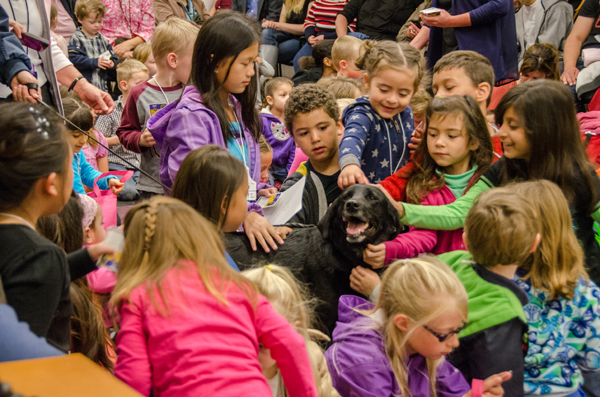
Former parcel inspection dog Bart was also a goodwill ambassador.
There has been a changing of the guard this summer among the California Dog Teams – comprised of specially trained dogs that sniff parcels and are part of the state’s first line of defense against invasive species. Three veteran dogs retired after many years of service, each having reached the mandatory retirement age of nine. Using the concept of “dog years,” that would make them between 56 and 61 years old in human terms. A fourth dog retired when its handler was promoted – that’s necessary because the program requires a replacement handler to train with a new dog to forge the strongest possible bond. All of the retired animals were placed in loving homes to live out their lives.
The first dog, Bart, worked alongside handler Mariah de Nijs in Contra Costa County. The second dog, Bella, also sniffed parcels in Contra Costa County, teaming up with handler Ceciile Siegel . The third dog, Friday, put its nose to the test with handler Jeremy Partch in San Diego County. And the fourth dog, Ebony, worked in Los Angeles County. Fortunately for California, each of these dogs has been replaced by new, able-nosed young canines. The rookies are named Venus, Conan, Cairo and Sedona, and some of them are already hard at work at parcel facilities – part of a crew of 13 dog-handler teams around the state.
The California Dog Teams enhance the inspection and surveillance activities of plant products entering the state via parcel delivery facilities and airfreight terminals. Once fully trained, dogs are able to alert their handlers to marked and unmarked parcels that contain agricultural products, allowing biologists to inspect for unwanted pests that pose a threat to California’s food supply and natural environment. Every canine that enters this program has been rescued from animal shelters, breed rescue groups, and other pet rescue organizations.
Between July 1, 2011 and June 30, 2012 the California Dog Teams alerted inspectors to 41,002 marked and unmarked parcels that contained agricultural products. A total of 124 actionable pests were intercepted during this period (An actionable pest may be a pest of economic or environmental concern and is either not known to be established in California or it is present in a limited distribution that allows for the possibility of eradication or successful containment). Additionally, 1,948 package rejections were issued during that time period for violations of state and federal plant quarantine laws and regulations.
The California Dog Teams serve as a vital and indispensable part of protecting California’s agricultural and natural environments from invasive species.
Posted in Uncategorized
Leave a comment