
Secretary Ross at COP30 in Brazil, meeting with a Mexican delegation to discuss deforestation and regenerative agriculture.
CDFA Secretary Karen Ross and Virginia Jameson, Deputy Secretary for Climate and Working Lands, are in Belém, Brazil this week for COP30, the United Nations’ annual climate summit.
California is a global leader in climate-smart agriculture and remains a steadfast partner in confronting the climate crisis.
Throughout the week, Secretary Ross will be highlighting California’s leadership and strengthening international cooperation to support farmers, ranchers, and communities worldwide.
It’s been a productive start to the week:
Secretary Ross met with Mexico’s delegation to discuss shared strategies for addressing deforestation and expanding incentives for regenerative agriculture, and:
Participated in a panel moderated by The Nature Conservancy, alongside Brazilian leaders, highlighting nature-based solutions, including healthy soils and regenerative grazing, and emphasizing the essential role of indigenous communities in climate action both in the Amazon and around the world.
Convened with colleagues from Australia to discuss common challenges related to livestock methane, incentivizing soil health practices, and drought.
Emphasized the importance of robust monitoring, reporting, and verification for global methane emission reduction in the livestock sector on the Clean Air Task Force’s panel on Methane in Action
Met with CIGAR, a global research partnership, to discuss opportunities for collaboration in climate-smart agriculture.
California is proud to collaborate globally to advance sustainable agriculture and build climate resilience from the ground up.
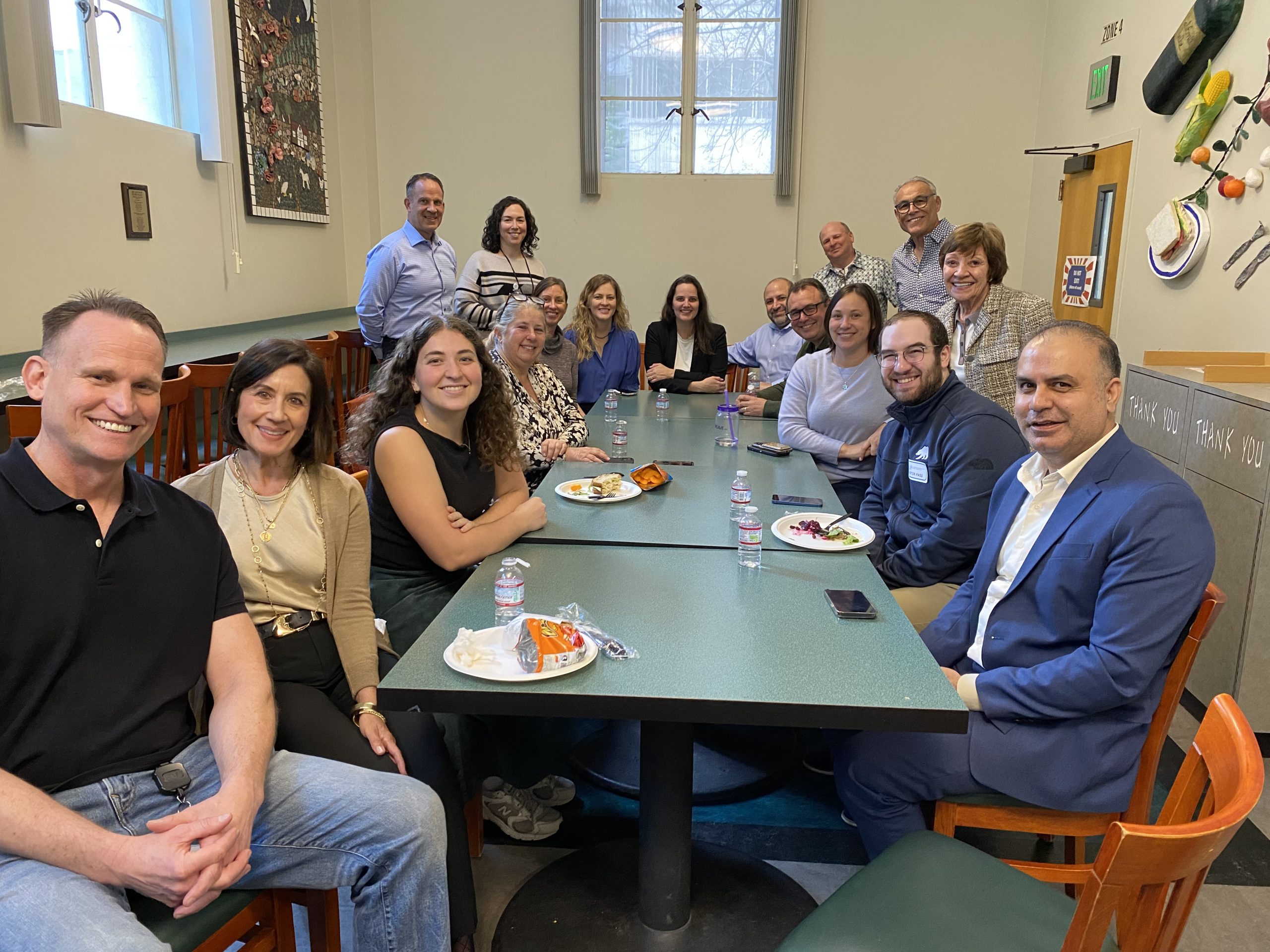
Pictured: Secretary Karen Ross (third from left), along with California State Assemblymember Chris Rogers (fourth from left), Assemblymember Damon Connolly (fifth from right); Andy Berliner (founder and CEO of Amy’s Kitchen, center); also included, Amy’s Kitchen staff and California Energy Commission staff members.
CDFA Karen Ross visited Amy’s Kitchen in Santa Rosa to see firsthand the results of a California Energy Commission–funded project driving innovation in food processing.
In the video below, Secretary Ross highlights how this project supports the state’s Cap-and-Invest strategy, helping California transition to a carbon-neutral economy while protecting local communities, sustainable jobs, and the future of California-grown food.
At CDFA we take great pride when we discover practices and standards utilized here in California are sources of inspiration beyond our borders. Recently, India’s Ministry of Fisheries Animal Husbandry & Dairying Government released its draft “Guidelines/SOP for Blood Transfusion and Blood Bank for Animals in India,” citing CDFA’s guidance in its references. This recognition underscores the influence of the agency’s work through the California Animal Blood Banks program (CABB).
The guidance provides clear information on best practices and the requirements for starting and operating an animal blood bank. Its development, mandated by California statute, involved collaboration with the California Veterinary Medical Board, technical experts, and other stakeholders. The resource is regularly updated to reflect evolving industry standards.
The CABB team works to forge new ground, developing comprehensive guidelines that not only ensure safety and efficacy but also prioritize the welfare of donor animals. To see this work serve as a model for a nation as large as India – with its vast and diverse animal populations – is a testament to the quality and foresight of our program.
While there has been no formal collaboration with India’s government, we are proud that the guidance and standards we’ve helped pioneer are a source of inspiration, helping to establish safe, ethical, and effective standards for animal healthcare on a global scale. This is a clear indicator that our efforts are aligning with international best practices and contributing to a more structured approach to veterinary medicine worldwide.
We look forward to seeing how these new guidelines are adopted and implemented in India and are thrilled to know that CDFA is playing a part in this important global step forward.
For more information on the CDFA Animal Blood Banking Program, please visit our website at www.cdfa.ca.gov/ahfss/cabb.
Fresno County is the No. 1 farm county in the nation, its farms selling a record $9.03 billion worth of production in 2024 — up nearly 6% from the previous year.
When it comes to total economic impact, that dollar figure more than doubles.
On Tuesday, Nov. 4, the Fresno County Board of Supervisors received Agricultural Commissioner Melissa Cregan’s 2024 crop and livestock report, which catalogues acreage, production and gross farm receipts.
Cregan also offered a first look at an economic impact report for Fresno County agriculture. Examining the 2023 crop year, farming contributed $21.66 billion to the county economy, directly supporting 63,103 jobs plus nearly 45,000 more from multiplier effects.
Farm Bureau CEO Ryan Jacobsen said Fresno County is the food capital of the nation.
“California grows more than a third of the country’s vegetables and three-quarters of the country’s fruits and nuts, with a majority of that coming from right here in the San Joaquin Valley,” Jacobsen said in a statement. “Food grows where water flows, and 2024 was a good water year for our county allowing farmers to grow the full rainbow of crops that we are capable of here.”
Kern County was previously the top U.S. ag county in 2023, but its value dropped 8% last year.
Grapes, nuts battle
After two years in the No. 2 spot, almonds are back on top as the leading agricultural commodity in Fresno County with a gross value of $1.45 billion — up 43% compared to 2023 as prices recovered.
At the same time, harvested almond acreage fell by 6% to 308,170 last year.
Grapes moved to the No. 2 spot with a gross value of $1.04 billion, down from $1.27 billion the year before. There were 142,263 acres planted in raisins, table and wine grapes last year, down 8% from 2023.
Pistachios remained in third, with a gross value of $857.3 million — down 5% from 2023.
Incomplete picture
Despite the large numbers, Fresno County farmers were quick to point out that these represent gross returns — and don’t represent farm profits as input costs rise.
“While the public may see this record-breaking number as a reflection of the health of our local agricultural community, that couldn’t be further from the truth,” stated Jacobsen. “The past four years have been extraordinarily difficult for most local farmers due to a combination of stressors — including lower-than-average market prices, rising input costs, higher interest rates, and more.”
Focus on farmworker
This year’s report highlighted the agricultural workforce. Titled “California Farmworkers: A Vital Contribution to the State’s Economy and How We Feed the World,” the report examines the role of farm employees in the nation’s food supply.
Seasonal labor is crucial, according to the report, especially to three farm sectors — row crops, grapes and tree fruit. For instance, the Central Valley is one of three major growing areas for the year-round lettuce harvest.
California’s farm success depends on farmworkers, the report says.
“Without them, California would face significant labor shortages, reduced capacity, and increased costs, all of which would threaten its position as a national and global agricultural leader,” according to the report.
Economic impact
The “Economic Contributions of Fresno County Agriculture” report found that in 2023, agriculture contributed a total of $21.66 billion into the economy, directly supporting 63,103 jobs plus nearly 45,000 employees from multiplier effects.
That equates to about 108,034 jobs, or 1 in 9 jobs in all of Fresno County.
Farmers raise more than 300 different crops across 1.88 million acres. Local food processing adds substantial value, with $6.02 billion in direct processing output spanning sectors from meat and poultry processing ($1.747 billion) to nut manufacturing ($1.5 billion), light processing of fresh produce ($831 million), and canning operations ($635.9 million). Major facilities process everything from beef and poultry to dried fruits, nuts, wine, frozen products, and dairy items, creating value-added products for domestic and international markets.
CDFA Deputy Secretary Rachael O’Brien with Dr. Julio Berdegué, Mexico’s Secretary of Agriculture and Rural Development
CDFA joined a USDA trade mission to Mexico this week. Deputy Secretary Rachael O’Brien was able to connect with Mexican and U.S. government officials as well as meet with key trading partners in the bakery, retail, and produce sectors. The delegation visited Mexico City’s Central de Abasto (Latin America’s largest wholesale market) and toured Grupo Bimbo Bakery — a significant partner for U.S. wheat producers.
Other visits included discussions with the American Chamber of Commerce in Mexico and a research overview with the International Maize and Wheat Improvement Center (CIMMYT).
Mexico’s agricultural officials provided a detailed overview on the nation’s response to New World screwworm — a significant threat to the U.S. cattle industry. Strong collaboration between Mexico, the US, and state departments of agriculture is ongoing to try to prevent the screwworm’s spread to the U.S.
Mexico is California’s fourth largest agricultural export destination, valued at $1.7 billion.
State agricultural officials including CDFA Deputy Secretary Rachel O’Brien (top – third from left) with U.S. Secretary of Agriculture Brooke Rollins (center), and in a plenary session (bottom-left).
CDFA Deputy Secretary Rachel O’Brien is participating in the U.S. – Mexico Agribusiness Trade Mission occurring this week in Mexico City. The trade mission is highlighting trade opportunities and business connections with the United States’ largest bilateral trading partner. The USDA Delegation includes more than 150 participants representing businesses, industry associations and state departments of agriculture.
Mexico is California fourth largest agricultural export market valued at $1.7 billion. Top exports include dairy, table grapes, processed tomatoes, almonds and pistachios.
Every year, the California Department of Food and Agriculture (CDFA) leads the State Employees Food Drive, raising food, funds and awareness regarding hunger issues in our state. California produces nearly half of the nation’s fruits and vegetables, yet more than 1 in 5 Californians — about 8.8 million — currently struggle with food insecurity. Last year, state employees donated over $111,000, as well as 30,270 pounds of food, 1,120 turkeys and 1,477 volunteer hours to food banks around the state!
Due to the federal government shutdown, more than 5 million Californians are at risk of losing access to CalFresh benefits or experiencing delays beginning today, November 1, 2025.
This means that 13.5% of Californians – many families with children – will have to choose between paying bills or buying food. Demands on food banks are expected to spike; we can help meet those demands.
The official start of the food drive was set for November 10, but due to the added urgency this year, we are accepting donations starting today, Nov. 1, 2025 through January 9, 2026.
Please check if the food bank is currently accepting food donations
Volunteer your time
Support your local food bank’s “Turkey Drive” or other fundraising events
This year, the Sacramento Food Bank and Family Services Turkey Drive will take place on November 14, 2025, and the Run to Feed the Hungry will take place on Thanksgiving Day – November 27, 2025.
Submit your donation details through the Food Drive Credit Form to be included in your department’s participation by January 9, 2025.
This October, we’re celebrating California’s fall harvest season, along with California Farmer and Farmworker Month – by exploring the people, places, and flavors that make our state’s agriculture special. In partnership with CA GROWN’s new digital hub — Experience California Agriculture — we’re highlighting farm adventures across the Golden State. From hands-on u-pick orchards and vineyard tours to local food experiences, this new resource makes it easier to connect with California’s vibrant agricultural communities across the state!
Have you ever wondered how pumpkins are grown? We met with two California pumpkin farmers to get the inside scoop (no pun intended). Ryan Van Groningen is a commercial pumpkin farmer at Van Groningen and Sons in Manteca, California. Scott Hunter is a pumpkin farmer AND runs Hunter Farms pumpkin patch in Atwater, California. Let’s learn more about how pumpkins are grown in California!
Where are pumpkins grown in California?
Pumpkins are grown in most counties in California. The majority of commercial production takes place in San Joaquin County. The warm days are offset by cooler nights, courtesy of the nearby Sacramento Delta. Ryan Van Groningen explains, “We can be 100+ during the day but we still enjoy that 70 degrees at night, which really does well for pumpkins.”
How are pumpkins grown in California?
Pumpkins are typically started from seed in plastic trays. When a pumpkin farmer plants his seeds depends on when he needs to harvest. The pumpkins at VanGronigan and Sons are sold commercially, which means they need to start their seeds much sooner. Many retailers carry pumpkins starting in late August and September.
Since it can take up to 120 days until a pumpkin is ready to harvest, some commercial growers need to start their seeds in a greenhouse to avoid late season frosts that would kill the young plants.
At Hunter Farms, the pumpkins are sold exclusively at the pumpkin patch (which doesn’t open until the end of September). Hunter starts his seed outdoors in May or June – well past any danger of frost. After 7-10 days, the seedlings have germinated and are ready to plant in the field. Once the seedlings are in the ground, they’ll continue to mature for between 90-120 days, depending on the variety.
How are pumpkins grown sustainably?
Sustainability is very important to California farmers. Good stewardship of our soil, water and air allows the land to be productive for generations to come. Water conservation is critical in the Golden State. To conserve water, most pumpkin farmers use drip irrigation. “With that method, we’re able to give the plant exactly what it needs in terms of water and fertilizer. We’re not wasting anything and we’re able to get it directly to the plant,” Van Groningen states.
At Van Groningen and Sons, the rows of pumpkin plants are lined with black plastic mulch to prevent the growing pumpkins from sitting in wet patches. This also helps to naturally suppress weeds and pests. Pumpkins require specific nutrients, and compost is often used as a natural fertilizer. Most pumpkin farmers have minimal electric usage because pumpkins don’t require any type of processing after harvest, and sorting and grading is done by hand. A pumpkin patch, on the other hand, would have more significant consumption. That’s why Hunter Farms has installed solar fields that power their pumps and provide for the facility’s electric needs.
How do farmers know when pumpkins are ready to harvest?
Most pumpkin farmers grow decorative pumpkins, so there’s no need to worry about their crop reaching optimal sugar levels or maturity. They determine when to harvest based off of two simple factors: color of the pumpkin and how dry the stem is. If picked too early, pumpkins won’t last as long. If picked too late, they’ll quickly turn to mush.
Pumpkin plants have a limited life cycle, so it’s important not to wait too long after they’ve ripened to harvest. “If you wait too long, that pumpkin plant will get weaker and weaker,” Hunter explains. “In the Central Valley, the heat can become an issue. We have to make sure the sun doesn’t burn our plants. The minute they start maturing, the plants themselves start to brown up. When they don’t have any more shade, the sun will burn them, and they become susceptible to insects. So once they’re ready to go we get them outta there.”
How are pumpkins harvested?
Pumpkins are hand harvested by a team of skilled workers. The harvest crew is trained to handle the pumpkins with care in order to not damage them.
“Our team needs to know that people purchase pumpkins with their eyes,” Van Groningen states. They use clippers or knives to carefully snip the pumpkins from the vine.
At Hunter Farms, the pumpkins are harvested into wooden storage bins. The bins are transported on a trailer to the barn, where they are sold to customers. At Van Groningen and Sons, smaller pumpkins are loaded into plastic bins, while larger pumpkins are carefully loaded directly onto trailers. From here, they are transported to a warehouse where they are sized, graded and sent off to retailers!
What happens after harvest?
After all of the “pretty” pumpkins have been harvested, Van Groningen and Sons uses the rest of the crop for feed. At Hunter Farms, they compost the remaining plant material.
Soon after harvest, pumpkin farmers will need to make decisions about the next year’s crop. They evaluate the success of each variety and decide what they’ll be planting the following year. This is done so far in advance because it can be challenging to find seed to grow some of the more novel pumpkin varieties.
Some pumpkin farmers grow cover crops during the cooler months. This can enrich the soil and helps to naturally suppress insects and soil-borne diseases.
How can you support local pumpkin farmers?
Supporting local pumpkin farmers is simple and fun! The easiest way to support pumpkin farmers is to buy California grown pumpkins – at your local grocer or a nearby pumpkin patch. Use them for fall decor, to make jack-o-lanterns, or even whip up a few fall treats using homemade pumpkin purée.
Not sure where the pumpkins at your local grocer were grown? Look for the CA GROWN license plate or signage, or simply ask!
Want to visit a California pumpkin patch? Hunter Farms is smack dab in the middle of the state, and definitely worth the trek! Learn more and purchase your tickets here!
These super simple (and long-lasting) pumpkin succulent centerpieces are a fun way to add some fall decor to your home (and a fabulous hostess gift, hint hint…)
Ready for your new favorite fall treat? We used canned pumpkin purée to make our Pumpkin Bread. Got a little extra time? Use homemade pumpkin purée instead!
We’re fans of pumpkin pie, but with SO many delicious pumpkin desserts to try – we like to keep our options open. Check out this round up of our favorite pumpkin desserts!
As CDFA continues the celebration of October as National Farm to School Month, we’re highlighting two-time California Farm to School Incubator Grant Program grantee Yucaipa-Calimesa Joint Union School District (YCJUSD), in San Bernardino County.
YCJUSD started purchasing oranges and kiwi from local farm Old Grove Orange nearly 20 years ago. Since then, farm to school has blossomed into a cornerstone program of the district and its partnership with Old Grove Orange has grown stronger by the year. Approximately 45 percent of YCJUSD’s fresh fruit and vegetables are now locally grown and sourced.
“Our partnership has extended from beyond the cafeteria and into the classroom, and the grants have allowed us to expand and provide funding for our programs,” said YCJUSD Nutrition Program Manager Lilyanna Montenegro.
The grant helped YCJUSD expand its local purchases and fund educational activities such as Old Grove Farm Field Trips for all 2nd-5th-grade students; Mini Farmers Markets for all TK-1st graders; and Harvest of the Month Education programs in the classroom.
This year’s National Farm-to-School Month theme, Growing for the Future, emphasizes the role of farm to school in creating thriving communities now and in the future. Farm to school helps young children and students eat healthy, fresh and locally grown meals in schools, and helps provide local farmers with a reliable source of income by feeding their communities.
This October, we’re celebrating California’s fall harvest season, along with California Farmer and Farmworker Month – by exploring the people, places, and flavors that make our state’s agriculture special. In partnership with CA GROWN’s new digital hub — Experience California Agriculture — we’re highlighting farm adventures across the Golden State. From hands-on u-pick orchards and vineyard tours to local food experiences, this new resource makes it easier to connect with California’s vibrant agricultural communities across the state!
There’s nothing like an afternoon spent apple picking to kick those fall feels into overdrive. Before you (incorrectly) assume that apple picking is a cutesy activity relegated to families with small children or sappy date nights, hear us out. You don’t have to deck yourself out in plaid and cleanse your mind of anything but wholesome thoughts to enjoy spending the day apple picking. Do you like apple pie? Apple donuts? Hard apple cider? If you’ve answered yes to any of these queries, you need to make a trip to an apple orchard, stat. We have it on good authority, and by that, we mean our own experience, that there’s no better place to enjoy all things apple than a visit to an actual apple orchard. And if you’ve never experienced an apple plucked straight from the tree…well, grocery store offerings can’t even compare.
A bonus is that California apples grow best in areas with cooler evening temperatures – specifically near the coast and in the Sierra Foothills. So, if you’ve been craving a weekend in Pismo or a fall Tahoe trip, we’re offering up the perfect excuse. Check out a few of our favorite u-pick apple orchards and start planning your next ag adventure!
California’s u-pick apple season runs roughly from August through November.
Nestled in the rolling hills outside Petaluma, Chileno Valley Ranch invites visitors to explore their u-pick orchard. This family-owned farm grows over 20 different apples – everything from the immensely popular Honey Crisp to heirloom varieties dating back to the 1840s! They ripen at various times throughout the fall, but on any given day, guests will be able to discover 3 or 4 unique varieties!
For four generations, the Noble family has grown apples in Butte County, California. Now the area’s last remaining apple orchard, owners Jim and Laurie Noble have changed up the business model to survive – embracing u-pick during the fall and supplying apples to Lassen Traditional Cidery. Outside of apple season, Noble Orchards offers u-pick peaches and nectarines from July through October, and a stunning assortment of irises in early spring!
There’s so much to do at Apple Ridge Farms! After collecting a basket of apples, explore the nature trail (lined with thousands of zinnias), try your hand at gem-mining, and visit the Bake Shop to sample all the apple-packed treats. We bit into the world’s best caramel apple, but owner Steve Tuso says the apple cider donuts are his fave.
At O’Halloran Ranch, guests can choose to partake in the traditional u-pick experience or simply mix and match from bins overflowing with already harvested apples. This quaint little farm has a quiet confidence; it offers visitors a traditional and authentic quiet, pastoral farm experience without all the crowds. So, hop on the 50 towards Tahoe and head to O’Halloran Ranch.
Everett Family Farm sells organic apples, berries, stonefruit and more at their on-site farmstand and to local restaurants and grocers. During the fall, visitors can traipse through the apple orchards and pick their fill of 14 different apple varieties. Be sure to bring cash or check – this small family farm’s u-pick relies on the honor system!
Spend a fabulous fall day at Gizdich Ranch. Collect your fill of u-pick apples, then settle in on one of the outdoor picnic tables with a slice of Nita’s famous apple pie. The recipe is a family secret – but Nita offers up one tidbit of truth: she doesn’t add much sugar to the apple pie filling. With apples this sweet, why would you?
Heading to the Central Coast for a wine-tasting weekend? Add apple picking to your itinerary, too! Swanton Pacific Ranch, run by Cal Poly San Luis Obispo, grows 16 different varieties of organic apples. This extends the growing season and allows guests an opportunity to experience lesser-known, heirloom varieties.
SLO Creek Farms is a 14-acre u-pick apple orchard in beautiful San Luis Obispo. You’ll definitely want to pluck a basket-full of organic apples from the trees, and don’t forget to grab a few bottles of freshly pressed cider and apple brandy to enjoy at home!
It’s easy to spend an entire afternoon at Avila Valley Barn! Kids love the u-pick apple orchard, ice cream shop and the friendly farm animals at the petting zoo, and adults can eat their fill of Avila Valley Barn’s iconic grilled artichokes and roasted corn. If you’re really into apple exploration, pop on over to their sister orchard, Gopher Glen, to taste over 65 different types of apples!
For many families, a visit to Julian is a cherished fall tradition. Volcan Valley Apple Farm’s trellised apple trees allow even the youngest participants to pluck their own fruit from the tree.
Stay – and play – at Julian Family Orchard! Spend the day enjoying the petting zoo, yard games and u-pick apple orchard, and then stay the night next door at Julian Orchard Ranch. While you’re there, be sure to grab a slice of Julian Pie Company’s famous apple pie!
Stone Soup Farm is just an hour outside of Los Angeles, but what a difference an hour makes! Tucked in the quiet hills of Oak Glen, this gorgeous farm offers apple picking and farm tours, where visitors can learn more about regenerative agriculture and the proper technique for picking the perfect apple.
Visit Southern California’s oldest apple orchard, Los Rios Rancho. Enjoy apple picking, horse-drawn wagon rides, cider pressing and more! Don’t even think about leaving without enjoying a slice of their famous apple pie with a cup of gourmet coffee.
Riley’s Farm boasts all the traditional u-pick apple orchard trappings, but its wildly diverse event offerings truly set this Oak Glen farm apart. Visitors can enjoy everything from musical theater and Civil War reenactments to Adventures in the Old World, where folks can step back in time and experience what life would have looked like in the 18th century!