

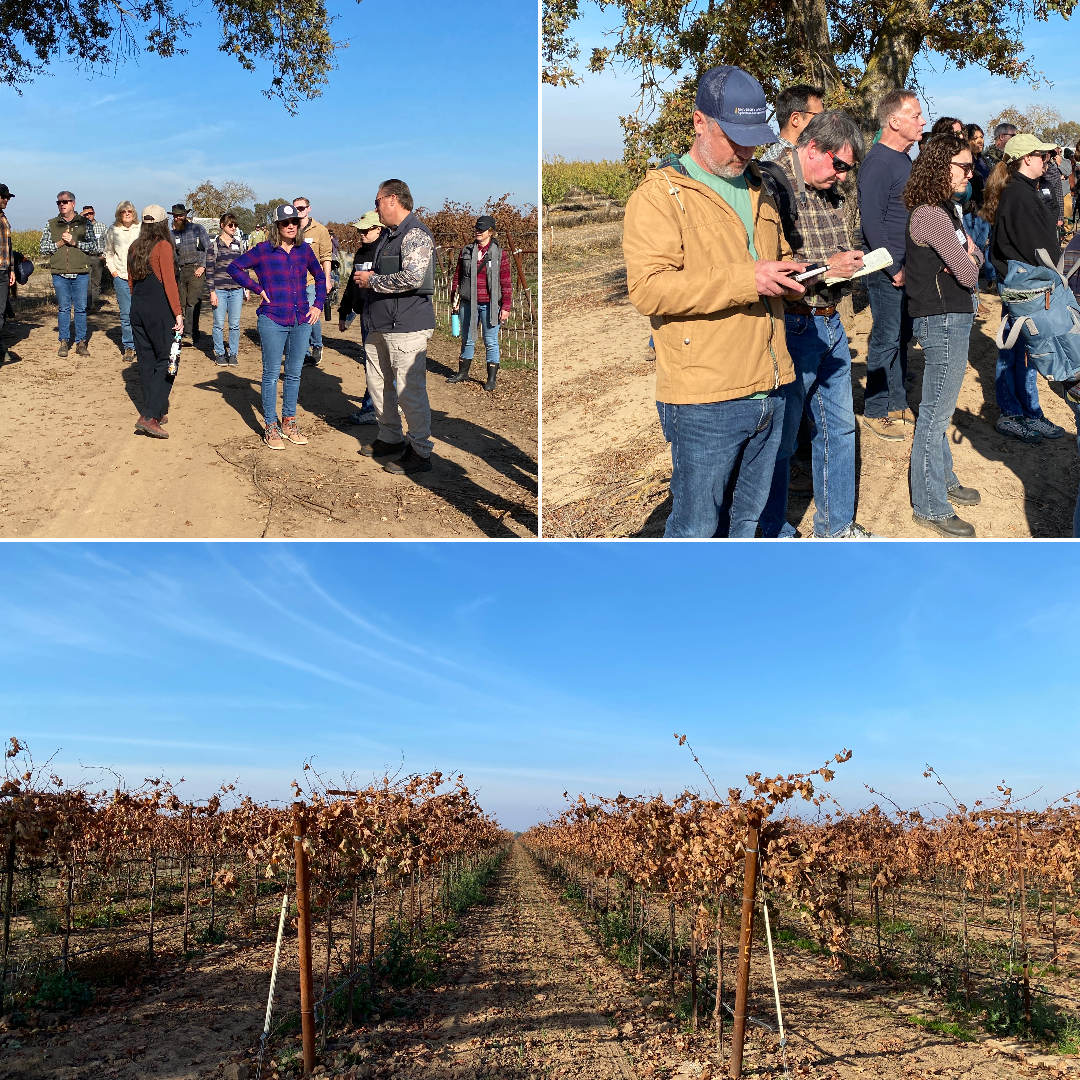
Approximately 70 participants joined in the field tour, gaining a firsthand view of how animal grazing and cover crops are helping to provide important ecosystem services to sustain healthy soils practices at a vineyard.

It’s World Soil Day — an essential component of California’s annual Healthy Soils Week. In this video, we meet farmer Scott Park of Meridian, Sutter County, and we learn about the steps he follows for improved soil health in the production of corn, processing tomatoes and rice, among other crops. Park’s approach to nutrient management focuses entirely on keeping soil healthy, which increases water holding capacity and infiltration rates, increases soil fertility, and reduces greenhouse gas emissions by sequestering carbon.

From a California Air Resources Board News Release
California officially kicked off a new international climate initiative that creates a partnership of subnational governments that are committed to reducing methane at the United Nations Climate Change Conference (COP28) hosted in Dubai.
The effort, which was initially announced in September during Climate Week, has expanded to 15 signatories, which include additions from Brazil, Canada, South Korea, Bolivia, Germany, Spain, and the United States.
The Subnational Methane Action Coalition creates collaboration with jurisdictions that oversee and regulate key sources of methane such as agriculture, energy and landfills to share goals and best practices in reducing the short-lived climate pollutant that accounts for almost 30% of current global warming and is 80 times more potent than carbon dioxide over a 20-year period.
“The science is clear that tackling methane emissions is one of the best investments we can make to fight climate change now and produce benefits in the near future to leave a better planet for generations to come,” said Liane Randolph, Chair of the California Air Resources Board. “California is ready to partner with governments across the world to implement actionable and effective solutions.”
“With leadership from our dairy families, California agriculture has been working to reduce methane emissions for a number of years. In addition, our efforts will require global solutions, bold ideas, and international partnerships to achieve the maximum reductions needed to accomplish our shared climate change goals,” said Karen Ross, California Secretary for the Department of Food and Agriculture.
California set a goal to reduce 40% of its methane emissions by 2030 compared to 2013 levels, and is leading the country with innovative solutions, including $100 million in funding to support a constellation of satellites that can monitor for large methane plumes. The California Air Resources Board (CARB), California Environmental Protection Agency (CalEPA), California Natural Resources Agency (CNRA) and California Department of Food and Agriculture (CDFA) collaborate in the state’s international engagements on methane.
Since methane is a potent greenhouse gas with a short atmospheric lifespan, methane emissions reductions can reduce the effects of climate change in the short term, and are critical for putting the world on a path to limiting warming by 1.5°C.
Signatories of the Coalition include:
Other partners in the effort include the Climate Group, which convenes subnational governments for climate action through the Under2 Coalition, and the UC Berkeley Center for Law, Energy, and Environment, which will work with state agencies and Initiative members to create action plans, track progress, organize regular peer-to-peer learning opportunities, and share best practices.
Research shows that lowering methane emissions can prevent up to 0.3°C of warming by 2050. While over 150 countries have agreed to collectively reduce global methane emissions by at least 30% below 2020 levels by 2030 through the Global Methane Pledge of 2021, meeting this target will require significant efforts from subnational jurisdictions.
Welcome to Healthy Soils Week 2023! We kick off the week with a video featuring CDFA Secretary Karen Ross. This year’s theme is “Common Ground: Soil Supports Us All!”
Throughout the week, CDFA will join key stakeholders to highlight various trainings and events focused on soil health.
Please visit the CDFA’s Healthy Soils Week 2023 page for more information about each of the week’s events.
Some of the Highlights
Visit the Healthy Soils Week 2023 webpage to learn more.
Collaborative Project in Sacramento Valley increased outreach, regional cooperation
Note — CDFA will join partners from around California to observe Healthy Soils Week, Dec 4 – 8.
By Linda J. Forbes
Director of Strategic Communications, UC Agriculture and Natural Resources
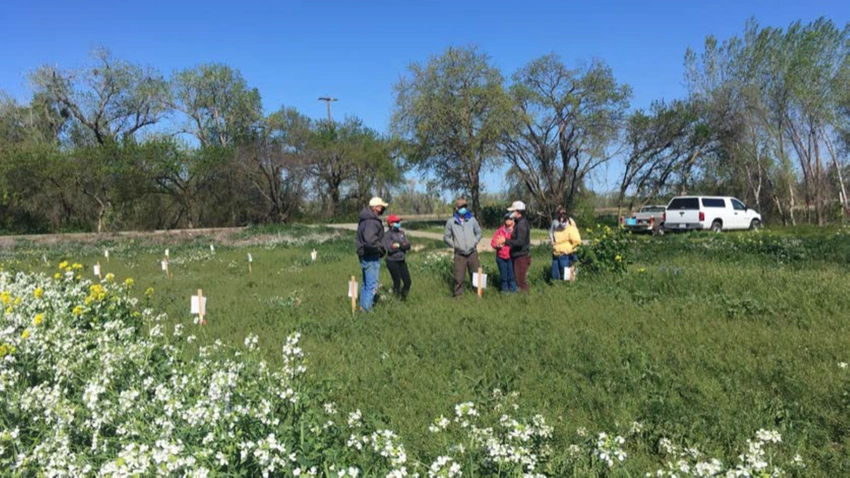
In 2020, agencies and experts in Colusa County came together for a project evaluating winter cover crops (planted in the fall and terminated in late winter or early spring) in annual crop rotations. This project had a large outreach component and various cover crops were planted each year to demonstrate how well they grew in the region.
During the three-year project, the team has significantly increased soil health outreach in the middle Sacramento Valley region and built a strong regional collaboration that continues for other projects. The research findings will be published upon completion of analysis.
Funded by CDFA’s Healthy Soils Program, the collaboration involved measuring changes in soil health between two cover crop treatments and a fallow control and led to innovation in outreach methods to make healthy soil practices more accessible.
Promoting soil health during a pandemic was a major challenge for the project team, comprising Sarah Light, UC Cooperative Extension agronomy farm advisor; Liz Harper, executive director of the Colusa County Resource Conservation District; Davis Ranch; Richter Ag; and the USDA Natural Resource Conservation Service (NRCS).
Unable to conduct in-person field days or workshops, Light and Harper created a YouTube channel called “The Soil Health Connection” and produced 29 episodes in English and five in Spanish. These episodes featured soil health experts from around the state. In addition, field demonstrations were recorded including soil sampling demonstrations, a cover crop field tour, and soil health field assessments following NRCS protocols.
“The collaboration was effective not only in sharing information on how to manage cover crops, but also allowed us to continue to extend knowledge and do outreach during COVID, when regular in-person programming was not available,” Light said.
Interviewees included researchers, farmers, ranchers, industry representatives, technical assistance providers and natural resource conservation agency representatives. The YouTube channel has over 200 subscribers and won the 2021 Conservation Education Award from the California-Nevada Chapter of the Soil and Water Conservation Society.
NRCS collaborated on six of the episodes and featured them in their statewide Soil Health newsletter. Participants included Resource Soil Scientist Jacqueline Vega-Pérez, Regional Soil Health Specialist Kabir Zahangir, California Plant Material Director Margaret Smither-Kopperl, Colusa County Soil Conservationist Brandi Murphy, California State Conservationist Carlos Suarez, and USDA Research Soil Scientist Claire Phillips.
Other innovations included hosting a virtual field day with continuing education credits and two drive-by, in-person field tours. The project itself was innovative in terms of conducting virtual and in-person outreach in Colusa County.
“We were one of the first in the region to organize virtual soil health events and because of our strong project team were able to quickly pivot to comply with state and local regulations during the pandemic,” Light said.
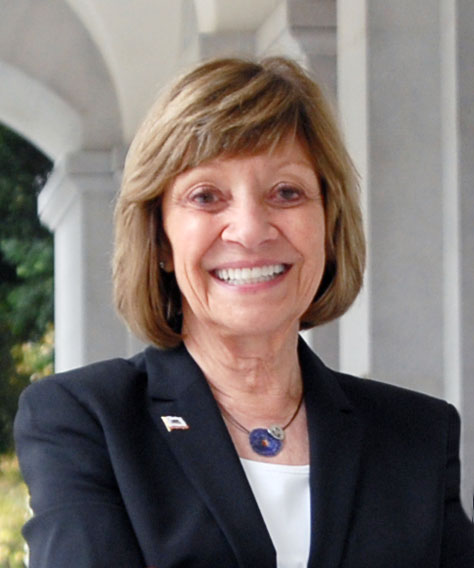
By CDFA Secretary Karen Ross
It is the season to reflect on the year, gather around the table, and give thanks! As someone who feels truly blessed to work with people I respect and admire, I feel thankful every day to be part of food and agriculture.
It is my passion and my purpose to travel the state and share with all Californians what I see first-hand as the amazing miracle of California agriculture! The farmers, ranchers, farmworkers, and all others who play an integral role in our food supply are a testament to hard work, innovation, resiliency, and optimism every day regardless of the challenges. That includes every one of our dedicated and talented CDFA staff members who are so passionate about our mission to ensure safe, nutritious, high-quality food and agricultural products — produced with the highest environmental and labor standards.
For many of California’s nearly forty million residents it is easy to take for granted what goes into the food on our table, but it’s important to remember that nutritional security is not assured. In a world of harsher and more frequent extreme weather events, producing food with access for all is threatened by climate change. I am grateful for the investment Governor Newsom and the Legislature have made in climate smart ag programs to support adaptation and the ability of farmers and ranchers to reduce greenhouse gas emissions and be part of the climate change solution by sequestering carbon.
At the other end of the food chain, Governor Newsom, First Partner Jennifer Siebel Newsom, and the Legislature have made significant investments in Farm-to-School programs to support small and mid-sized, historically-underserved farmers and ranchers with local school procurement. It is a holistic investment that is combined with nutrition education and experiential learning to inspire healthy lifelong habits in students and their families, to help them avoid chronic diseases and fully achieve their potential.
As young people learn about exciting agricultural technology and innovations that enhance our ability to produce food with care—for the environment as well as the people who make it possible–I know they will see what I do: California agriculture is about growing opportunity! It’s a chance to be involved in a career -– a calling, really -– to produce food and ag products for healthy lives, healthy communities, and a healthy environment. How thankful I am for all the people who make our California agricultural bounty possible!
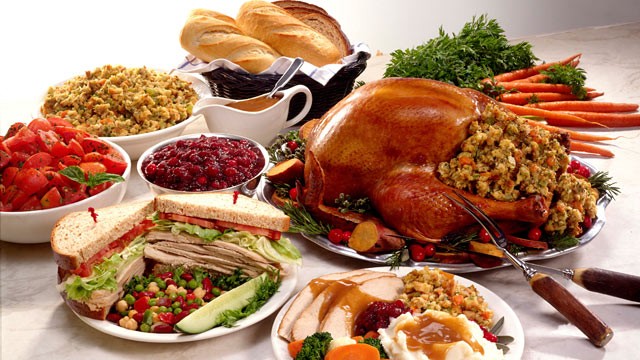
From the American Farm Bureau Federation
Gathering around the table for a Thanksgiving dinner won’t take as much of a toll on your pocketbook this year compared to 2022, but the meal still reflects historically high costs. The American Farm Bureau Federation’s 38th annual survey provides a snapshot of the average cost of this year’s classic holiday feast for 10, which is $61.17 or less than $6.20 per person.
This is a 4.5% decrease from last year’s record-high average of $64.05, but a Thanksgiving meal is still 25% higher than it was in 2019, which highlights the impact high supply costs and inflation have had on food prices since before the pandemic.
The centerpiece on most Thanksgiving tables – the turkey – helped bring down the overall cost of dinner. The average price for a 16-pound turkey is $27.35. That is $1.71 per pound, down 5.6% from last year.
Farm Bureau “volunteer shoppers” checked prices Nov. 1-6, before most grocery store chains began featuring whole frozen turkeys at sharply lower prices. According to USDA Agricultural Marketing Service data, the average per-pound feature price for whole frozen turkeys declined further during the second week of November. Consumers who have not yet purchased a turkey may find additional savings in the days leading up to Thanksgiving.
“Traditionally, the turkey is the most expensive item on the Thanksgiving dinner table,” said AFBF Senior Economist Veronica Nigh. “Turkey prices have fallen thanks to a sharp reduction in cases of avian influenza, which have allowed production to increase in time for the holiday.”
The shopping list for Farm Bureau’s informal survey includes turkey, stuffing, sweet potatoes, rolls with butter, peas, cranberries, a veggie tray, and pumpkin pie with whipped cream, all in quantities sufficient to serve a family of 10 with plenty of leftovers.

America’s biggest food holiday is almost here, and the USDA wants to remind consumers to avoid habits that increase the risk of harmful bacteria in their Thanksgiving meal.
“Unsafe handling and undercooking your turkey can cause foodborne illness,” said USDA Under Secretary for Food Safety Dr. Emilio Esteban. “To ensure your Thanksgiving meal is wholesome and memorable without the illness, follow the four steps to food safety: clean, separate, cook and chill, and avoid risky food handling habits that go against USDA guidelines.”
Here are seven dangerous habits USDA would like consumers to drop:
#1 Not washing your hands or kitchen surfaces before, during and after food prep: Handwashing is the first step to avoiding foodborne illness. Wash your hands for at least 20 seconds with soap and water before, during and after handling food.
#2 Using the same cutting boards and utensils for raw and ready-to-eat foods: Cross-contamination is the spread of bacteria from raw meat and poultry onto ready-to-eat food, surfaces, and utensils. Avoid this by using separate cutting boards — one for raw meat and poultry and another for ready-to-eat foods like fruits and vegetables that will be served raw.
#3 Defrosting your turkey on the kitchen counter: Leaving any frozen package of meat or poultry for more than two hours on the counter at room temperature is dangerous. Even though the center of the package may still be frozen, the outer layer of the food is in the “Danger Zone” between 40 and 140 F — a temperature where foodborne bacteria multiply rapidly. You can safely thaw a turkey using the following methods:
#4 Cooking your turkey overnight at a low temperature: It is not safe to cook any meat or poultry in an oven set lower than 325 F. At lower temperatures, meat stays in the Danger Zone for too long. Cook your turkey at 325 F or above and ensure all parts of the turkey reach a safe internal temperature of 165 F.
#5 Relying only on a pop-up temperature indicator: While the pop-up timers found in many turkeys tend to be fairly accurate, they only check the internal temperature in one spot when we recommend three. Always use a food thermometer to ensure your turkey has reached a safe internal temperature of 165 F in the thickest part of the breast, the innermost part of the wing, and the innermost part of the thigh to check its internal temperature.
#6 Stuffing your turkey the night before: USDA recommends against stuffing your turkey since this often leads to bacteria growth. If you plan to stuff your turkey, follow these steps:
#7 Keeping leftovers for more than a week: Store leftovers in small shallow containers and put them in the refrigerator. Thanksgiving leftovers are safe to eat for up to four days when stored in the refrigerator. In the freezer, leftovers are safely frozen indefinitely but will keep the best quality for two to six months.
For more food safety information, call the USDA Meat and Poultry Hotline at 1-888-MPHotline (1-888-674-6854), email MPHotline@usda.gov or chat live at ask.usda.gov from 10 a.m. to 6 p.m. Eastern Time, Monday through Friday. On Thanksgiving Day, the Hotline will be open from 8 a.m. to 2 p.m. Eastern Time.

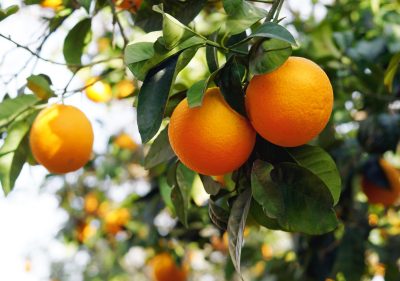
With Thanksgiving and its generous tradition of sharing coming up next week, CDFA is urgently reminding Californians in fruit fly quarantine zones that they should *not* be moving homegrown produce off their property — citrus as well as other fruits and vegetables — as movement is forbidden under quarantine requirements and also creates a risk of spread of the invasive flies.
There are seven different fruit fly quarantines currently active in California, in the counties of Los Angeles, Ventura, Sacramento, Riverside, San Bernardino, Contra Costa and Santa Clara.
Maps, quarantine restrictions, and other information is available online at: https://www.cdfa.ca.gov/plant/off/regulation.html
Californians are urged to adopt the principles of “Don’t Pack a Pest” to help prevent future introductions of invasive pests and diseases — by declaring all agricultural products for inspection upon entering the country and state, and by shipping Ag products through official channels that allow for proper treatment of commodities to protect against invasive species.