
Planting Seeds - Food & Farming News from CDFA

USDA Announces Recipients of Conservation Innovation Grants in 40 States

http://www.usda.gov/wps/portal/usda/usdahome?contentid=2011/08/0373.xml&navid=NEWS_RELEASE&navtype=RT&parentnav=LATEST_RELEASES&edeployment_action=retrievecontent

Agriculture Secretary Tom Vilsack today announced the winning proposals for the 2011 Conservation Innovation Grants (CIG). Through CIG, the USDA’s Natural Resources Conservation Service (NRCS) is investing nearly $22.5 million in innovative conservation technologies and approaches that address a broad array of existing and emerging natural resource issues.

“We’re announcing more than 52 grants today—these are 52 opportunities to help some of America’s top agricultural and conservation institutions, foundations and businesses develop unique approaches to enhancing and protecting natural resources on agricultural lands,” said Vilsack. “The grants will help to spur creativity and problem solving to benefit conservation-minded farmers and ranchers. Everyone who relies upon the sustainability of our nation’s natural resources for clean water, food and fiber, or their way of life, will benefit from these grants.”

Besides advancing innovations that address erosion prevention and other natural resource issues, the 2011 CIG award winners will demonstrate the effectiveness of new ways to reduce odors from poultry and livestock operations, reclaim mining lands, develop ecosystem markets and expand solar energy use on farms. Grant winners pay 50 percent of project costs.

Projects will be carried out in 40 states. Eight of the approved grants support development of conservation innovations in the Chesapeake Bay Watershed, and another eight focus on the Mississippi River Basin.

A summary of all proposals selected for a 2011 Conservation Innovation Grant is available at www.nrcs.usda.gov . Some examples include:

California – $372,478 to the Mokelumne Watershed Environmental Benefits Program to establish a regional ecosystem market that invests in improving water availability, water quality, habitat viability and carbon sequestration, and measures its benefits.

Delaware, Maryland, Pennsylvania, Virginia and West Virginia – $848,424 to the National Fish and Wildlife Foundation to help farmers convert manure to energy to generate income and improve water quality in the Chesapeake Bay.

Florida – $581,625 to the New North Florida Cooperative Association, Inc., to develop and demonstrate conservation approaches and technologies that can be easily and inexpensively adopted by limited-resource, socially disadvantaged and beginning farmers.

Georgia – $122,712 to the University of Georgia to demonstrate the effectiveness of solar energy in cooling, heating, and pumping water, and for drip irrigation, aerating ponds, and watering livestock.

Iowa, Illinois and Indiana – $195,623 to the Agricultural Drainage Management Coalition to develop and demonstrate ways to retrofit existing conservation buffers to better prevent nutrients from entering waterways from field drainage systems.

Kentucky, Ohio, Pennsylvania, Virginia and West Virginia – $541,136 to The American Chestnut Foundation to demonstrate the use of chestnut trees and other hardwoods to reclaim land on mining sites.

Maryland – $73,500 to the Maryland Association of Soil Conservation Districts for conservation outreach to non-English-speaking poultry producers.

Massachusetts and Rhode Island – $60,954 to Walrus and Carpenter Oysters to turn nuisance macroalgae that harms oyster production into fertilizer.

Ohio – $1 million to the Quasar Energy Group, LLC, to demonstrate the effectiveness of anaerobic digesters to process and manage livestock waste in the Grand Lake St. Mary’s watershed, and to prevent livestock nutrients from entering the Mississippi River.

Oregon – $966,722 to the Freshwater Trust to demonstrate, through on-the-ground projects and transactions of verified and registered credits, a functional market system that uses proven tools and methodologies.

South Dakota – $859,671 to South Dakota State University to demonstrate the effectiveness of how mob grazing of cattle impacts the productivity and profitability of grazing land, plant species, and soil and water quality. In mob grazing, cows are restricted to grazing in a small area for a short period of time.

Washington – $410,491 to Washington State University to demonstrate the effectiveness of conservation practices for mitigating air emissions from dairy operations.

Wisconsin – $700,000 to the University of Wisconsin to demonstrate the effectiveness of how to preserve water resources in the state.

The NRCS administers CIG as part of the Environmental Quality Incentives Program. Grants are awarded to state and local governments, federally recognized Indian tribes, non-governmental organizations and individuals. NRCS uses CIG to invest in innovative, on-the-ground conservation technologies and approaches with the goal of wide-scale adoption to address water quality and quantity, air quality, energy conservation, and environmental markets, among other natural resource issues.

For more information about NRCS conservation programs online, visit: http://www.nrcs.usda.gov or visit the nearest USDA Service Center in your area.

#

Posted in Uncategorized | Leave a comment

Pollination Preservation: Grants Help Assess, Improve Health of Bee Colonies

Photo of bee colony

Inspecting a bee colony.

California’s farmers and beekeepers are harvesting the benefits of two Specialty Crop Block Grant (SBCG) projects awarded by the California Department of Food and Agriculture’s (CDFA) Federal Funds Management Office (FFMO).  The grantee, Project Apis m (PAm) reports that the loss of bees during the crucial overwintering period, when they are most vulnerable, is hovering at an unsustainable 30% level. To reduce that loss rate, Project Apis m is giving beekeepers tools to objectively assess and improve the health of their colonies so that growers can be confident when it comes to pollination season.

A grant awarded to Project Apis m in 2007 assists growers and beekeepers by giving them access to vital information about the health of bee colonies before they are sent into the field to pollinate California’s specialty crops.  The grant provided funding to conduct field and laboratory assessments for analyzing bee health.  This work resulted in the development and distribution of a list of diagnostic facilities that can perform objective evaluation of bee health. Beekeepers have been made aware of methods to effectively evaluate bees for pests, diseases, viruses, nutritional health indicators, and pesticide exposure in an effort to reverse the trend of declining honey bee populations.

In 2009, PAm received a second SCBG for a project on Best Management Practices (BMPs) for honey bees. With this grant, beekeepers are able to focus their BMPs in areas where objective evaluations indicated they can most improve honey bee health.  PAm’s campaign of brochures, one-page fact sheets, articles, newsletters, e-newsletters, website development, video clips and PowerPoint presentations at regional, state and national meetings is reaching beekeepers pollinating California crops.  The BMPs focus on nutrition, pest control (Varroa), disease control (Nosema), hive management, colony management and business management.

Project Apis m was created by beekeepers and orchardists to pursue research to improve the health and vitality of honey bee colonies while improving crop production.  For more information, please visit www.projectapism.org

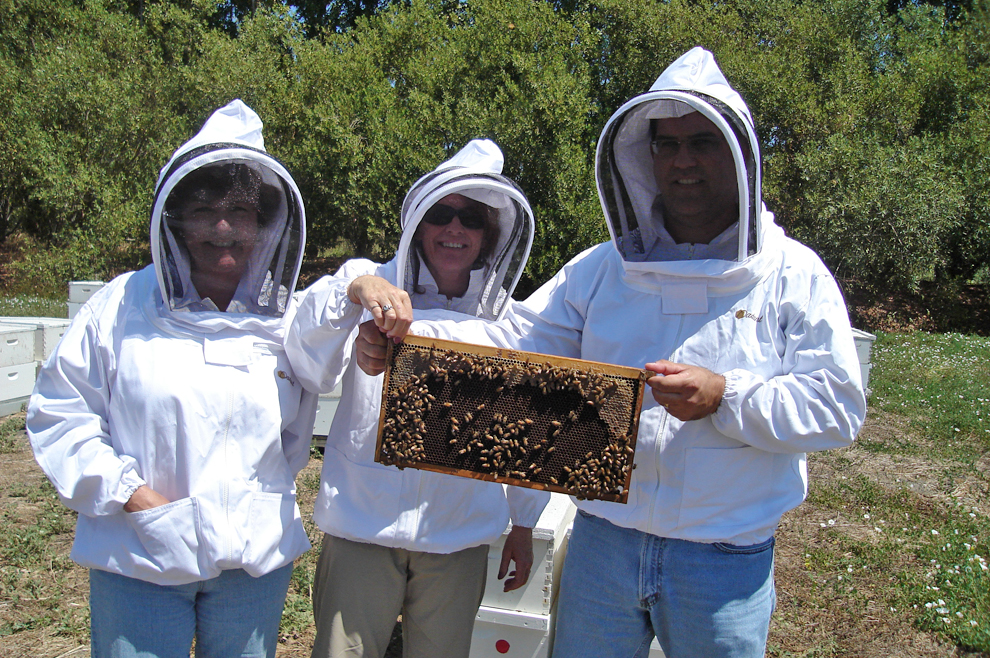
The FFMO is responsible for managing California’s SCBG Program, which funds projects that enhance the competitiveness of the state’s specialty crops. The FFMO conducts compliance site visits with SCBG recipients to ensure project goals and objectives are being met and to review financial records.  FFMO staff Faye Ison and Troy West recently met with PAm Project Director Dan Cummings and Project Manager Christi Heintz to conduct a site visit and they were given the opportunity to tour a fascinating apiary near Chico, California where they learned firsthand about hives and equipment, the organization of the bee colony, and the roles of worker, drone and queen bees.

Photo of staff holding a bee colony during a site visit.

Project Manager Christi Heintz (center) gives FFMO staff Faye Ison and Troy West a firsthand look at the science of honey bee health.

Posted in Pollinators, Specialty Crops | Tagged , , , | Leave a comment

Coin Counting Survey in Northern California

Customer using a Coinstar Center

Earlier this month, Sacramento TV station KOVR-13 contacted CDFA’s Division of Measurement Standards (DMS) about the  coin counting machines that are found in supermarkets. These machines count a customer’s change, charge a fee, and return a voucher that can be exchanged at the check stand for money. The station’s “Call Kurtis” program had received consumer complaints that they were not getting credit for all of the coins they had deposited into the machines.

DMS told the station that while investigators respond to complaints about the machines,  there are no specifications and tolerances for them and that, as a result, they are not regularly checked by weights and measures officials.

DMS is planning a survey of coin-counting machines in Northern California to learn more about their accuracy rates.

Posted in Uncategorized | Leave a comment

Secretary Ross and California Ag Leaders talk trade with Ambassador Ron Kirk, United States Trade Representative

Amabassador Ron Kirk, U.S. Trade Representative, at Blue Diamond Sacramento Facility

Ambassador Ron Kirk, U.S. Trade Representative (USTR), addresses the gathering at the Sacramento headquarters of Blue Diamond Growers. Seated from left are CDFA Secretary Karen Ross, Blue Diamond President & CEO Mark Jansen, and USTR's Chief Agricultural Negotiator Dr. Isi Siddiqui.

Today, I had the great opportunity to meet with Ambassador Ron Kirk and California agricultural leaders to discuss trade and greater market access for agricultural products worldwide. California is the largest agricultural producer and exporter in the nation – with more than $12 billion in exports. Our farmers and ranchers, on average, export approximately 23 percent of products grown and harvested in this state.

What makes California’s farmers and ranchers so successful in the international trade arena – is the dedication to innovation, the importance of food safety, as well as producing some of the highest quality agricultural products in the world.

California is blessed with such a great climate – that it allows us to grow more than 400 different agricultural products – from rice, cotton and wheat to high value specialty crops and wine. Just as we have a diversity of growers in this state, large – small, organic – conventional, – we also have a diversity of exporters. We have large agricultural cooperatives, representing a number of small and medium growers to export management companies representing a wide variety of private label products.

California farmers and ranchers have an intrinsic ability to sell our products to the world – be it the cache of California or the diversity and quality of products from our fields.

Trade is vital to California. It provides jobs, supports our rural communities and assists in meeting the every growing global food demand.

Access to foreign markets is essential to California’s farmers and ranchers. By opening doors to foreign markets, lowering tariffs and eliminating non-tariff barriers to trade we are providing opportunities for family farmers, rural communities and the multitude of businesses connected to the agricultural sector.

It was a pleasure to meet with Ambassador Kirk and his team – this meeting reinforced the importance of California on the international stage.

Posted in Trade | Tagged | 1 Comment

Secretary Ross Announces Science Advisor and Environmental Farming Appointments

CDFA Secretary Karen Ross has announced the appointment of Dr. Amrith Gunasekara as Science Advisor to the Secretary.  Dr. Gunasekara is returning to CDFA after a period as a research scientist for the California Department of Public Health. In his previous assignment at CDFA, he was an environmental scientist in CDFA’s fertilizer program. Dr. Gunasekara has also worked for the California Department of Pesticide Regulation. He received his PhD from UC Davis.  As Science Advisor, Dr. Gunasekara will be a steward of CDFA’s wide-ranging, world-renowned scientific expertise, and he will look to deliver that expertise to help facilitate ongoing review of the regulatory climate for agriculture.

Dr. Gunasekara will serve as CDFA’s liaison to the Cannella Environmental Farming Act Science Panel. Secretary Ross announced the following appointments to the panel:  Jeff Dlott, PhD, CEO, SureHarvest (Soquel); Ann Thrupp, PhD, Manager of Sustainability and Organic Development, Fetzer & Bonterra Vineyards (Hopland); Don Cameron, Vice President and General Manager, TerraNova Ranch, Inc. (Fresno); Brian Leahy, Resources Agency, Department of Conservation; Mike Tollstrup, CalEPA, Air Resources Board.  Ex Officio members will be Daniel Mountjoy, USDA NRCS and Louise Jackson, PhD, University of California Cooperative Extension. The Cannella Environmental Farming Act requires the Department of Food and Agriculture to establish and oversee an environmental farming program to provide incentives to farmers whose practices promote the well-being of ecosystems, air quality, and wildlife and their habitat.  In addition, the CDFA is required to assist in the compilation of scientific evidence from public and private sources and serve as a depository of this information and provide it to federal, state, and local governments, as needed. 

 “The work of Dr. Amrith Gunasekara and the science panel will underscore CDFA’s commitment to science, to a fair regulatory climate, and to the ongoing documentation of the environmental contributions of farming,” said Secretary Ross.

Posted in Uncategorized | 2 Comments

INVASIVE SPECIES ON AGENDA AT AUGUST 24 MEETING OF THE CALIFORNIA STATE BOARD OF FOOD AND AGRICULTURE

http://cdfa.ca.gov/egov/Press_Releases/Press_Release.asp?PRnum=11-048

The California State Board of Food and Agriculture will discuss invasive species policies, initiatives and partnerships at its meeting on Wednesday, August 24, 2011. The meeting will be held from 10:00 a.m. to 2:45 p.m. at the California Department of Food and Agriculture (CDFA), 1220 N Street – Main Auditorium, Sacramento, 95814.

“The ability to protect California’s farms and natural landscapes from invasive species is essential,” said CDFA Secretary Karen Ross.  “It is a network and system that encourages diverse food production, maintains distribution for small and large farmers, and promotes environmental stewardship.”

The detection, exclusion and management of invasive species are critical functions of the CDFA. Working together with federal, state, and county partners, CDFA implements a variety of programs that support invasive species surveillance and inspection.  The federal government has defined ‘invasive species’ as species whose introduction causes, or is likely to cause, economic or environmental harm or harm to human health.

“As a farmer, I understand the on-farm challenges of dealing with invasive species,” said Craig McNamara, president of the California State Board of Food and Agriculture.  “California’s leadership in protecting our farms, waterways, and public landscapes is a role model for the nation.”

This meeting will provide the State Board with a briefing on California invasive species policies and lay the foundation for future discussions on this issue.

Speakers for the meeting include: Helene Wright, USDA – Animal and Plant Health Inspection Service; Doug Johnson, California Invasive Species Advisory Committee; Dr. Robert Leavitt, CDFA ; Robin Wall, U.S. Customs and Border Patrol; Barry Bedwell, California Grape and Tree Fruit League; and Richard Matteis, California Farm Bureau Federation. Additional invited speakers include representatives from the University of California, Davis – Department of Entomology; University of California, Riverside – Center for Invasive Species Research; and University of California Statewide Integrated Pest Management Program

The California State Board of Food and Agriculture advises the Governor and CDFA Secretary.  The State Board conducts forums that bring together local, state, and federal government officials, agricultural representatives, and citizens to discuss current issues of concern to California agriculture.

Follow the board on Twitter at: www.twitter.com/Cafood_agboard

Posted in Uncategorized | Leave a comment

Farm Bill Discussion Begins in California

farm bill logoEvery five years we have the ability to help shape national food policy through the farm bill. This legislation funds critical programs such as nutrition assistance (food stamps), technical assistance for farmers and ranchers, and initiatives that support food production and environmental conservation.

In representing California’s 81,500 farms, I have the pleasure to work directly with the men and women who work the soil and care for our agricultural and food landscape. Theses farmers and ranchers need to be part of the conversations that are occurring at the national level – conversations concerning food and farm policy that will have an impact of future generations.

To help advocate California farm bill priorities at the national level, CDFA will be hosting a series of listening sessions across the state seeking public input on the farm bill. I strongly encourage everyone to participate and provide input as part of this process.

California Farm Bill listening session schedule:

August 22, 2011 – Sacramento, 1:00 – 3:00 p.m.
California Department of Food and Agriculture
1220 N Street – Main Auditorium
Sacramento, CA 95814

August 29, 2011 – Fresno, 1:00 – 3:00 p.m.
Fresno County Farm Bureau
1274 West Hedges Fresno, CA 93728

September 7, 2011 – San Diego, 9:00 a.m. – 11:00 a.m.
San Diego County Farm Bureau
1670 E. Valley Parkway Escondido, CA 92027

September 8, 2011 – Salinas, 3:00 – 5:00 p.m.
Monterey County Agricultural Commissioner’s Office
1428 Abbott Street Salinas, CA 93901

If you wish to submit comments or position papers regarding a California perspective on the farm bill please email farmbill@cdfa.ca.gov

Posted in Farm Bill | Tagged , | Leave a comment

West Nile Virus Update

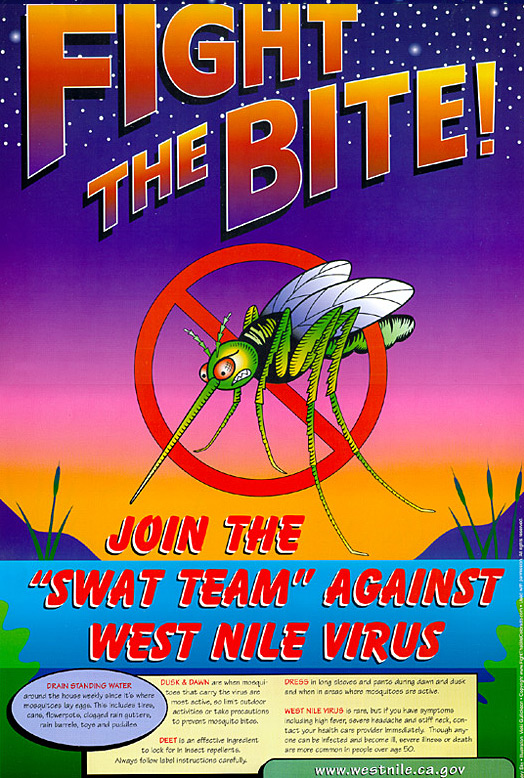
The first case of west Nile virus in a horse this year has been reported. The four-year old unvaccinated gelding is recovering at Santa Anita, in Los Angeles County. West Nile virus is not transmissible from horse-to-horse. They contract the disease from infected mosquitoes.  Horse owners are urged to make sure their animals are vaccinated. For more information, please click on this link:  http://www.cdfa.ca.gov/ahfss/animal_health/wnv_info.html

Posted in Uncategorized | Leave a comment

CALIFORNIA LEADS NATION IN FARMERS MARKETS

http://www.cdfa.ca.gov/egov/Press_Releases/Press_Release.asp?PRnum=11-046

SACRAMENTO, August 11, 2011 – The USDA has designated the week of August 7-13 as National Farmers Market Week, and CDFA Secretary Karen Ross is calling on Californians to recognize the state’s certified farmers markets for their role in the overall success of farmers markets nationally. “California’s certified farmers markets are an important community venue to bring farmers and consumers together,” said Secretary Ross.  “People are more interested than ever in local food and in having relationships with the people who produce it. Farmers markets are perfectly positioned for this.”

California leads the nation with 758 certified farmers markets – sales venues for certified agricultural producers selling healthy and high-quality produce directly to consumers. Until 1977, regulations required farmers to properly pack, size and label their fresh fruits, nuts, and vegetables in standard containers to transport and sell anywhere other than the farm-site. Recognizing the importance of farmers to consumer sales, the department revised regulations allowing for the creation of California certified farmers markets.

These markets are now part of the fabric of many communities throughout the state.  Furthermore, farmers markets are an important source of fresh produce to many seniors and low-income families who can purchase fruits and vegetables through the Senior Farmers Market Nutrition Program; the Women, Infants and Children’s (WIC) Supplemental Nutrition Program; and the CalFresh program.   

Both the number and size of farmers markets in California and the United States have grown dramatically in recent years, prompting state and national advocates of local farming to designate a week each year to take note of their benefits. California joins the nation in celebrating National Farmers Market Week.
 

-30-

Posted in Uncategorized | 1 Comment

ORIENTAL FRUIT FLY DETECTED IN WESTMINSTER AREA OF ORANGE COUNTY

http://cdfa.ca.gov/egov/Press_Releases/Press_Release.asp?PRnum=11-045

SACRAMENTO, August 10, 2011 – The California Department of Food and Agriculture is administering a treatment program for the Oriental fruit fly in the Westminster area of Orange County. This is the fourth treatment program for this pest underway in Southern California.

Two Oriental fruit flies were detected recently in the community. The treatment program will be carried out over approximately 18 square miles surrounding the sites where the insects were trapped. A map of the treatment area is available at: http://www.cdfa.ca.gov/phpps/PDEP/treatment/treatment_maps.html

Treatment of the Oriental fruit fly primarily relies upon a process known as “male attractant,” in which workers squirt a small patch of fly attractant mixed with a very small dose of pesticide approximately 8-10 feet off the ground to light poles, street trees and similar surfaces.   Male flies are attracted to the mixture and die after consuming it.

 “Our system to detect invasive species like the Oriental fruit fly is working well, and according to design,” said CDFA Secretary Karen Ross. “The key is to move quickly and take action before the pests can cause widespread damage.”

The Oriental fruit fly is known to target over 230 different fruit, vegetable and plant commodities.  Damage occurs when the female lays eggs inside the fruit. The eggs hatch into maggots that tunnel through the flesh of the fruit, making it unfit for consumption.

While fruit flies and other pests threaten California’s crops, the vast majority of them are detected in urban and suburban areas.  The most common pathway for these pests to enter the state is by “hitchhiking” in fruits and vegetables brought back illegally by travelers as they return from infested regions around the world. The Oriental fruit fly is widespread throughout much of the mainland of Southern Asia and neighboring islands including Sri Lanka and Taiwan.  It is also found in Hawaii.

-30-

Posted in Uncategorized | Leave a comment