


News Release – Office of Governor Newsom
What you need to know: California is investing $23 million to help connect California grown fresh food to Californians who qualify for CalFresh, WIC, and Senior Farmers Market Nutrition Programs.
Governor Newsom today announced that California is continuing its national leadership in bringing fresh and healthy California grown fruits and vegetables to tables across the golden state. Through the California Department of Food and Agriculture (CDFA) Office of Farm to Fork, California is connecting locally grown food to eligible Californians who qualify for benefits through the CalFresh, Women Infants and Children (WIC), and Senior Farmers Market Nutrition Programs.
California continues stepping up to ensure that every Californian has access to locally grown fruits and vegetables. We’re supporting our farmers, strengthening local markets, and connecting families with fresh, nutritious produce—improving health outcomes while keeping food dollars in our communities.
Governor Gavin Newsom
As the country’s top agricultural producer and creator of the nation-leading Farm to School program, California is proud to continue expanding access to our nutritious fruits and vegetables for kids and families across the state. We are thrilled to invest in the Golden State’s farmers and communities to ensure everyone has the opportunity to eat healthy and every kid has the best start in life.
First Partner Jennifer Siebel Newsom
Connecting farmers to families
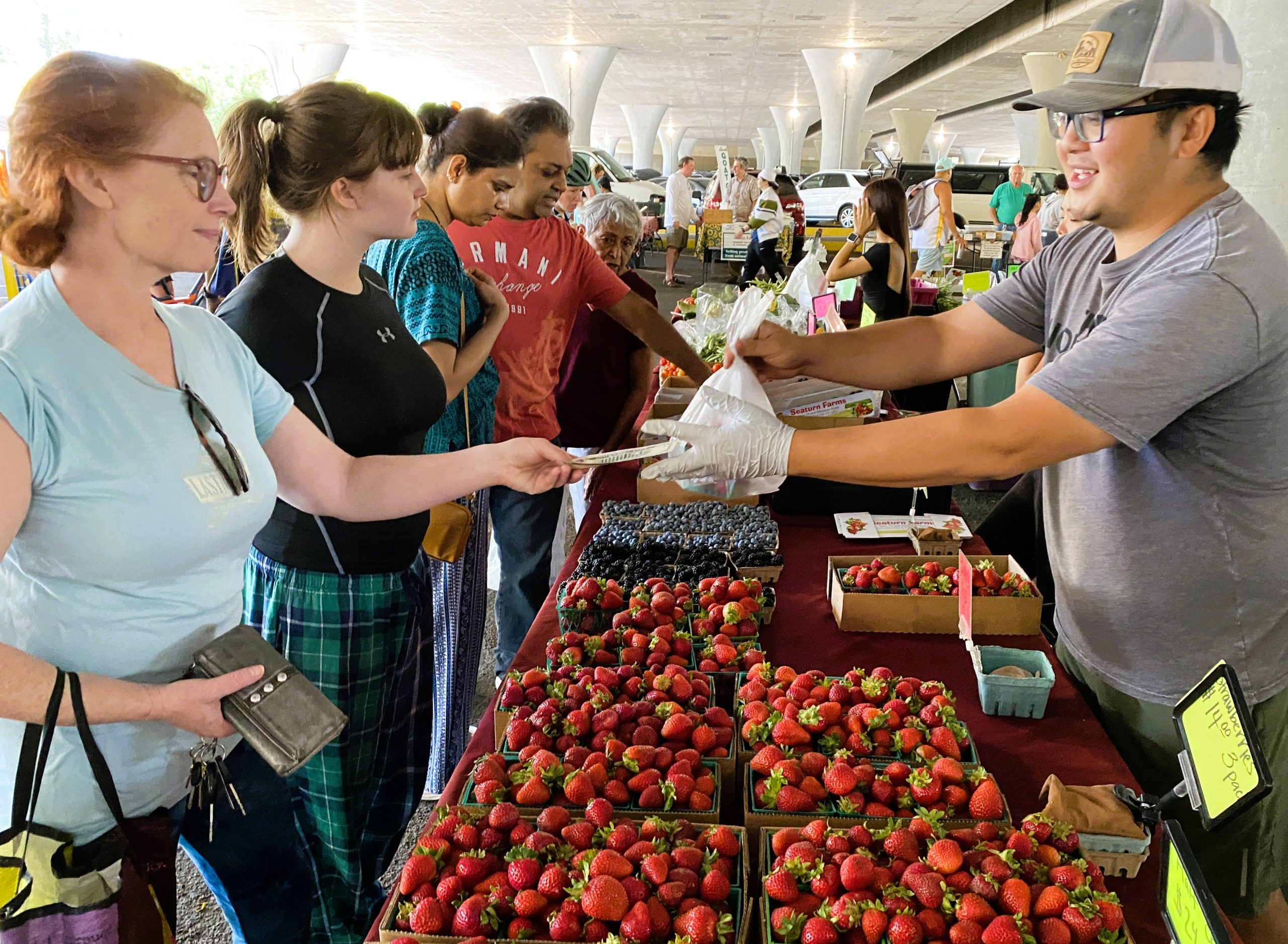
The state’s investments empower eligible Californians to increase their consumption of fresh fruits and vegetables. CalFresh shoppers can benefit from the program simply by spending their benefits at participating Certified Farmers Markets throughout the state and other retail outlets. For every dollar spent by eligible Californians, they will receive an additional dollar that can be spent on fruits and vegetables at the market or retail outlet, within set parameters, increasing their ability to purchase and consume healthy, California-grown fresh fruits and vegetables for themselves and their families. The projects will also support California’s vibrant farming communities selling at participating markets.
California’s investments help address food insecurity among low-income Californians while simultaneously supporting and expanding markets for California farmers. Past investments have been shown to have a positive effect on the local economy, with every dollar in incentives generating three dollars in local economic activity.
Incentivising Farm-to-Fork
California is distributing approximately $21.5 million to increase the purchase of California-grown fresh fruit and vegetables by CalFresh shoppers at 12 projects across the state. Current nutrition incentives support CalFresh shoppers at more than 280 locations throughout California.
Awards will allow grantees to sustain incentive distributions and benefit the farmers and shoppers participating in the program at 303 participating Certified Farmers’ Markets, Community Supported Agriculture programs, mobile markets and small retailers across California through spring 2027. The 12 grantees range in location, size and operations.
Across the state, the Office of Farm to Fork’s investments are connecting Californians to locally grown affordable food, while the Ecology Center works with over 50 organizations and operates at over 290 Certified Farmers’ Markets in 38 counties.
An additional 11 projects will receive $1,700,000 in total grant awards from the Special Supplemental Nutrition Program for Women, Infants and Children Farmers’ Market Nutrition Program (WIC FMNP) and the Senior Farmers’ Market Nutrition Program (SFMNP).
10 of the grantees will distribute nutrition incentives and provide technical support at 121 Certified Farmers’ Markets in the following 19 counties across California: San Diego, Riverside, Los Angeles, San Mateo, Santa Clara, Marin, San Francisco, Alameda, Contra Costa, Napa, Sonoma, Solano, Mendocino, Lake, Butte, Siskiyou, Humboldt, Lassen and Modoc. One grantee will focus solely on providing technical assistance for WIC FMNP and SFMNP nutrition incentives that utilize electronic FMNP Farmers’ Market Cards at nine certified farmers’ markets in the Bay Area. A detailed list of grantees and project descriptions for the 2026 CNIP Expansion Grant is available on the CNIP webpage.
CNIP is administered by CDFA’s Office of Farm to Fork, which leads CDFA’s food access work.
Building on California’s success fighting hunger with access to healthy food
- In 2025, more than 4 million California children received SUN Bucks food benefits via EBT cards, with each eligible child receiving $120 in food benefits.
- California was the first state to implement a statewide Universal Meals Program for schoolchildren, providing all public TK-12 students access to two free meals per school day, regardless of income. California’s Farm to School program, championed by First Partner Jennifer Siebel Newsom, works in tandem with Universal School Meals to ensure California students have access to two free school meals that are locally-sourced, delicious, and nutritious.
- In October 2025, Governor Newsom signed a landmark law phasing out the most concerning ultra-processed foods from school meals in California – protecting children’s health and setting higher nutrition standards across the state.
- Governor Newsom previously signed AB 418 (Asm. Gabriel, 2023) and AB 2316 (Gabriel, 2024), banning four potentially harmful chemical food additives from products sold statewide, including red dye 3 and brominated vegetable oil, which is often used as a stabilizer in citrus-flavored beverages, and prohibiting schools from serving and selling foods containing synthetic food dye additives associated with risks to health harms in children, including cancer, damage to the immune system, and neurobehavioral issues. The federal government and numerous states have taken similar actions following CA’s lead.
- In 2024, Governor Newsom signed a legislative package to increase enrollment in state food assistance programs, reduce youth consumption of processed foods, and increase access to healthy, locally grown food in all California communities.
- In 2023, California became the first state to codify President Biden’s new federal guidelines on school nutrition standards to reduce sugar and salt in school meals, and established a process for California to maintain those standards should a different federal Administration lower the standards.