



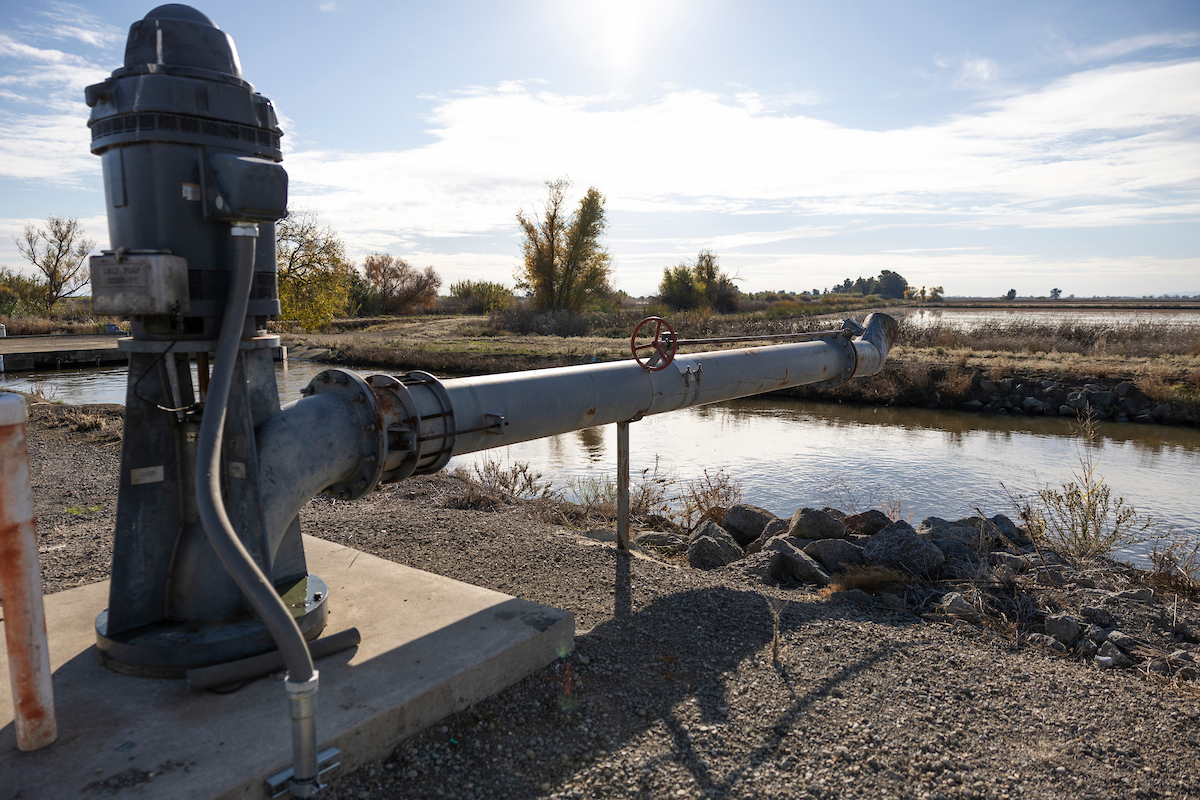
The Department of Water Resources (DWR) has released the final version of California’s Groundwater: Bulletin 118 – Update 2025, the State’s official and most comprehensive report of groundwater monitoring, conditions, and management across California.
The report builds upon the previous update in 2020 and contains critical information about the state’s groundwater supplies from 2020 to 2024, a period marked by record-setting dry and wet weather events and increasing ambient temperatures.
It shows considerable progress made by California and local agencies towards reaching the goals of groundwater sustainability outlined in the Sustainable Groundwater Management Act (SGMA). Among the successes noted in the report, California has seen improvements in groundwater recharge efforts, drinking well protection, and increased funding for tribal projects.
The publication also presents findings and recommendations that support the future management and protection of groundwater in alignment with the state’s key water initiatives including the California Water Plan, the Water Resilience Portfolio, and Water Supply Strategy.
Key findings from the report:
- California’s groundwater basins are the state’s largest and lowest cost water storage and a critical natural infrastructure asset, with storage capacity exceeding 1 billion acre feet, about 25 times all surface reservoirs combined. Sustainable yield in high and medium priority basins is about 12 million acre feet annually.
- Groundwater is central to California’s water resilience, supplying about 40 percent of statewide demand in average years and nearly 60 percent in dry years. The driest 22-year stretch in at least 1,200 years, including four major droughts (2001 to 2002, 2007 to 2009, 2012 to 2016, and 2020 to 2022), has increased both reliance on and stress to groundwater.
- From 2020 to 2022, California experienced its three driest consecutive years on record leading to reduced surface water supplies and increased reliance and stress on groundwater basins. As a result, hundreds of wells went dry across the state, and many groundwater basins are still recovering.
- More than 32 million Californians (about 82 percent) rely on groundwater for some portion of their water supply, including over 7 million people in non-basin areas where it is often the only source. Groundwater use is about 79 percent agriculture, 19 percent urban, and 2 percent managed wetlands.
- Management and data improvements are accelerating in the state’s highest use basins. The 94 high and medium priority basins account for about 95 percent of groundwater pumping. Groundwater Sustainability Plan (GSP) annual reports compiled by groundwater sustainability agencies (GSAs) now serve as the most comprehensive statewide groundwater data source.
- Groundwater levels show early signs of improvement, but significant challenges remain. From 2014 to 2024, 41 percent of monitored wells rose five feet or more, while about 20 percent declined by five feet or more. Despite these gains, land subsidence continues to be widespread and impactful, with about 4,000 square miles experiencing more than 0.5 feet of subsidence in the past five years.
- SGMA has spurred more than 1,500 local projects and management actions. Their estimated cost is in the billions, underscoring the scale of effort ahead and the importance of continued collaboration, improved measurement, and coordinated management across local, state, and federal partners to support long term sustainability.
For more, see the original announcement from DWR.