Planting Seeds - Food & Farming News from CDFA

CDFA welcomes the appointment of Carney King as Deputy Secretary of Legislative Affairs

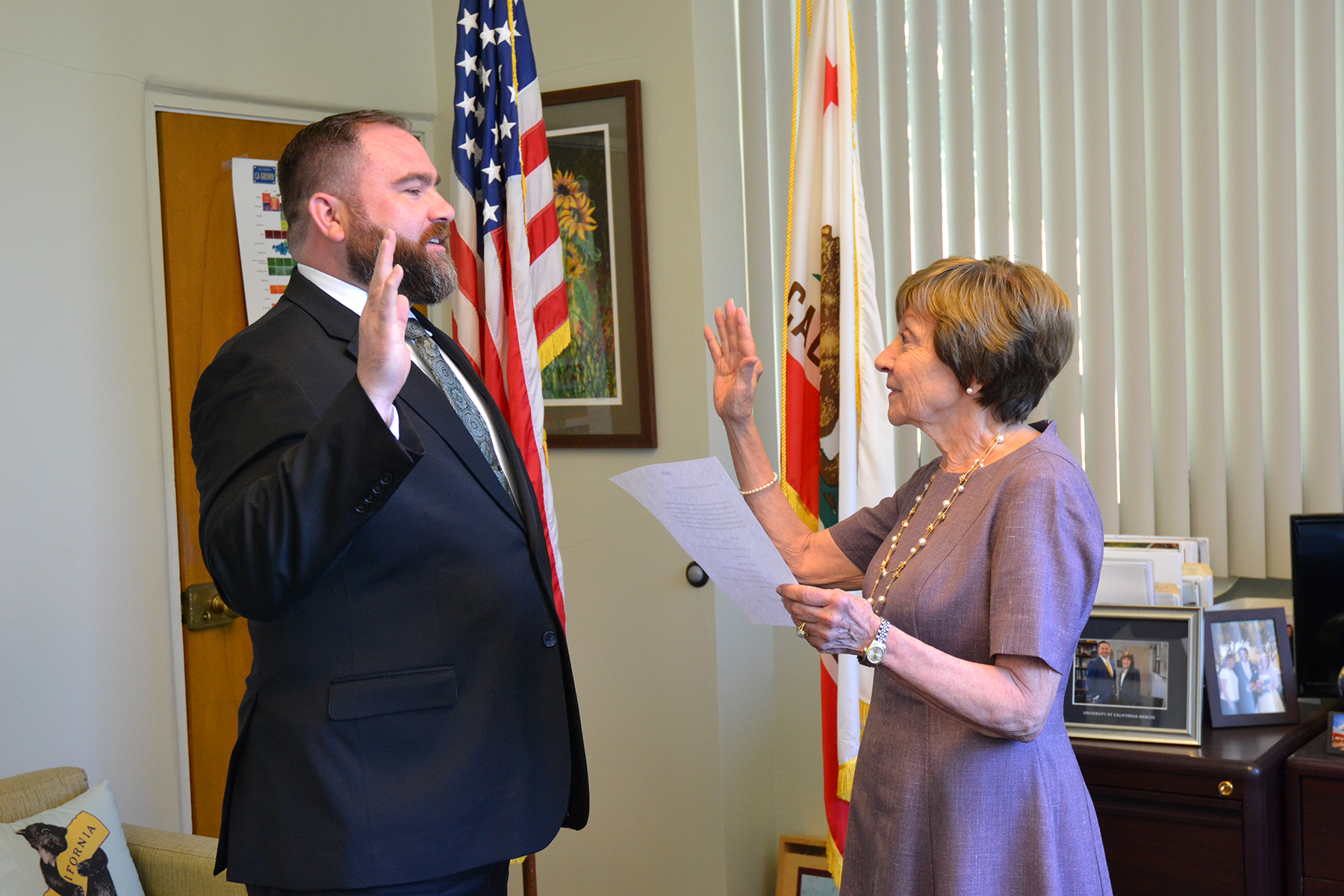
CDFA Secretary Karen Ross performs the swearing-in ceremony for the appointment of Carney King to the position of Deputy Secretary of Legislative Affairs.

Carney King has been appointed the Deputy Secretary of Legislative Affairs at the California Department of Food and Agriculture. King has been CDFA’s Legislative Manager since 2025, and came to the department after a distinguished career in the US Army and service in several legislative offices.

He was a Policy Consultant in the Office of Senator Richard Roth in the California State Senate from 2022 to 2025; a Legislative Aide in the Office of Senator Bill Dodd in the California State Senate in 2020; Site Lead for the Covid Testing Task Force in the California State Senate from 2020 to 2022; and a Senate Fellow in the Office of Mike Morrell in the California State Senate from 2018 to 2020.

He served as a CH-47F Flight Engineer in the United States Army from 2005 to 2011. King earned a Master of Public Administration Degree from the University of Southern California and a Bachelor of Science degree in Political Science from the University of Oregon.

Carney is an avid golfer who enjoys spending time with his wife and two kids. Congratulations, Carney!

Posted in Legislation | Tagged , , | Leave a comment

Farm to School benefits small farms like Old Grove Orange in Redlands

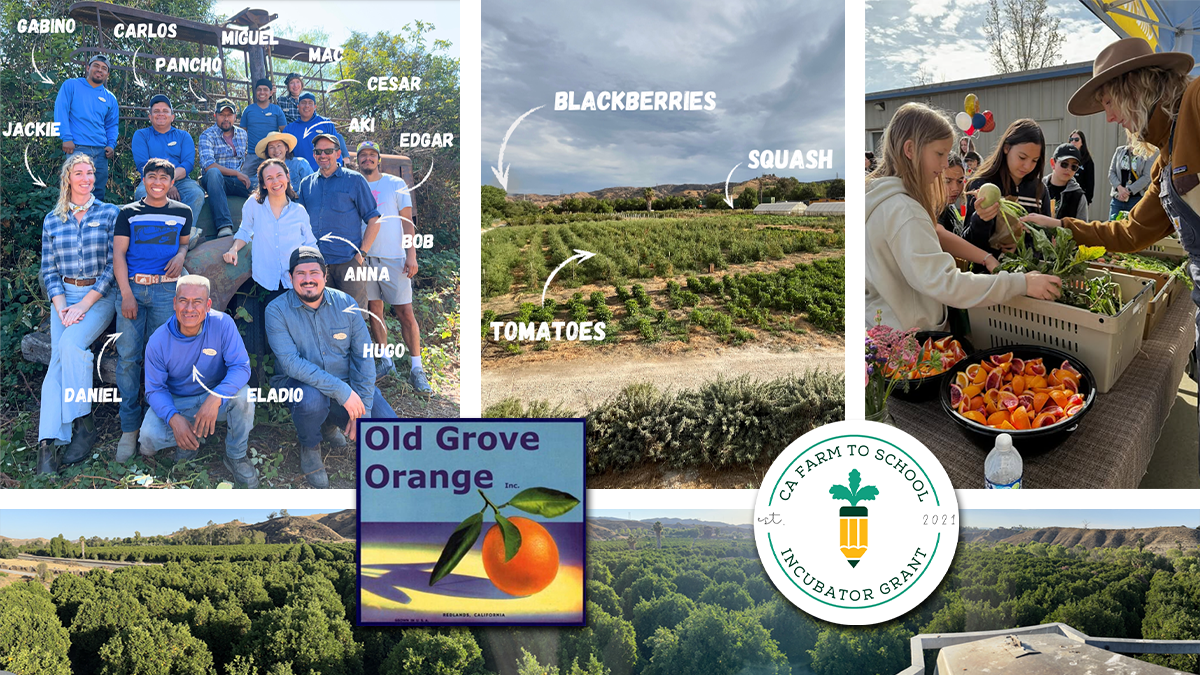
(L-R) Farm to school programs help sustain small farmers like the hardworking, passionate team pictured with Anna Knight, a fifth-generation farmer at Old Grove Orange in Redlands. For local school districts, Old Grove Orange grows a variety of seasonal produce, including those offered by farmer Jackie to students while hosting an Old Grove Orange Mini Farmers’ Market in the Corona-Norco Unified School District.

Farm to school programming provides the consistent demand needed to sustain local small farmers who take pride in benefitting student health and the local economy. 

“Small farmers need to adapt to survive!” said fifth-generation farmer Anna Knight of Old Grove Orange. “We’ve done everything from farmers’ markets to community supported agriculture, but for the last 20-plus years, 100% of the produce we grow has gone directly to local K-12 public school districts. We wouldn’t be here without the visionary nutrition services programs of Greater L.A., and these partnerships are how we keep farming forever!”

Old Grove Orange is a family farm stewarding 81 acres in Redlands, California. Over the last 21 years, Old Grove Orange and the 30 farm families contributing to its food hub have worked with 50+ school districts in the Greater Los Angeles area. Their thoughtful approach to farm to school provides students with experiential education programs that connect them to the land, the farmers and the products served in their school meals. 

As a three-time grant recipient of the CDFA Farm to School Incubator Grant Program, Old Grove Orange has increased its production of minimally processed seasonal vegetable products designed specifically for the school market. School districts can often find it challenging to cook whole vegetables due to staff or equipment capacity; therefore, Old Grove Orange’s pre-cut, portioned and packaged produce allows for an easier adoption of local products into school meals.

Click here to learn more about Old Grove Orange.

Posted in Agricultural Education, CDFA Inspection Services, Community-based Food System, Environment, Farm to School, Food Access | Tagged | Leave a comment

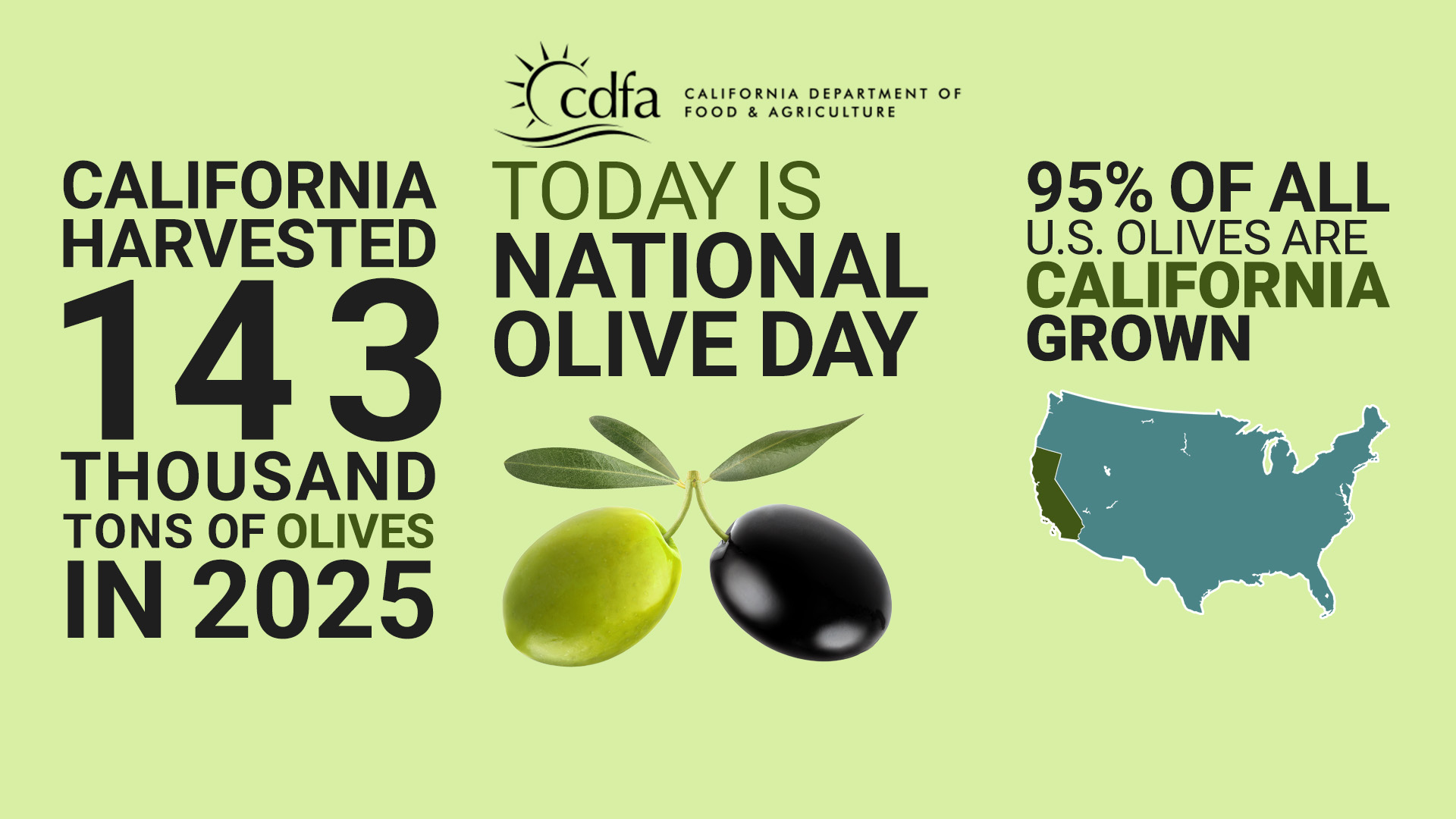
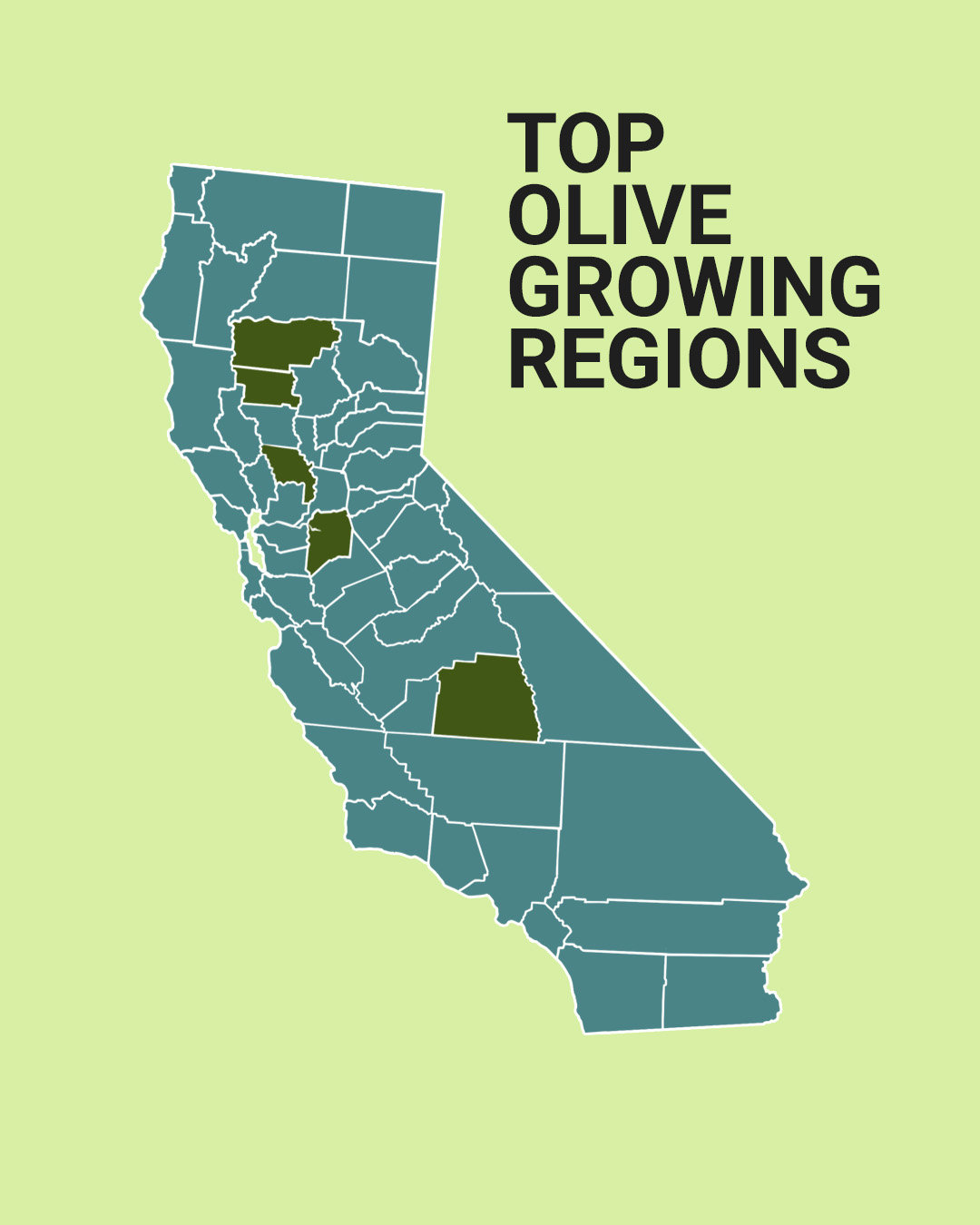
Happy National Olive Day – June 1! 🫒🌞🌿

Thank you for the collaboration: USDA National Agricultural Statistics Service and Jerry James Stone.

Today, we celebrate one of California’s iconic crops and the people who make it possible. California leads the nation in olive production, thanks to its favorable climate, fertile growing regions, and the hard work of dedicated growers and farmworkers.

A special recognition goes to olive growers, farmworkers, processors, olive oil producers, packers, distributors, retailers, and everyone throughout the olive supply chain who helps bring high-quality California-grown olives to tables across the country.

Whether enjoyed as a snack, added to favorite recipes, or transformed into premium olive oil, California olives are a testament to the skill, dedication, and passion of the people behind them.

Thank you for helping California continue to produce some of the finest olives and olive oil in the world.

Resources:
Olive Oil Commission of California
CDFA Farmer Resources
California Grown

Posted in Uncategorized | Leave a comment

USDA Announces Enrollment Period and Payment Rates for Specialty Crop Farmers

The U.S. Department of Agriculture (USDA) has announced payment rates and the enrollment period for the Assistance for Specialty Crops Farmers (ASCF) program. USDA will issue $1.625 billion in payments to eligible specialty crop producers in response to elevated input costs and market disruptions resulting from foreign competitors engaging in unfair trade practices that impeded specialty crop exports.

Producers who have a Login.gov account can access and submit their pre-filled application starting today, June 1, 2026. Producers who do not have a Login.gov account or prefer to enroll in person at their local Farm Service Agency (FSA) office can request their prefilled application beginning June 8, 2026. The ASCF enrollment period closes on Aug. 7, 2026.

These payments are authorized under the Commodity Credit Corporation Charter Act and are administered by the Farm Service Agency (FSA). Specialty crop payments are intended to provide financial support to allow producers to pay for production and marketing inputs in the face of significant market disruptions during the 2025 growing season.

How to Apply

Pre-filled applications will be available online to producers with a Login.gov account who timely filed their 2025 crop acreage report for eligible specialty crops. Starting on June 1, 2026, producers who have a Login.gov account can access and submit their pre-filled application from fsa.usda.gov/ascf. Beginning June 8, 2026, producers can request their pre-filled ASCF application from their FSA county office.

The deadline to submit completed ASCF applications is Aug. 7, 2026. Producers can complete their applications online or submit them to their FSA county office.

Payments will be issued as applications are submitted and approved, beginning as early as the first week of signup.

Login.gov

Login.gov is the public’s one account for government. Producers can use one account and password for secure, private access to participating government agencies, including FSA.

To apply for ASCF online, producers can start by visiting fsa.usda.gov/ascf to create their Login.gov account. Producers who have an existing Login.gov account can work with FSA using their existing account.

With a secure Login.gov account, producers can be amongst the first to apply for ASCF, allowing them to view, complete, certify, and submit their application as well as track their application and payment status.

For assistance creating a Login.gov account, visit login.gov/help.

Eligibility

Specialty crop acres of eligible crops reported to FSA as an initial, double crop, repeat crop, or subsequent crop by April 24, 2026, will be used to determine ASCF program payments. Acreage that is reported as a cover crop, prevented planted, or with an intended use of grazing, left standing, green manure, silage, forage, volunteer, or experimental will not be used to determine ASCF program payments.

For a list of eligible specialty crops visit fsa.usda.gov/ascf. Specialty crops grown in a controlled environment are not eligible, except for mushrooms.

Crop insurance linkage is not required; however, USDA strongly urges producers to take advantage of the new risk management tools provided in the Working Families Tax Cuts Act, also known as the One Big Beautiful Bill Act, to best protect against future price risk and volatility.

Payment Calculations and more information on ASCF are available online at fsa.usda.gov/ascf. Producers can also contact their local FSA county office.


Posted in Specialty Crops | Tagged , | Leave a comment

CDFA Celebrates International Day of Biological Diversity 2026

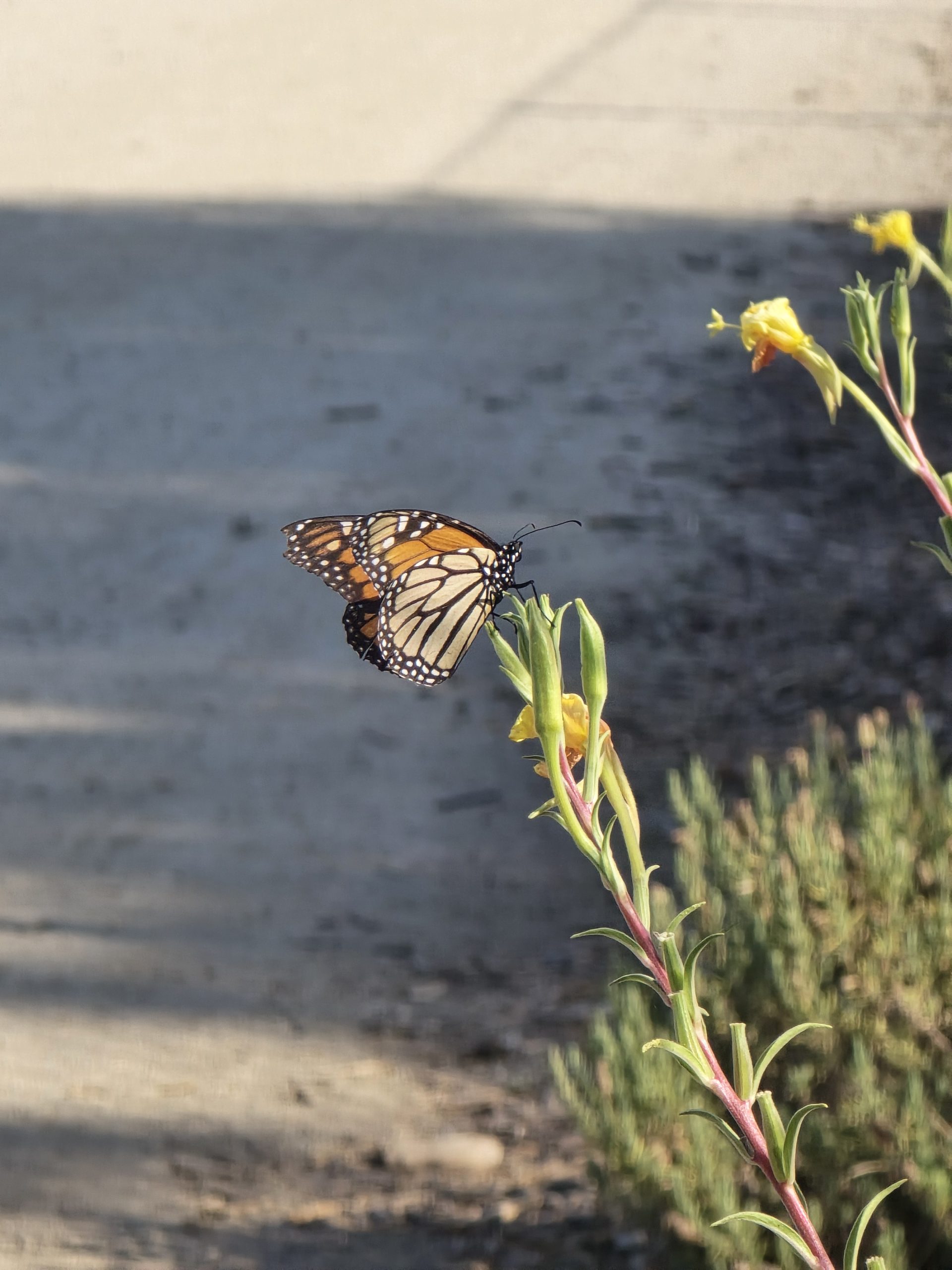
Photo Credit: State of California Department of Fish and Wildlife

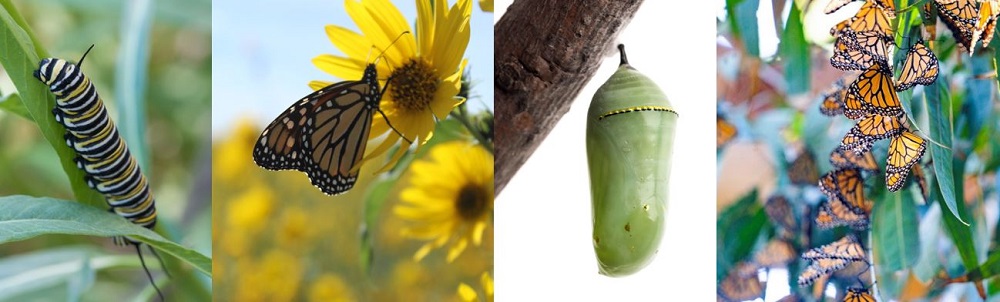
As we recognize the International Day for Biological Diversity, we’d like to highlight how our Office of Agricultural Resilience and Sustainability is supporting monarch butterflies and other pollinators through its Pollinator Habitat Program and its participation in the California Multi-Agency Monarch and Pollinator collaborative, which recently released a new report outlining priority actions to support western monarch butterfly recovery and pollinator conservation.

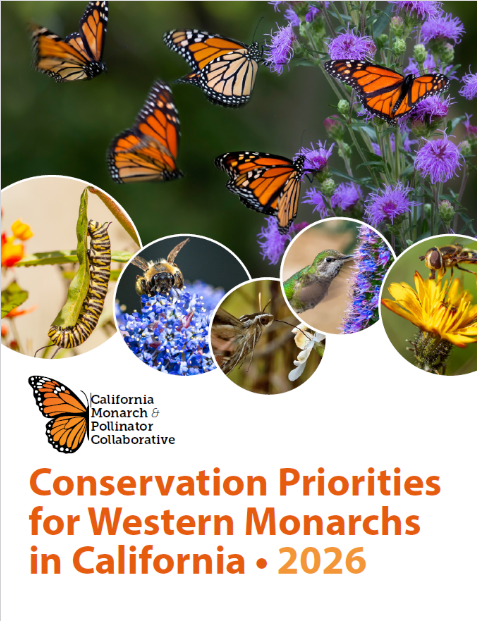
Big news for monarch butterflies! The California Multi-Agency Monarch and Pollinator Collaborative (Collaborative) published “Conservation Priorities for Western Monarchs” on May 6, 2026, the results of a years-long process to identify conservation actions and research needs for the western monarch butterfly. The Collaborative is a working group comprised of 13 state and federal partner agencies including CDFA. It was created to inform and promote integrated science, natural resource management, and policy that can increase the pace and scale of monarch and pollinator conservation throughout California. The report marks a significant effort to address threats to the monarch butterfly, whose population has declined significantly in recent years.

The report covers the year-long analysis of the Western Association of Fish and Wildlife Agencies Western Monarch Butterfly Conservation Plan (2019—2069) and recommendations from the 2022 Western Monarch Butterfly Conservation Summit in Washington DC to identify relevant actions, pinpoint gaps, and prioritize efforts based on agency capacity and species need.

“This report lays out a roadmap for addressing some of the key challenges for monarchs and other pollinators that we depend on to support our ecosystems and food supply. It is important to see how agriculture can be part of the solution,” Secretary Karen Ross.

The recommended actions were sorted into six focal areas: Habitat, Research, Monitoring, Outreach and Education, Funding, and Collaboration. Collectively, the actions in this report provide a strategic roadmap for the Collaborative to catalyze effective and coordinated conservation action. By focusing on shared priorities, addressing critical gaps, and committing to ongoing evaluation and adaptation, the Collaborative aims to significantly contribute to the recovery of monarch butterflies and the broader health of California’s vital pollinator populations.

The report identifies five top-priority actions for the next three years:

  1. Develop common monarch habitat definitions for the west
  2. Track implementation and success of habitat projects
  3. Centralize existing pollinator resources
  4. Increase native plant availability for restoration projects
  5. Develop a demographic model to identify vulnerabilities in the western monarch life cycle

CDFA’s Pollinator Habitat Program is highlighted as a case study in the report. It falls under the Habitat and Funding categories and helps to increase monarch and pollinator habitat on agricultural land. CDFA’s Biologically Integrated Farming Systems Program is also included in the report. These programs are part of what CDFA is currently doing to help bolster pollinator populations.

Posted in Uncategorized | Leave a comment

Center for Analytical Chemistry staff gain better appreciation of lab work through sampling ride-along

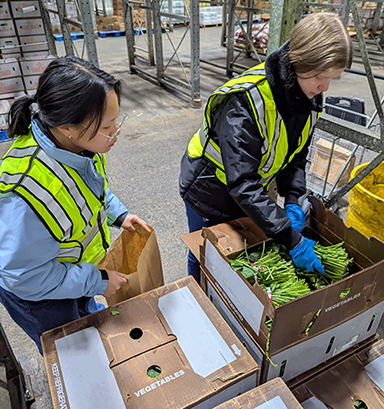
(L-R) CAC’s Sam Hartanto lends a hand to DPR Envi­ronmental Scientist Emily Edgerton as they sample a lot of spinach in a supermarket distribution center.

CDFA Center for Analytical Chemistry (CAC) Food Safety Laboratories provide analytical services to the Department of Pesticide Regulation (DPR) through analyzing various samples DPR staff take from the field.

To observe firsthand the sampling techniques utilized by DPR, Food Safety Laboratory team members recently rode along with the DPR Enforcement Branch while they collected samples for DPR’s Food Residue Monitoring program. Together, they visited various sites including distribution centers, terminal mar­kets and grocery stores.

These ride-along events provide a great opportunity for CAC chemists to connect field sampling to the analysis performed in the laborato­ry and further strengthen the collaborative relation­ship between CAC and DPR.

“My ride-along experience was a perfect comple­ment to the laboratory training that I’ve received since starting at CAC,” said new Environmental Scientist Sam Hartanto. “I walked away with a new understanding of how samples arrive at the lab and a strong appreciation for the work that the DPR samplers do.”

Posted in CDFA Inspection Services, Center for Analytical Chemistry | Tagged , , | Leave a comment

Secretary Karen Ross Celebrated as Anti-Hunger Champion at 2026 Food ACCESS Conference

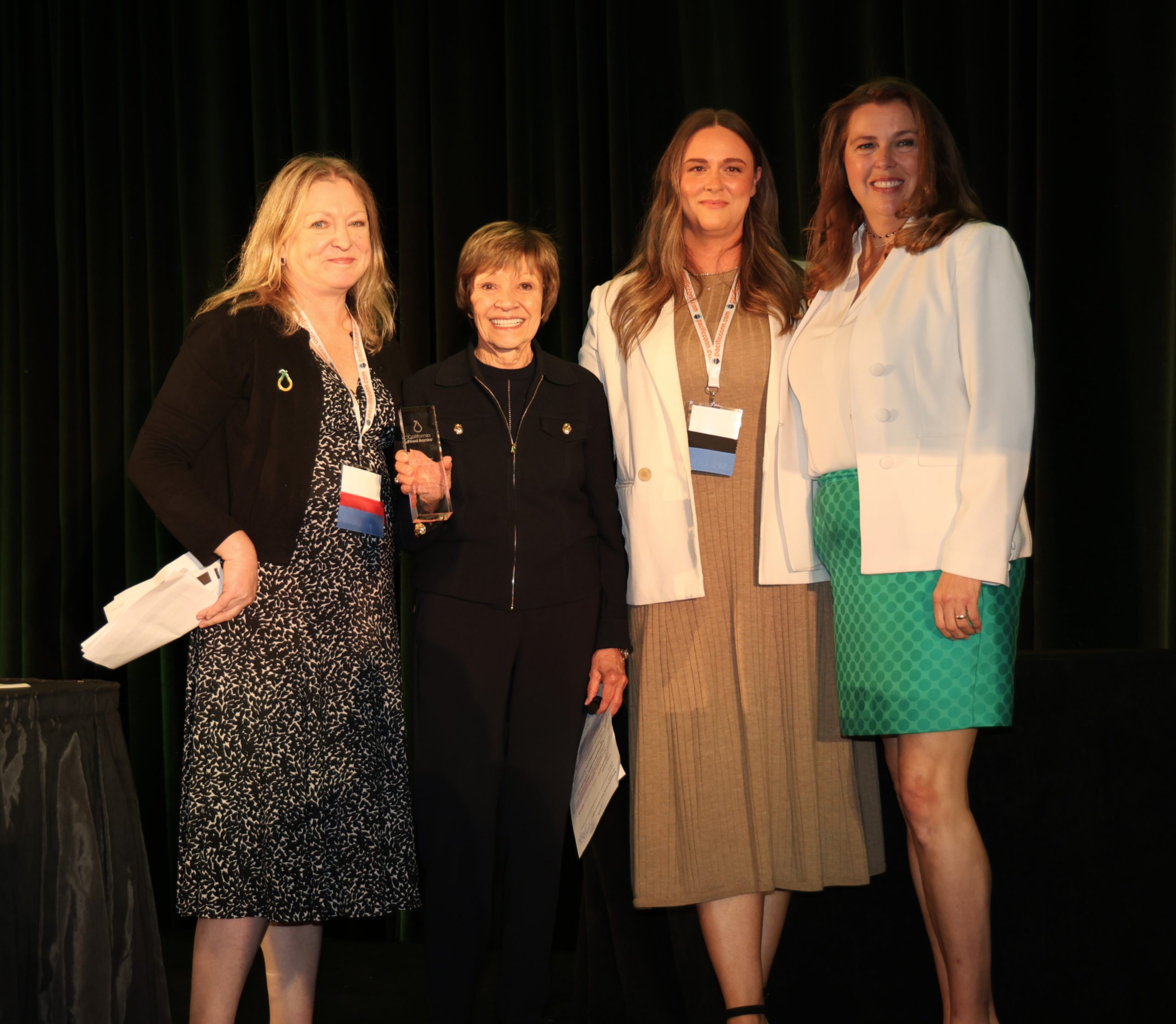
Secretary Karen Ross (pictured, center) is recognized by the California Association of Food Banks as a 2026 Anti-Hunger Champion – Administrator Award.

California Department of Food and Agriculture Secretary Karen Ross was recognized today by the California Association of Food Banks as a 2026 Anti-Hunger Champion during the organization’s Food ACCESS Conference luncheon in Sacramento.

Secretary Ross received the Anti-Hunger Champion Award — Administrator Award at the 2026 Food ACCESS Conference, honoring her leadership and ongoing commitment to improving food access and supporting Californians experiencing food insecurity.

Hosted biennially by the California Association of Food Banks, Food ACCESS brings together advocates, food bankers, policymakers, philanthropists, and community leaders from across California and the nation to address the hunger epidemic and advance solutions for a hunger-free California.

This year’s conference, held May 18–19 at the Hyatt Regency Sacramento, features interactive workshops, discussion groups, plenary sessions, networking opportunities, and Capitol Action Day activities focused on expanding food access and addressing the root causes of hunger.

In her remarks, Secretary Ross emphasized the importance of continued collaboration among state agencies, food banks, farmers, and community partners to ensure all Californians have access to nutritious food. Secretary Ross also reflected on longstanding partnerships between California agriculture and food banks, highlighting efforts to “turn excess into access” by connecting surplus healthy food with Californians in need. She also emphasized continued investments in resilient local food systems, farm-to-family programs, and community food infrastructure across the state.

Video:

Watch the remarks by Secretary Ross

Posted in Uncategorized | Leave a comment

Artichokes: All About California’s Official State Vegetable

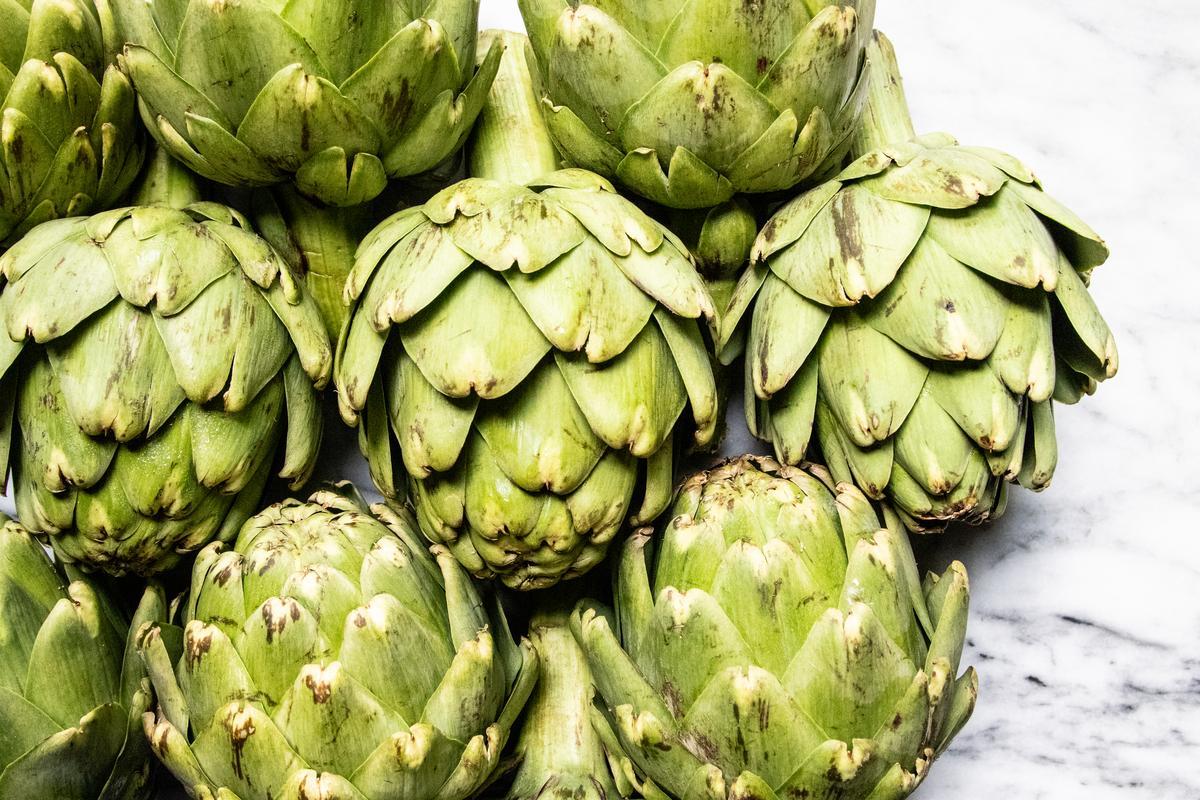
Fresh California artichokes from Pezzini Farms.

Courtesy of CA GROWN

Artichokes have been grown in California since the late 1880s, but they didn’t always have their modern-day it-girl status. Initially, most of America’s artichokes were imported from France, until World War I disrupted that supply line. California growers banded together to form the Artichoke Growers Association (now the California Artichoke Advisory Board), consolidated packing and transportation, and used refrigerated railway cars to ship CA GROWN artichokes to the East Coast where Italian immigrants were willing to pay a premium. While that was a brilliant short-term business decision, a nationwide marketing campaign focused on teaching consumers how to prepare and serve artichokes was what truly cemented their popularity. And the rest as they say, is history.

Over 100 years later, we think it’s time for a refresher. Let’s take a look at how artichokes are grown in the Golden State – and learn to prep and cook California’s official state vegetable!

Where are artichokes grown?

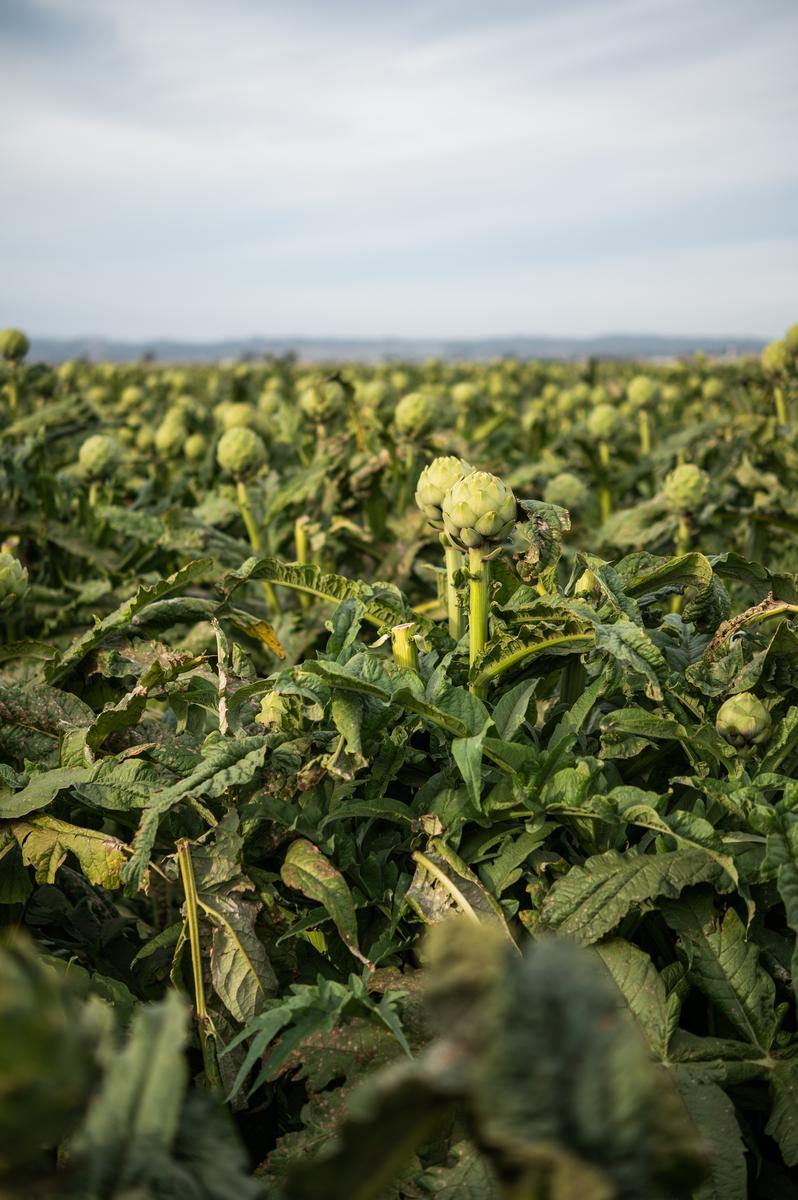
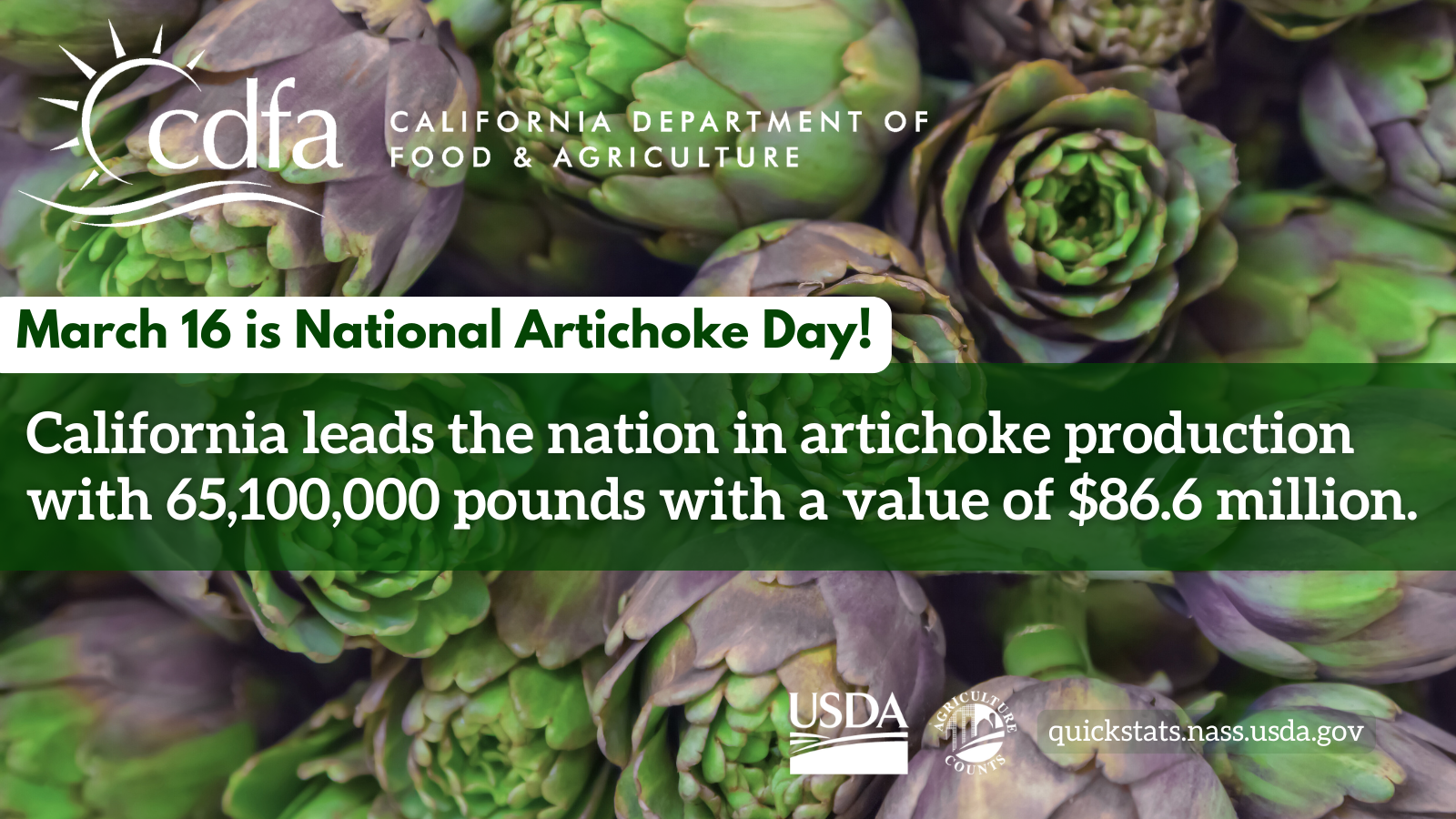
Today, California leads the nation in artichoke production – providing virtually all of the domestic supply. Almost 70% of those artichokes are grown in the small Central Coast town of Castroville, the self-proclaimed (but undisputed) Artichoke Capital of the World. 

BOX: It’s no secret that California leads the nation in agricultural production – supplying over half of the nation’s fresh produce and over two-thirds of all fruits and nuts – but did you know that many of those crops are grown only in California? Learn more

Artichokes: Fruit, vegetable or…flower? 

Artichokes are California’s official state vegetable – and while that’s technically the prevailing classification, the part of the plant that you eat is actually an immature thistle flower. Artichoke plants can be annuals or perennials. Annual artichoke plants are replanted every year, whereas perennial artichoke plants, like those at Pezzini Farms, can remain productive for over 100 years! 

How are artichokes harvested?

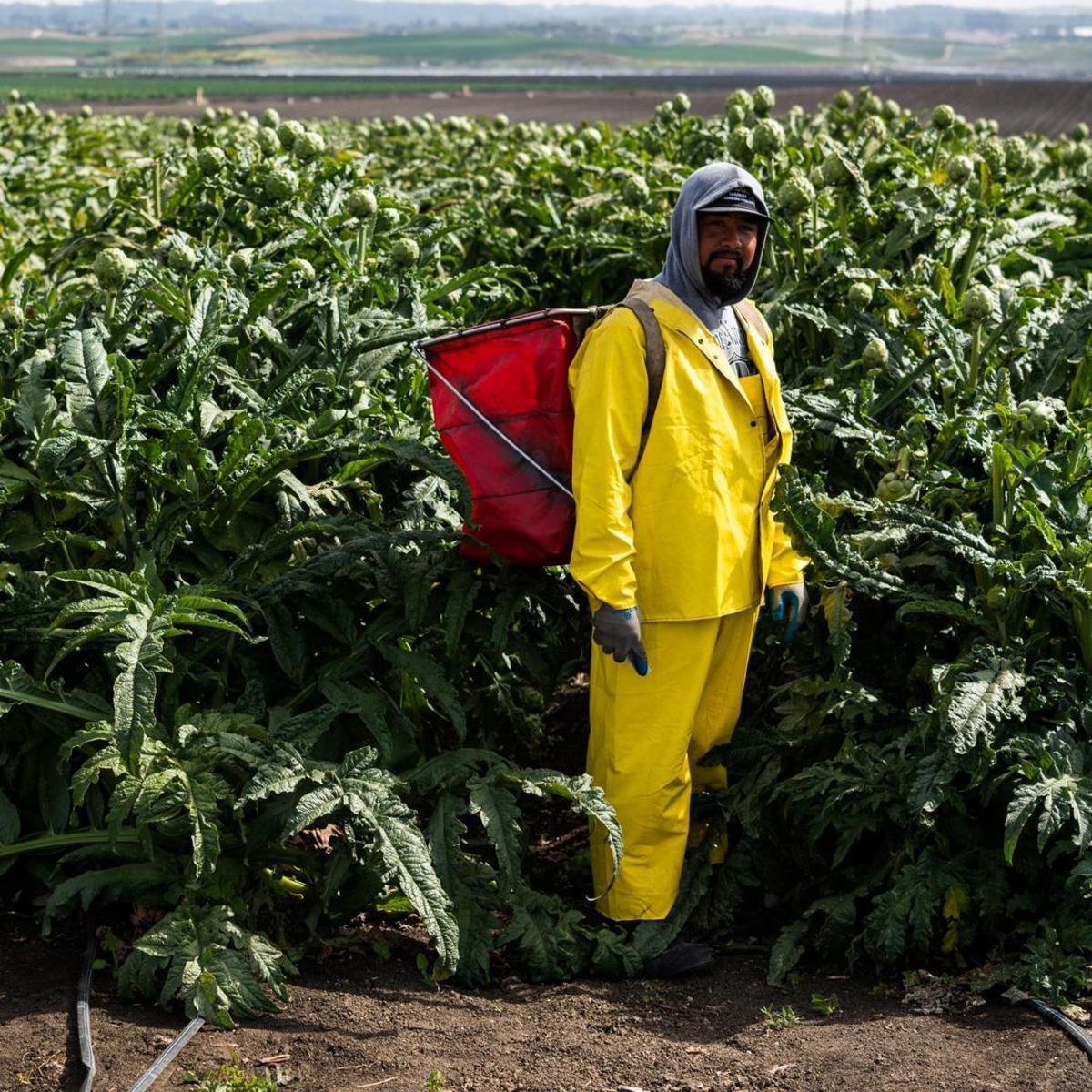
Artichoke harvest is not for the weak…literally! The harvest team walks down each row, using a special knife to carefully (but quickly) slice ripe artichokes from the plant. The harvested artichokes are stored in a backpack and collected at the end of the row, where they are sorted and field packed. If you’re thinking that doesn’t sound too challenging, keep this in mind: the harvest backpack (called a canasta) can weigh 80-100 pounds by the end of each row! 

BOX: Each artichoke plant can be harvested seven to ten times over the course of two or three months!

Green and purple artichokes production in Ocean Mist, Castroville (Monterey County), California

When are artichokes in season? 

Artichokes are always in season in the Golden State. Fresh artichokes are at their peak from March through May. A second, smaller harvest takes place in October. To enjoy artichokes year-round, simply fill in the gaps with canned, jarred and frozen artichokes – all of which should be readily available at well-stocked grocers. 

Ocean Mist Farms, Castroville, California (Monterey County)

How to prep and cook an artichoke

Don’t be intimidated by artichokes! Sure, artichokes require a bit of prep, but once you know what to do, it’s super simple (and so worth it).

How to prep an artichoke

What you’ll need: Cutting board, scissors (optional), small paring knife, large chef-style knife

  1. Use kitchen scissors or a small paring knife to trim the tips of the tougher outer leaves and any thorns.
  2. Using a larger knife, shorten the artichoke stem to about an inch in length. (You can stop here if you are steaming or boiling the artichoke, do the next steps if you are grilling or roasting)
  3. With the same large knife, cut the artichoke in half lengthwise.
  4. Using the small paring knife, carefully cut out the fuzzy choke from the center of the artichoke. 

How to cook an artichoke

Once you’ve prepped your artichoke, the options are limitless. Artichokes are delicious steamed, grilled, roasted – even microwaved! Check out these links to master a few basic techniques. 

How to Roast an Artichoke

How to Grill an Artichoke

How to Steam an Artichoke

The best artichoke recipes

Ready for a few restaurant-worthy dishes that are sure to wow any crowd? Check out these incredible artichoke recipes!

Bruschetta Stuffed Artichokes

Spinach and Baby Artichoke Bread Pudding

California-Style Stuffed Artichoke

Paella with Artichoke Hearts and Seasonal Vegetables from This Mess is Ours

Zesty Artichoke Pasta Salad with Goat Cheese from A Table Defloured

Lemon Artichoke Chicken from Salt and Wind

Article by Hilary Rance and photography by James Collier for CA GROWN.

Resource:

Posted in Agricultural Marketing | Tagged , , , , | Leave a comment

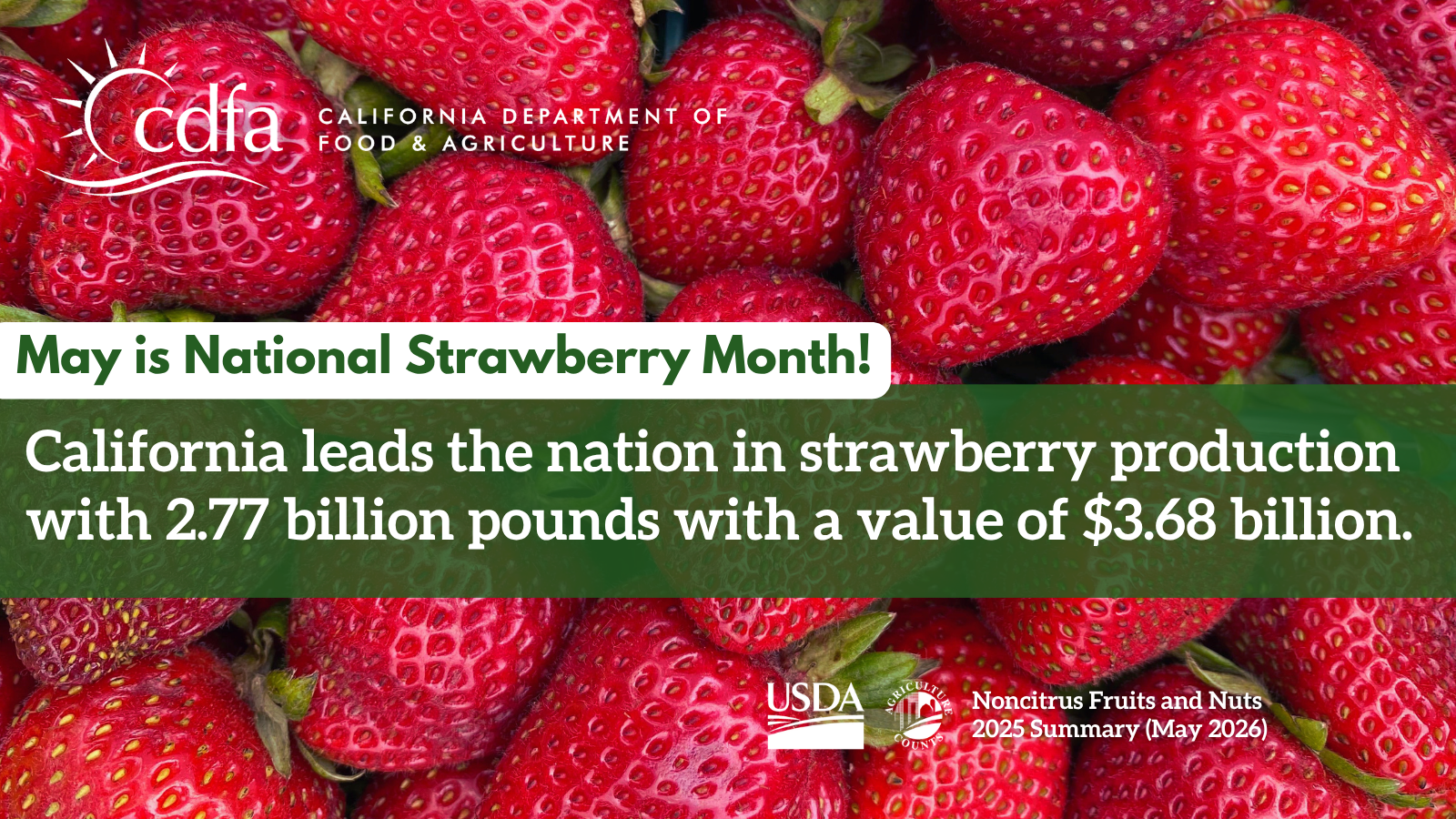
🍓 May is National Strawberry Month!

California leads the nation in strawberry production, harvesting 2.77 billion pounds valued at $3.68 billion. From coastal fields to tables across the United States, California strawberries are delicious and nutritious! Join us in celebrating the growers, farmworkers, and communities behind one of our state’s sweetest crops!

Resources:

Where are California strawberries grown? (California Strawberry Commission)

How Strawberries are Grown at Dirty Girl Produce (California Grown)

Video: Meet Mayra, a Santa Maria strawberry farmer. Watch her story:

Video: Smart Irrigation – California strawberry farmers set an excellent example

Posted in Uncategorized | Leave a comment

Secretary Ross discusses importance of fruit and vegetable inspections at national conference in San Diego

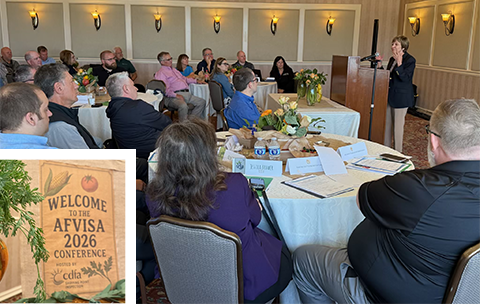
CDFA Secretary Karen Ross addresses inspectors from across the country at the 2026 Association of Fruits & Vegetables Inspection & Standardization Agencies Conference on May 13.

CDFA Secretary Karen Ross spoke to attendees of the 2026 Association of Fruits & Vegetables Inspection & Standardization Agencies (AFVISA) Conference on Wednesday, May 13. The association includes inspectors from throughout the country and Secretary Ross thanked them for working to maintain quality standards and specifications in produce brought to market to maintain the integrity consumers expect.

Secretary Ross also celebrated the work of CDFA inspectors and laboratory staff in the Inspection Services Division by mentioning some figures from last year, including:

Posted in CDFA Inspection Services, Food Safety | Tagged , , , | Leave a comment