


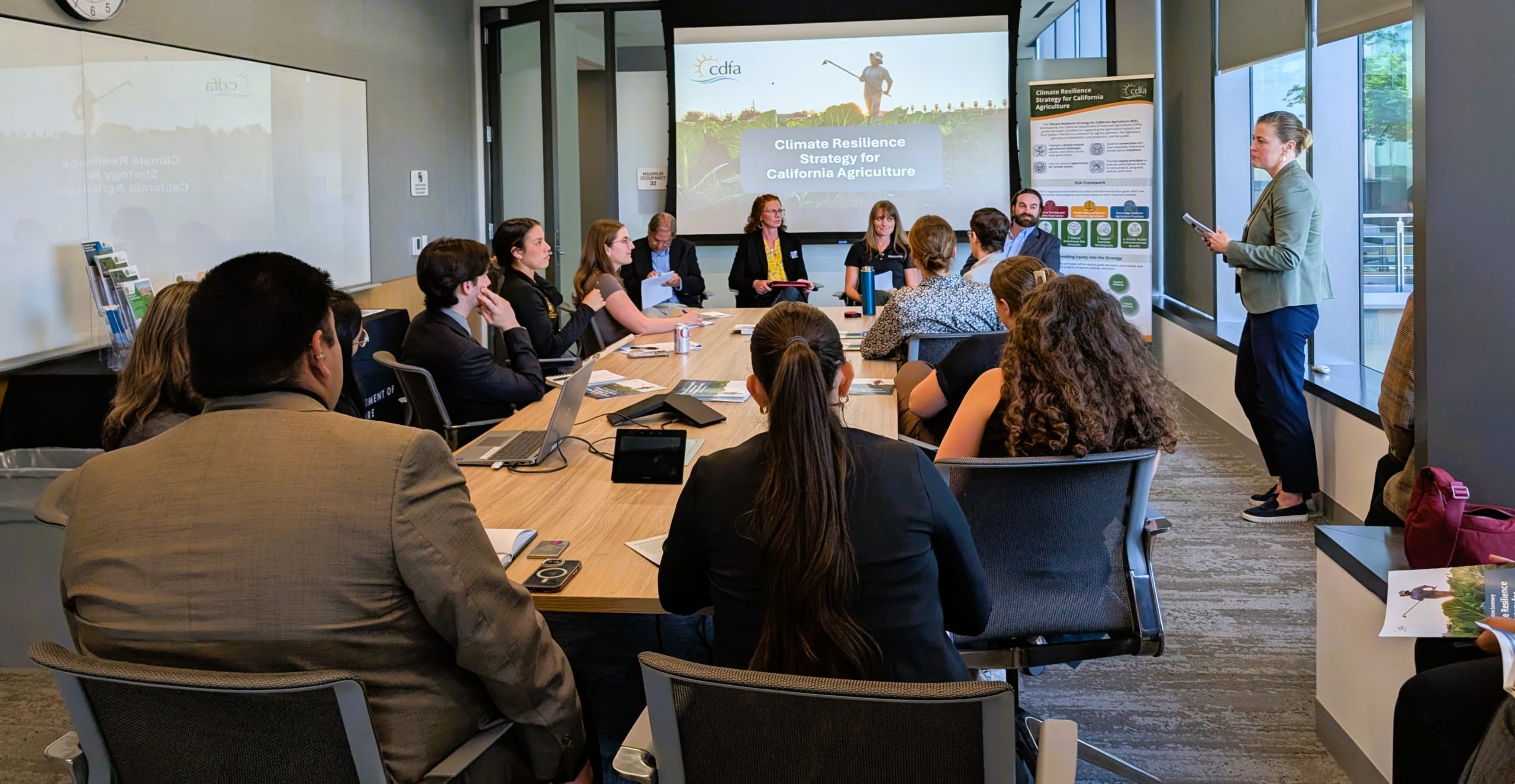
California agriculture plays a substantial role in California’s climate adaptation efforts, with producers, researchers, and policymakers working together to build a more sustainable and resilient future. On April 30, California Department of Food and Agriculture Deputy Secretary for Climate and Working Lands Virginia Jameson led a legislative briefing to present the recently published Climate Resilience Strategy for California Agriculture (RSA).
The presentation began with an overview of the new Climate Resilience Strategy for California Agriculture and was followed by a panel discussion featuring producers and technical assistance providers with firsthand implementation experience.
Panelists included Chris Kelley, Ritta Martin, Randi Black, and Tyler Donnelley. The discussion focused on the impacts of climate change and efforts to build climate resilience through climate-smart agricultural practices.
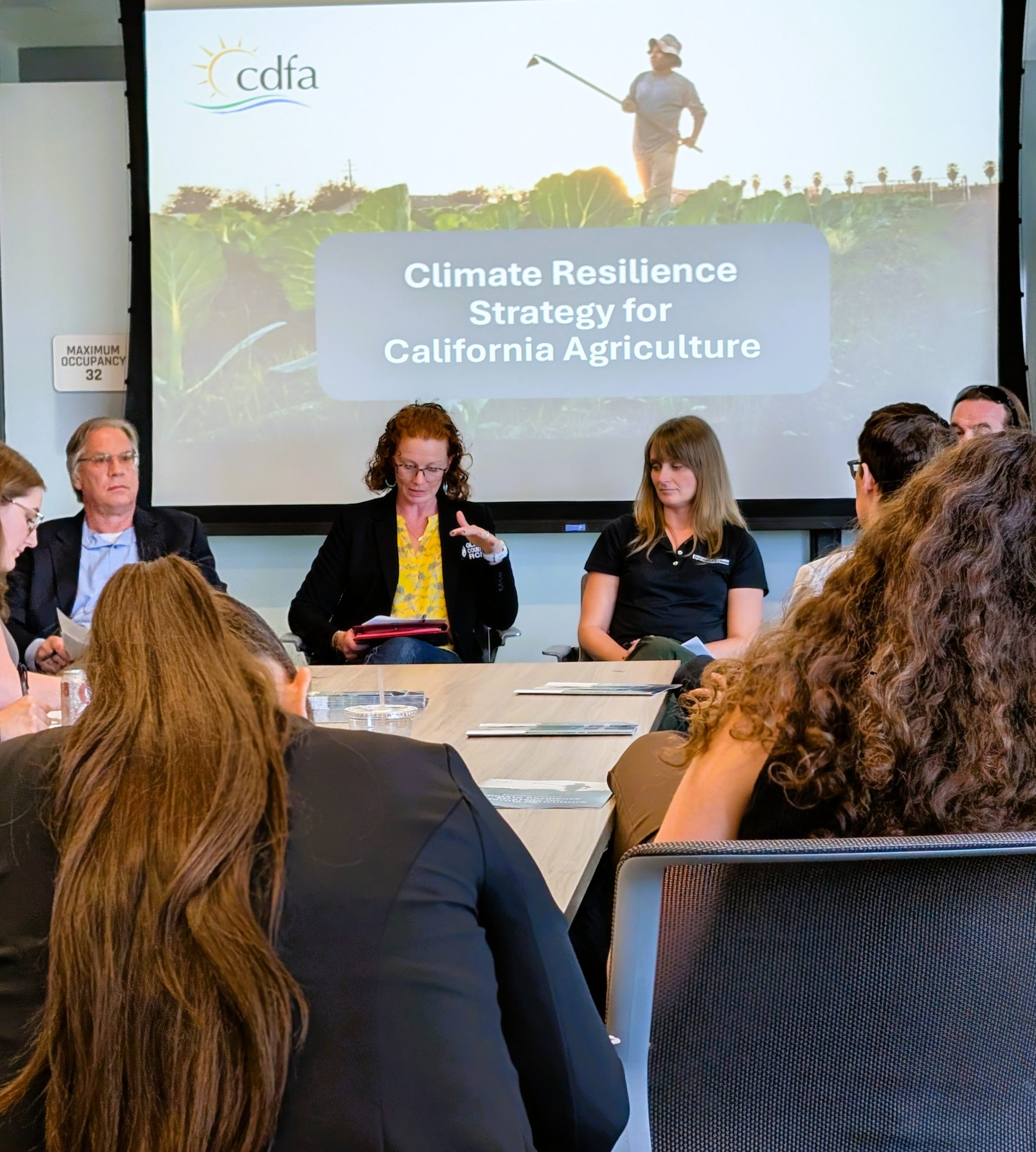
The legislative briefing began with an overview of the RSA by Deputy Secretary Jameson and was followed by an excellent group of panelists, Chris Kelley, Ritta Martin, Randi Black, and Tyler Donnelley, who have firsthand experience dealing with the impacts of climate change and are working to build climate resilience.
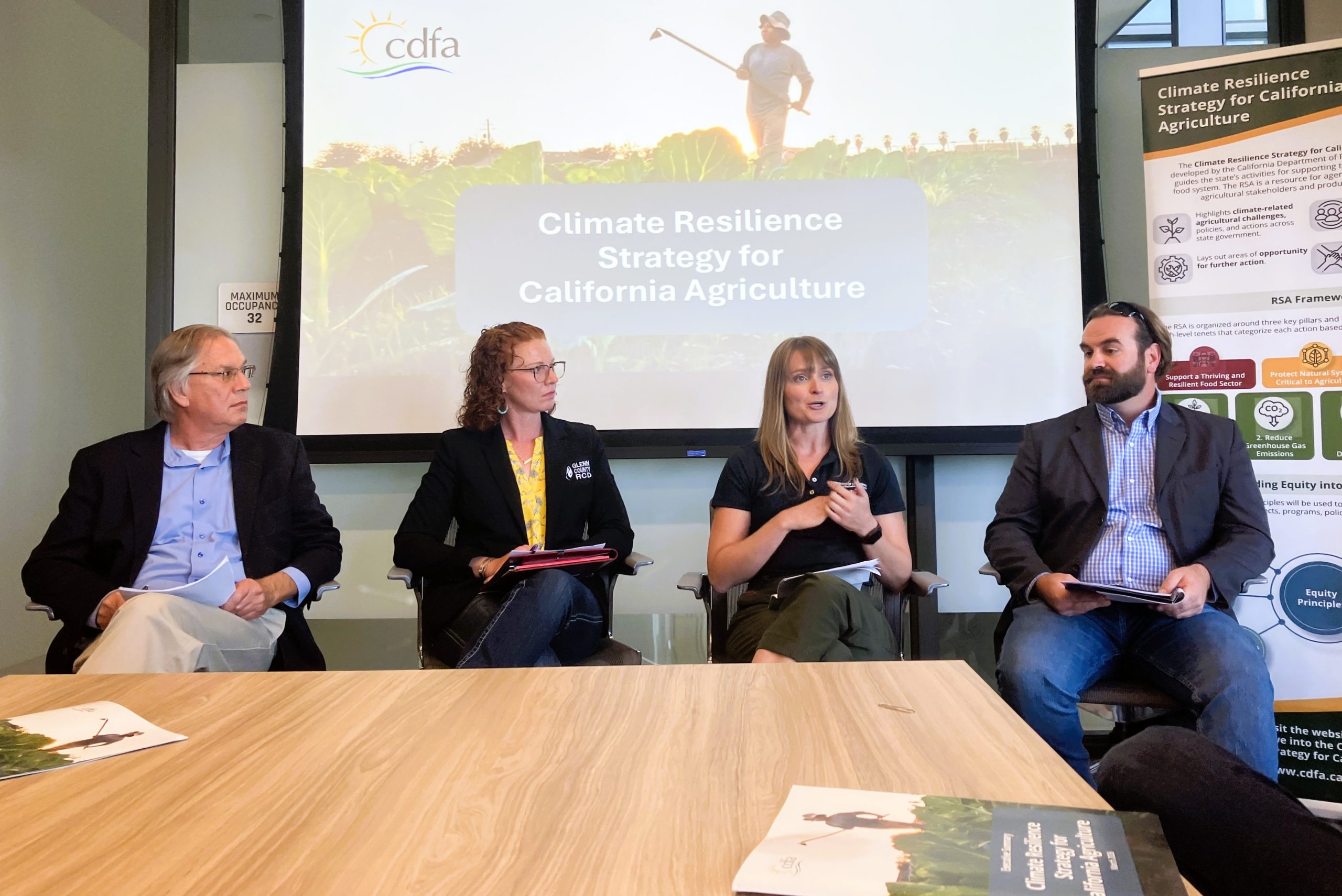
Additionally, Black explains the limitations placed by lack of funding to transition further into climate-smart agriculture and explains the possible opportunities if the funding was met. With the RSA “waste” materials such as manure, compostables, and byproducts can be used to create value and strengthen farm operations.

The panelists provided valuable insight on the importance of climate-smart agriculture in addressing environmental efforts through discussions of climate change mitigation impacts, community strengthening, and results of implementing climate-smart agriculture.
Resources:
News Release: California launches new strategy to protect the agriculture and food sectors from climate change
Webpage: Climate Resilience Strategy for California Agriculture
Document: Climate Resilience Strategy for California Agriculture