National Honey Bee Day is celebrated on the third Saturday of August. This year the holiday falls on Saturday, August 15.
Ahead of National Honey Bee Day on August 15, we’re celebrating the honey bees and beekeepers that play an important role in California agriculture. Honey bees do more than produce honey. Through pollination, they contribute to the production of crops that are an important part of California’s agricultural economy. As National Honey Bee Day approaches, we’re celebrating the honey bees, beekeepers and California agriculture that make it all possible.
“Bees and other pollinators are an essential part of California agriculture, supporting the crops we grow and the food we enjoy. Protecting pollinators also reminds us of the important role nature plays in supporting healthy and resilient farms and communities. By embracing nature-based solutions, including creating habitat and forage on working lands, we can support pollinators while strengthening the health and sustainability of California agriculture,” said Secretary Karen Ross.
770,000 honey bee colonies were in California as of April 1, 2026.
The total value of pollination in Arizona, California and Hawaii reached $364 million in 2025, up 3 percent from 2024. The total value of pollination for almonds increased 5 percent from 2024 to 2025.
California apiarists produced 11,025 pounds of honey in 2025, valued at $28.334 million.
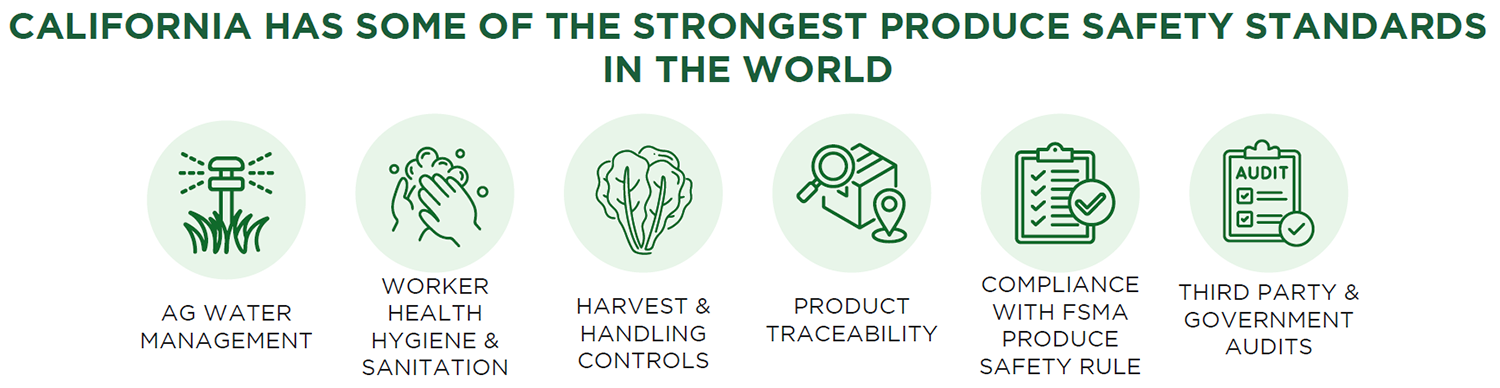
With the ongoing cyclospora outbreak, many consumers, restaurants and grocery stores are concerned about the safety of their produce and its origin. The California LGMA would like to assure the public that California lettuce and leafy greens are in full production and are not associated with the ongoing outbreak. The U.S. Food and Drug Administration and U.S. Centers for Disease Control and Prevention have reported that many of the cyclospora cases were linked to iceberg lettuce grown in Central Mexico.
“Food safety is essential to consumer health and trust, and the California Department of Food and Agriculture takes our role seriously,” said CDFA Secretary Karen Ross. “We know the repercussions can be significant, both for those who get ill and their families, as well as on business operations and local economies. Through the leadership of CDFA’s Inspection Services Division with our state and federal partners, the Leafy Green Marketing Agreement and other industry stakeholders, thousands of audits and farm inspections happen each year. We also participate in education events, research projects and work groups to continually improve food safety programs, support farming practice adoption and ensure food grown in California remains the safest in the country.”
Why California lettuce is at low risk for cyclospora contamination
LGMA has created a Cyclospora Fact Sheet to help everyone in the supply chain better understand why lettuce and leafy greens from California LGMA members are a low-risk commodity for cyclospora contamination. The bottom line is that California LGMA handlers follow science-based food safety metrics that address the key pathways associated with cyclospora contamination, making California leafy greens a very low-risk commodity. LGMA’s program focuses on preventing contamination before it occurs through risk identification, mitigation practices and continuous improvement.
Today marks the final day at CDFA for Undersecretary Christine Birdsong, concluding five years of dedicated service to the State of California. Throughout her tenure, Christine brought significant experience working with industry leaders in the agricultural community and provided steady, thoughtful leadership during periods of substantial change, leaving a meaningful impact on the department.
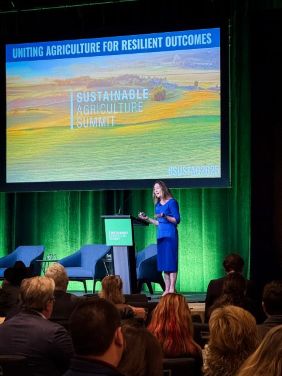
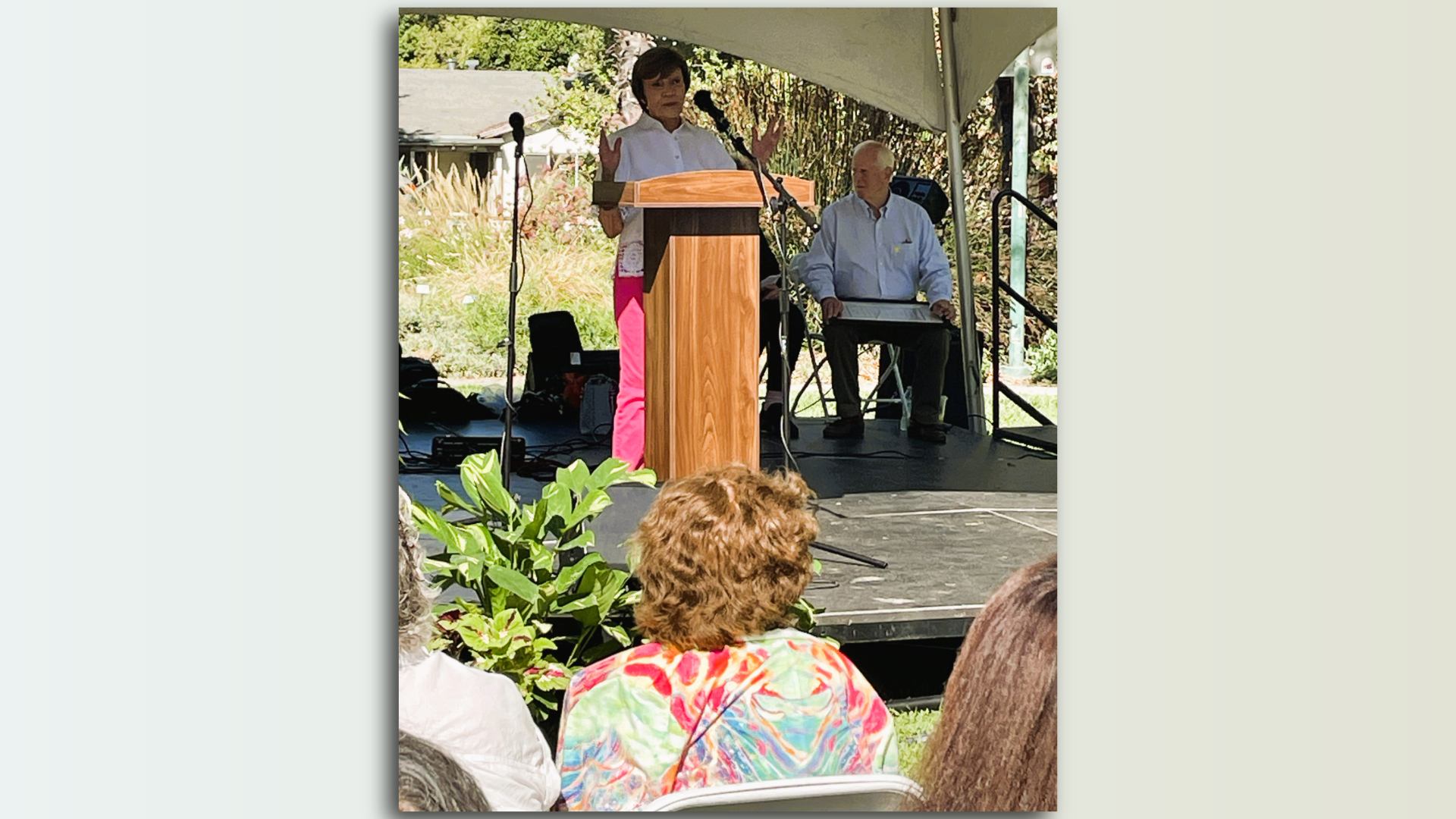
Secretary Birdsong at Sustainable Agriculture Summit.
Before departing, Christine took a few moments to share her reflections and favorite memories from her time at CDFA.
Q: What was your favorite part of working with CDFA?
A: The people – amazing staff, amazing humans doing amazing things!
Q: What was your biggest challenge while at CDFA?
A: Public speaking! I never stopped being nervous.
The Public Affairs team must provide an editorial note that in her last week, Christine testified in the legislature and did a phenomenal job representing the department!
Q: What was your favorite memory while at CDFA?
A: Attending division director meetings and seeing everyone interact and support one another.
Q: What is your favorite California agriculture product?
A: LETTUCE! And all things that go into salads.
CDFA Secretary Karen Ross: “I always say that the Undersecretary has the hardest job in the department, and that is especially true at a department as large and diverse as CDFA. Christy brought calm confidence to her role. She has been an enormous asset to the state, me and every person at CDFA. I thank Christy for all she has done and wish her every success in the future. Thank you, Christy!”
To mark the occasion, the California Department of Food and Agriculture (CDFA) visited the Cameron Park Certified Farmers’ Market in El Dorado County, one of the state’s 650 certified markets, to hear directly from the people who help make these markets thrive. In this video, the market manager, local farmers, and customers share why supporting Certified Farmers’ Markets matters. Many Certified Farmers’ Markets throughout California operate year-round, providing continued access to fresh, locally grown food.
As Californians celebrate National Farmers Market Week, CDFA encourages everyone to visit a Certified Farmers’ Market and experience the benefits of buying directly from local farmers. Every visit helps strengthen California agriculture.
“When you make a purchase at a Certified Farmers Market, sale proceeds go directly to the farmer, providing critical support for small farms while enhancing access to fresh, local, healthy food,” said Secretary Karen Ross.
Celebrating Three Decades of CDFA’s Medfly Preventive Release Program
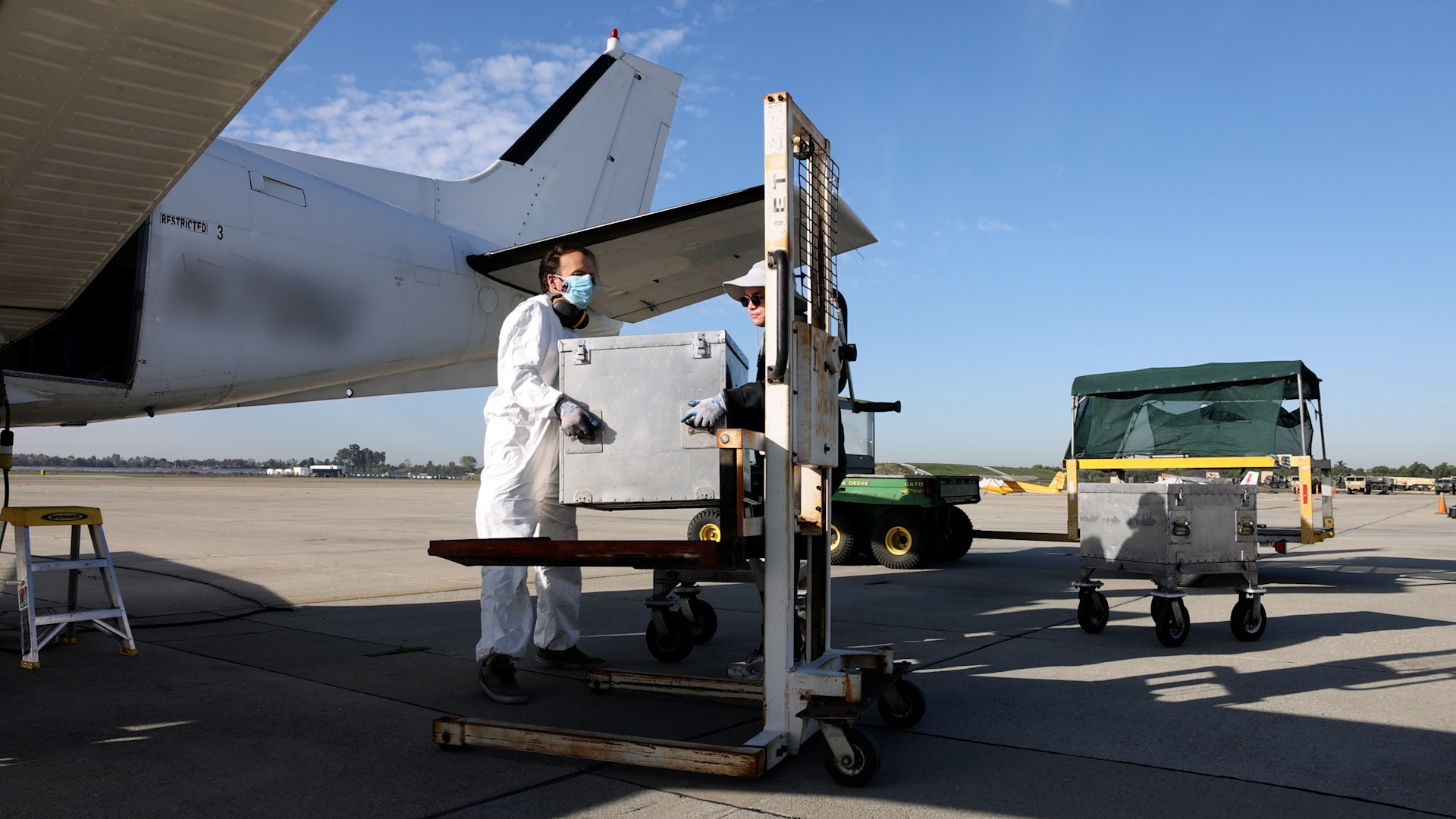
Millions of sterile Mediterranean fruit flies (Medflies) are loaded onto aircraft at the Preventive Release Program in Los Alamitos for ongoing releases throughout portions of Los Angeles, Orange, Riverside and San Bernardino counties. The releases are a key component of California’s 30-year effort to prevent Medfly infestations.
This year marks the 30th anniversary of California’s Mediterranean fruit fly (Medfly)Preventive Release Program (PRP), a landmark pest prevention effort that helps protect agriculture, natural resources and urban food production in the Los Angeles Basin and across the state from devastating environmental and economic losses.
Established in 1996, the Medfly PRP was created in response to the increasing threat of Medfly introductions into the Los Angeles Basin, driven by growing international trade and travel. Prior to the program’s creation, California relied largely on reactive eradication efforts to address repeated introductions of the destructive pest that threatens more than 250 types of fruits and vegetables. The PRP represented a shift toward a proactive, science-based prevention strategy, proving more cost-effective while reducing pesticide use.
The PRP utilizes sterile insect technique (SIT), an environmentally friendly pest management approach that functions as a form of biological ‘birth control.’ Sterile male Medflies are released year-round at a weekly rate of 62,500 to 125,000 flies per square mile throughout portions of Los Angeles, Orange, Riverside and San Bernardino counties, covering approximately 1,750 square miles. The sterile males mate with wild females, resulting in no viable offspring and preventing populations from becoming established, while an extensive trapping network monitors for wild Medfly introductions. Entomologists identify any trapped insects, and program specialists continuously analyze data to assess effectiveness and guide operations.
Results to date have been significant. Before the PRP was established, California averaged approximately 7.5 Medfly infestations annually. Since preventive releases began, infestations have declined by more than 90%, averaging fewer than one infestation per year.
Additionally, the strategic location and infrastructure of the Medfly PRP facility in Los Alamitos can be mobilized quickly to respond to Medfly detections anywhere in the state. Most recently, the facility coordinated releases to address a Medfly infestation in Santa Clara County, which was successfully eradicated, resulting in the lifting of a 241-square-mile quarantine around San Jose.
The program protects California’s $18.5 billion agricultural economy while helping preserve residents’ ability to grow fresh fruits and vegetables at home, and with Southern California being a critical hub for agricultural trade and distribution, program impacts extend even beyond county and state lines.
Earlier this year, the California Department of Pesticide Regulation (DPR) honored the Medfly PRP with its 2025 Integrated Pest Management Achievement Award, recognizing the program’s long-term effectiveness and environmentally responsible approach to pest prevention. The award is presented as part of DPR’s annual recognition of outstanding programs and organizations across the state that focus on using safe, effective and sustainable pest management practices.
This 30-year milestone also coincides with the 50th anniversary of USDA Animal and Plant Health Inspection Service’s Medfly Program. Established in 1975 through a partnership with Mexico and Guatemala, the program was designed to prevent the northward spread of a pest capable of infesting more than 250 varieties of fruits and vegetables — and has become an international model for protecting agriculture through science, innovation and cooperation. Today, the program rears approximately 1.2 billion sterile Medflies each week at the El Pino facility in Guatemala, providing a critical line of defense for agricultural production and trade throughout North America.
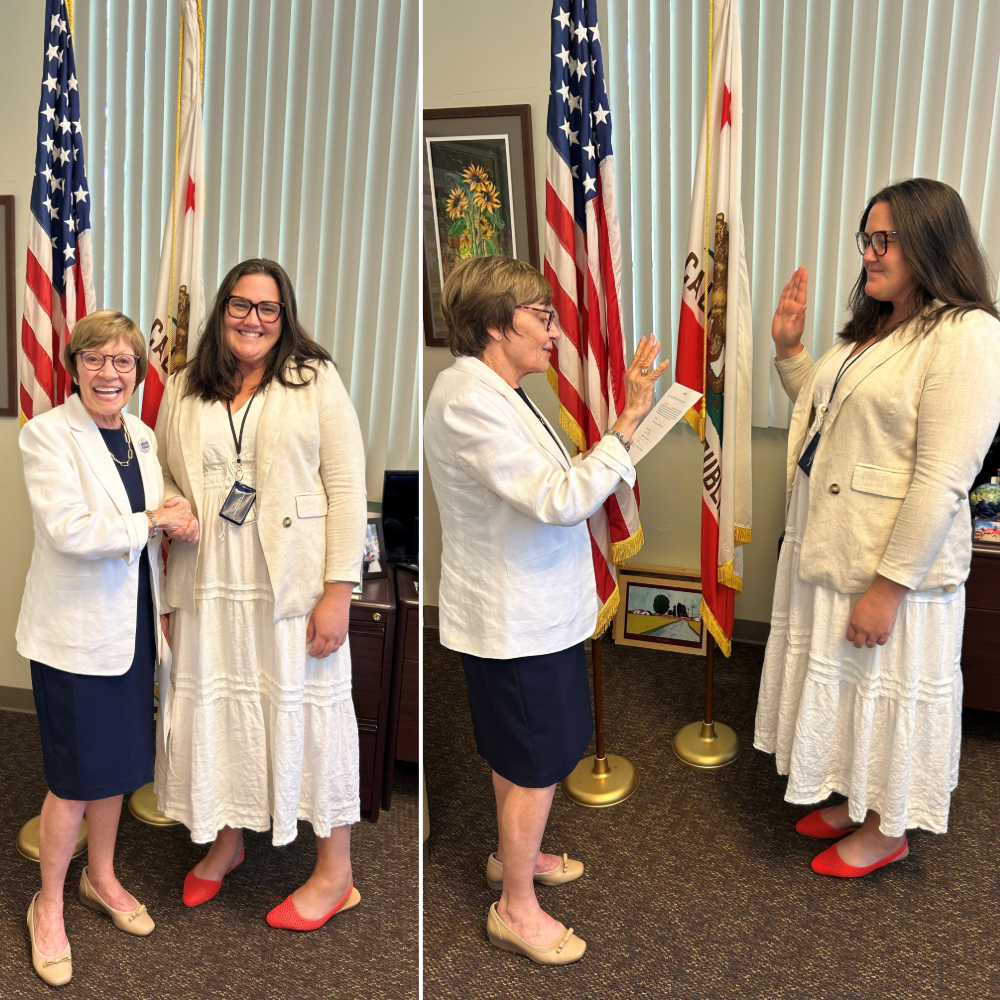
CDFA Secretary Karen Ross (left), Devon Keeler (right) – Sacramento, California
Devon Keeler has been appointed Deputy Secretary of Communications and External Affairs at the California Department of Food and Agriculture. Keeler joins the department from the Governor’s Office of Service and Community Engagement, bringing with her a breadth of experience in stakeholder engagement and communications strategy.
She served as Assistant Executive Director at the Office of Community Partnerships and Strategic Communications from 2022 to 2026; Senior Communications Officer at the California Department of Public Health, overseeing Vaccinate ALL 58 communications from 2021 to 2022; and Vice President at Mercury Public Affairs, where she held multiple positions from 2011 to 2021, including Director and Senior Associate.
Keeler earned a Bachelor of Arts degree in Political Science from the University of California, Santa Barbara.
Keeler loves water sports and spending time outdoors with her husband and two kids. Congratulations, Devon!
CDFA Secretary Karen Ross joined local officials in celebrating the Davis Farmers’ Market 50th Celebration on Saturday.
“This incredible milestone is not just cause for celebration in this community, but for farmers’ markets across the state,” Secretary Ross said. “The Davis Farmers Market has set a standard for generations for how community and local food producers can come together to support one another and open new ways to access fresh, local and healthy food.”
The Davis Farmers’ Market Alliance’s mission is to educate and engage the public about nutrition, sustainable agriculture and the local economic benefits of buying food and locally sourced products directly from growers and artisans. The public can be assured that produce bought from the Davis Farmers’ Market is being sold by the farmer who grew it or the producer’s representative because it is certified by the CDFA Certified Farmers’ Market Program.
“When you make a purchase at a Certified Farmers Market, sale proceeds go directly to the farmer, providing critical support for small farms while enhancing access to fresh, local, healthy food. Farmers markets have also played an important role in expanding access to fruits and vegetables for food-insecure households through the California Nutrition Incentive Program, which matches funds for shoppers using nutrition benefits—such as CalFresh, WIC, and the Senior Farmers’ Market Nutrition Program—to purchase California-grown fruits and vegetables,” said Secretary Ross.
“The intent of the Certified Farmers’ Market Program is to provide an alternative method for California producers to sell their products directly to consumers,” said CDFA Direct Marketing Manager Jennifer Leidolf, who supervises Certified Farmers’ Market inspectors. “Shopping at a Certified Farmers’ Market means there is a direct connection with you and the farmer and that the produce being offered for sale has been verified that it was grown by the farmer.”
Visit the CDFA Certified Farmers’ Market webpage to find the Certified Farmers’ Markets to visit by county. As National Farmers’ Market Week is August 2-8, 2026, an annual celebration highlighting the vital role farmers’ markets play in our nation’s food system, this is an especially great time to build relationships with locally grown food!
CDFA also recognizes Monterey Bay Certified Farmers’ Markets for celebrating 50 years of operation this year. The family of markets includes four vibrant markets in Aptos, Carmel and Monterey, each reflecting the unique character of its community as cherished regional institutions, deeply woven into the daily lives of farmers, families, chefs and visitors.
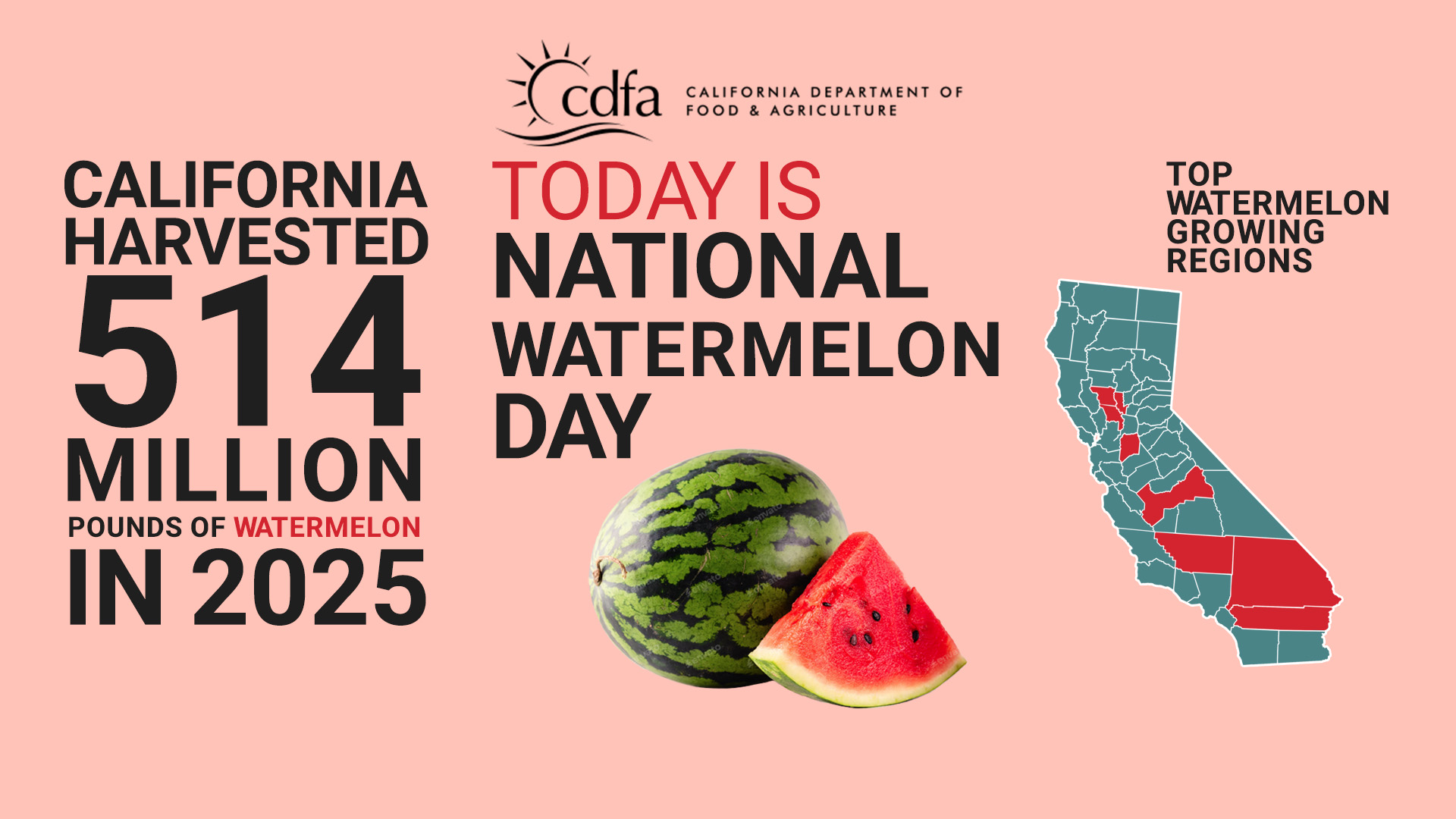
Today, we celebrate National Watermelon Day and recognize the California farmers, farmworkers, and agricultural communities whose hard work helps bring one of summer’s most refreshing fruits to our tables.
California continues to be a major producer of watermelons, harvesting 514 million pounds in 2025. From planting and irrigating fields to harvesting, packing, and transporting fruit, producing a watermelon takes the dedication of thousands of people working together throughout the growing season.
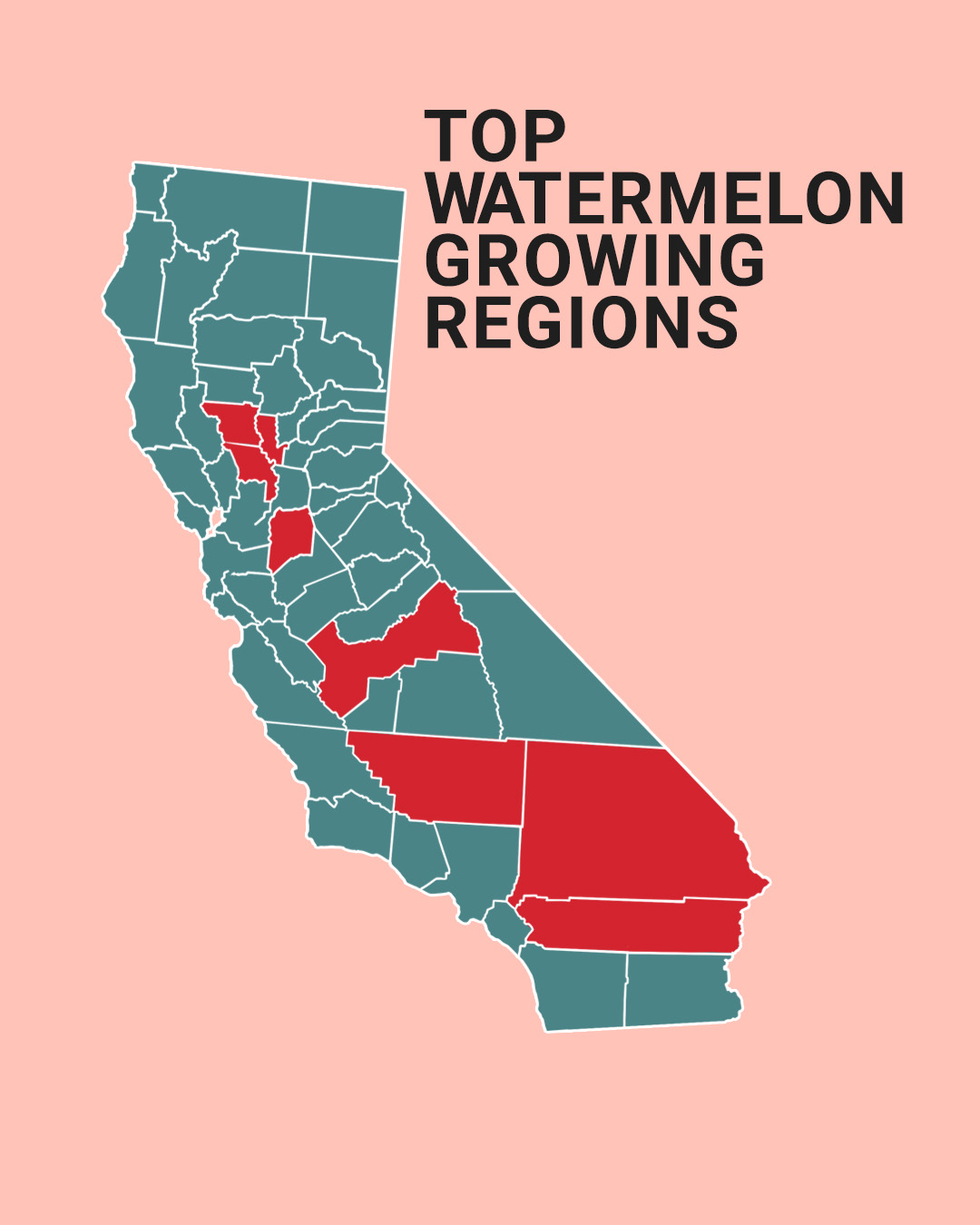
Watermelons are grown in communities across California, with several counties standing out for their production. According to the 2022 California County Agricultural Commissioners’ Report and the 2022 Census of Agriculture, leading California watermelon-producing counties based on acres harvested and gross production value include:
San Joaquin
Kern
Yolo
Colusa
Sutter
Fresno
Riverside
San Bernardino
These regions help supply consumers with fresh, California-grown watermelons during the peak of summer, showcasing the diversity and strength of the state’s agricultural landscape.
Whether enjoyed at a family barbecue, sliced at a picnic, blended into a refreshing drink, or simply eaten fresh, watermelon is a summertime favorite. Naturally sweet and hydrating, it’s a delicious way to enjoy California agriculture.
On this National Watermelon Day, CDFA extends its sincere appreciation to California’s watermelon growers, farmworkers, processors, shippers, and everyone throughout the supply chain whose dedication helps make this iconic summer fruit available for families to enjoy.
Thank you for all you do — and happy National Watermelon Day!
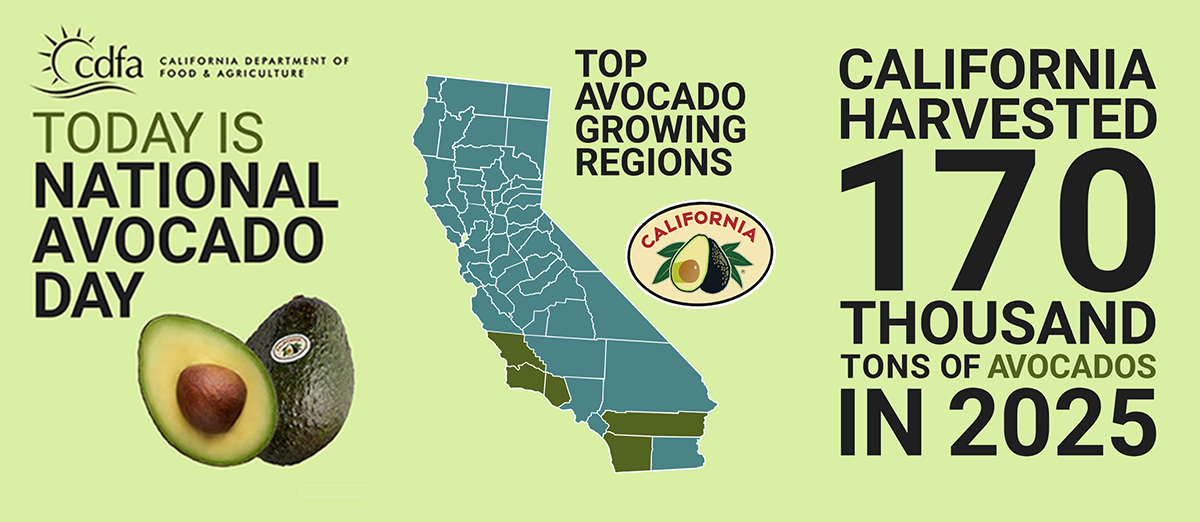
California is the nation’s leader in avocado production, harvesting 170,000 tons in 2025!
According to the 2023-24 California Agricultural Statistics Review, California producers represent 96% of the U.S. market, with 47,600 acres dedicated to growing these nutritional super fruits, generating $239 million. Leading counties for avocado production include Ventura, San Diego, Riverside, Santa Barbara and San Luis Obispo.
CDFA thanks the farmworkers, shippers, handlers and all involved in supplying the nation and beyond with nutrient-dense California avocados that provide substantial amounts of vitamins, minerals and other nutrients with relatively few calories.
Visit https://californiaavocado.com/ to learn more about this amazing fruit, recipes and the California Avocado Commission.
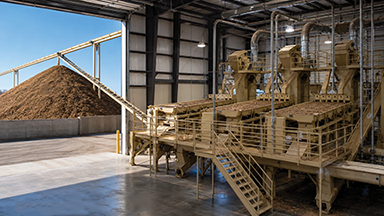
Returning almond shells to orchards as a potassium amendment and mulch could generate additional farm revenue while recycling nutrients, improving soil health and reducing waste. University of California researchers examine this as one opportunity among others in California’s emerging bioeconomy. Photo credit: Almond Board of California.
A new academic study explores how California’s emerging bioeconomy could create new value from the state’s biological resources while strengthening rural economics and preparing the workforce for new industries.
This study is in a special issue of the Agricultural and Resource Economics (ARE) Update from the University of California Giannini Foundation of Agricultural Economics. It highlights Californians discovering how agricultural byproducts, forest materials and food waste can become feedstocks for renewable energy, new manufacturing industries and other higher-value products.
An example of the bioeconomy in practice is how California’s almond industry is already creating value through agricultural circularity. Almond hulls sold as livestock feed fetch roughly $76 to $106 per ton, or about $160 million to $230 million. Another opportunity authors identify is returning almond shells to orchards as a potassium amendment and mulch, possibly generating another $21 million to $31 million in annual revenue while recycling nutrients, improving soil health and reducing waste.
These studies suggest that California’s next wave of innovation may come not from replacing agriculture’s traditional strengths, but from building on them. They suggest that industry, policymakers and UC Cooperative Extension could help California create new economic opportunities while improving resources and supporting resilient rural economies.