



The United States Department of Agriculture (USDA) has confirmed that the New World Screwworm – an invasive, destructive parasite – has been detected in Texas and New Mexico, marking the the pest’s first incursion into the United States since it was successfully eradicated in the 1960s.
Current Status for California
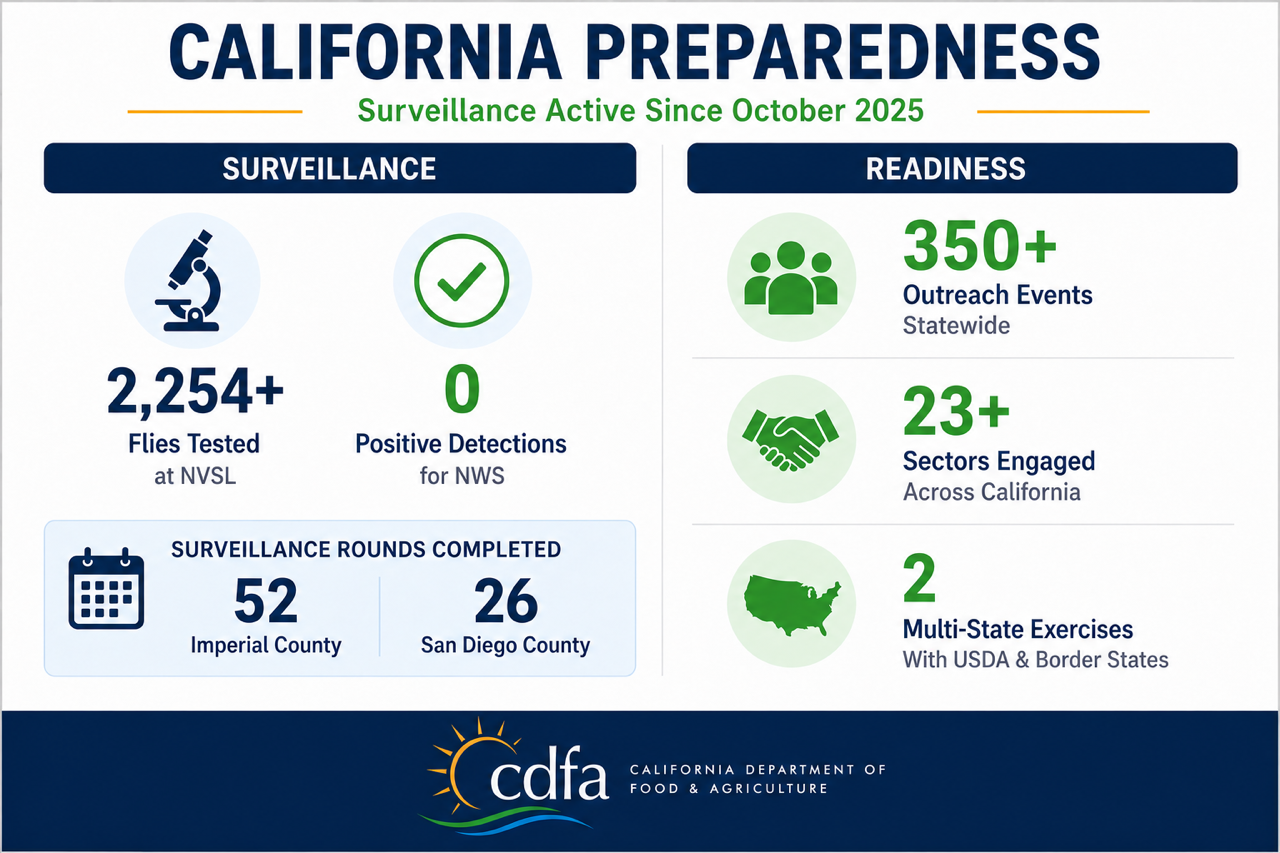
There are currently NO confirmed detections of New World Screwworm in California. The California Department of Food and Agriculture (CDFA) is actively monitoring the situation and working closely with local, state, and federal health officials.
What is New World Screwworm?
New World Screwworm is a parasitic fly that poses a severe threat to warm-blooded animals, including livestock, wildlife, pets, and, in very rare cases, humans.
Unlike common black flies that eat dead tissue, screwworm larvae (maggots) feed on living tissue inside open wounds. Their feeding expands and deepens the wound, attracting more flies to lay eggs. If left untreated, this cycle can be fatal to the animal. Female flies only mate once in their lifetime.
The previous infestation in the US was eliminated using the Sterile Insect Technique (SIT), a process where sterile male flies are released into the wild to prevent reproduction. USDA resumed release of these sterile flies along the southern U.S. border in response to the parasite’s current spread.
Key Takeaways for Animal Owners and the Public
Because of the screwworm’s spread northward through Central America and Mexico into Texas and New Mexico, California is taking proactive steps to protect our agricultural economy, wildlife, and workers.
For more than a year, veterinarians and CDFA experts have been engaged in detection and outreach activities with producers and colleagues at the federal, state, and local levels. Our staff is in constant contact with our One Health partners at the California Department of Public Health (CDPH) and the California Department of Fish and Wildlife (CDFW) to maintain surveillance and response preparedness. The One Health approach is a collaborative concept that recognizes and addresses the close link between human, animal, and environmental health.
Best Practices
We need the help of all California animal owners to keep this pest out of our state. Please follow these best practices:
- Check your animals daily: The absolute best defense is keeping an eye on animals. Routinely inspect livestock, horses, and pets for any signs of wounds or unusual fly activity. It’s important people traveling with their pets to and from Mexico and other infested regions carefully check them for wounds or signs of infestation.
- Treat wounds immediately: Keep any open wounds clean, treated, and covered to prevent flies from laying eggs.
- Monitor travel requirements: If you are moving livestock, please check the CDFA website frequently for any new entry or movement restrictions regarding animals coming from infested states.
- Know the human risk: Human cases are incredibly rare, isolated, and cannot spread from person to person like a virus.
- What to do if you suspect Screwworm: Do not wait. If you see signs of unusual larvae in an animal’s wound, immediately contact your local veterinarian or reach out directly to your CDFA District Office.
Stay Updated
For the latest official data and status maps, please monitor these tracking pages:
- California: CDFA NWS Updates Page
- Federal Tracking: USDA APHIS Current Status
- New Mexico: New World Screwworm Awareness