


Japanese Beetle
As part of our “Know Your Pests” series leading up to California’s Invasive Species Council summit on October 1-2 in Sacramento, the California Department of Food and Agriculture (CDFA) is highlighting invasive pests that Californians should know how to identify and what to do if they see or suspect one.
Knowing what to look for and reporting a suspected pest can help protect California agriculture, our communities and our natural resources.
Know it
The Japanese beetle (Popillia japonica) is an invasive insect that can feed on hundreds of species of plants. Adult beetles feed on plant leaves, flowers and fruit, while the larvae, or grubs, feed on plant roots in the soil. Japanese beetles can damage fruit trees, vineyards, berry crops, ornamental plants and turf.
Spot it
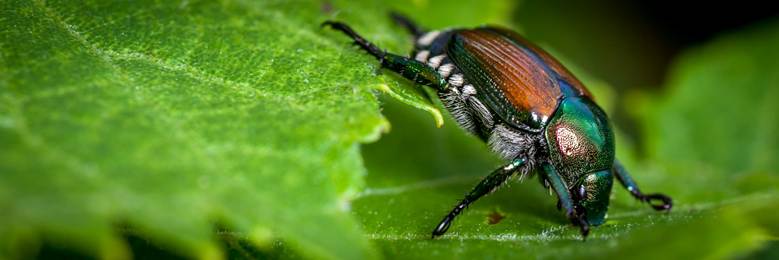
Adult Japanese beetles are about 3/8 inch long and have a distinctive metallic green body with copper-brown wing covers.
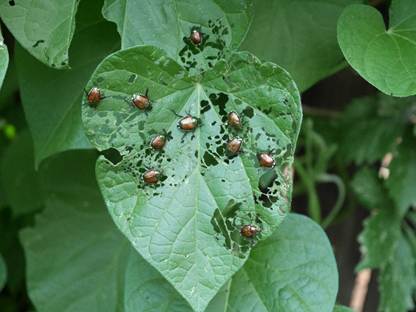
Look for adults feeding on leaves, flowers and fruit, particularly during the summer months. Feeding can cause a characteristic skeletonized appearance to leaves, with the tissue between the leaf veins eaten away.
Japanese beetle grubs live underground and feed on the roots of grasses and other plants.
Why it matters?
California works to keep Japanese beetle from becoming established because of the significant threat it poses to agriculture and the environment.
The beetle feeds on a wide range of crops and plants, including grapes, berries, tree fruit, nursery plants and ornamental vegetation. If established, Japanese beetle could cause significant damage to California’s agricultural commodities and natural resources.
CDFA is currently conducting Japanese beetle eradication and detection activities, including work in Sacramento and Placer County.
What to do?
Do you think you may have found a Japanese beetle?
Don’t move the insect or potentially infested plant material.
Take a photo, if possible, and report the suspected pest to the California Department of Food and Agriculture Pest Hotline:
1-800-491-1899
CDFA asks Californians to report insects they suspect could be Japanese beetles, as well as extensive beetle damage to lawns, roses, grapes, fruit trees and other plants.
Early detection and rapid response can help prevent invasive pests from becoming established and spreading.