Planting Seeds - Food & Farming News from CDFA

Montna Farms: A Multi-Generational Rice Farm Advancing Sustainability in California Agriculture

This video was developed by CDFA in collaboration with the California Rice Commission, highlighting the shared commitment to sustainable rice farming and agricultural stewardship in California.

At Montna Farms in Sutter County, California rice farmer Nicole Montna Van Vleck shares how her family’s multi-generational farm has become a model for sustainability, wildlife habitat, and innovation in agriculture. From conserving water in rice production to supporting the Pacific Flyway and restoring salmon habitat through working rice fields, her story reflects how California farmers are producing food while actively enhancing ecosystems. As part of the International Year of the Woman Farmer, this conversation highlights the leadership, stewardship, and forward-thinking role women farmers play in shaping the future of agriculture.

Resources:

California Rice Commission

International Year of the Woman Farmer

Posted in AG Vision, Agricultural Education, Animal Welfare, Biodiversity, Conservation, Drought, Environment, Farm Labor, Trade, Water | Tagged | Leave a comment

California celebrates nearly 3.5 billion universal school meals served

From the Office of Governor Gavin Newsom

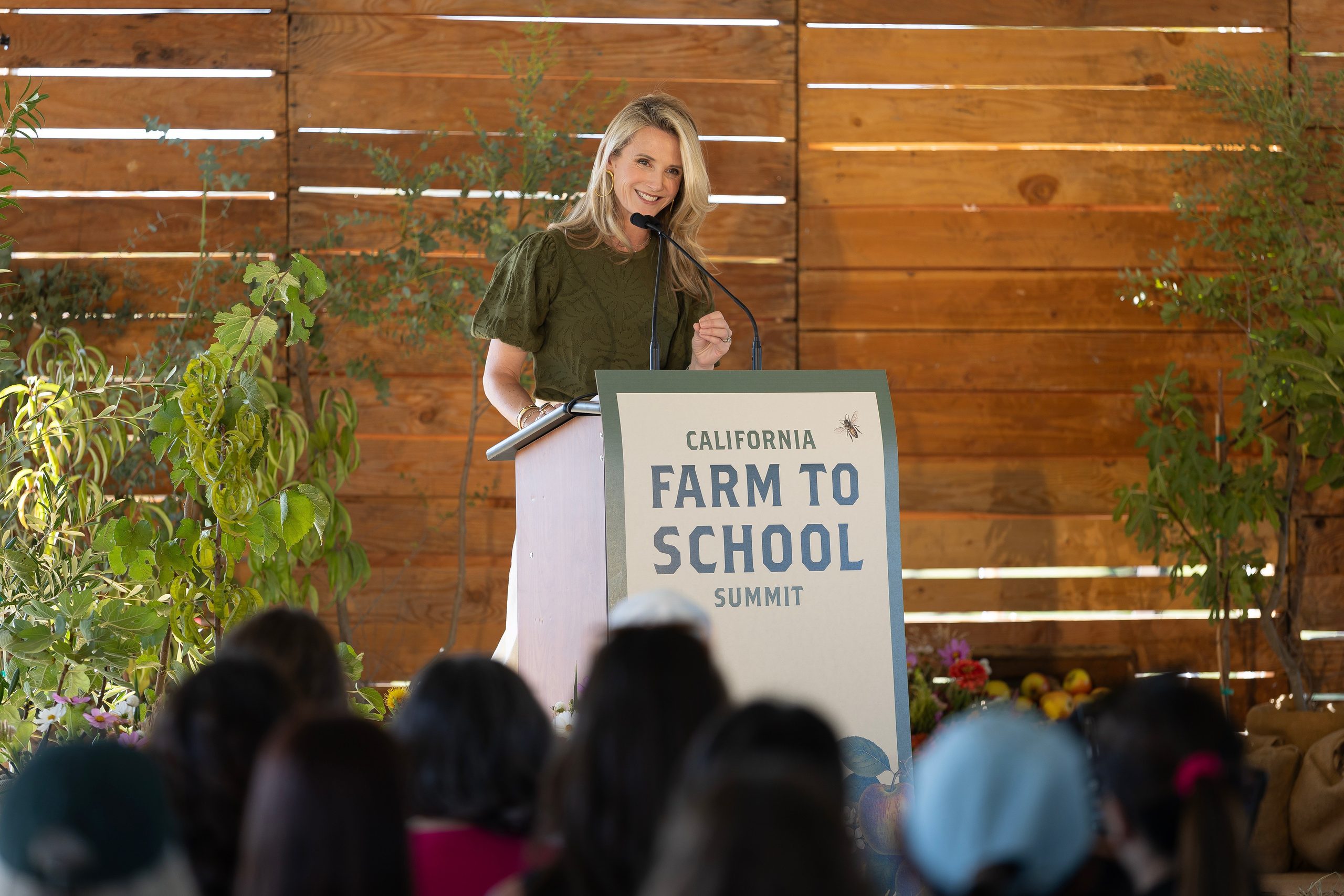
California’s Farm to School program, championed by First Partner Jennifer Siebel Newsom, works in tandem with universal school meals to ensure more California students have access to two free school meals that are locally-sourced, delicious, and nutritious.

– Excerpt from announcement below

What you need to know: Five years ago, Governor Newsom signed into law universal school meals, a first-in-the-nation effort ensuring all public-school children have access to two nutritious free meals per school day.

SACRAMENTO – Five years ago, in partnership with the Legislature, Governor Newsom signed a landmark piece of legislation into law, making California the first state in the nation to implement a universal free school meal program for all public school students. Fast-forward to 2026, the state is expected to serve nearly 1 billion meals during this school year — improving meal quality and access while reducing hunger for millions of families. 

Since the implementation of the universal school meal program in the Golden State, nearly 3.5 billion meals have been served to children — saving families time and money, supporting children’s health and learning, and reducing stigma around free school meals.

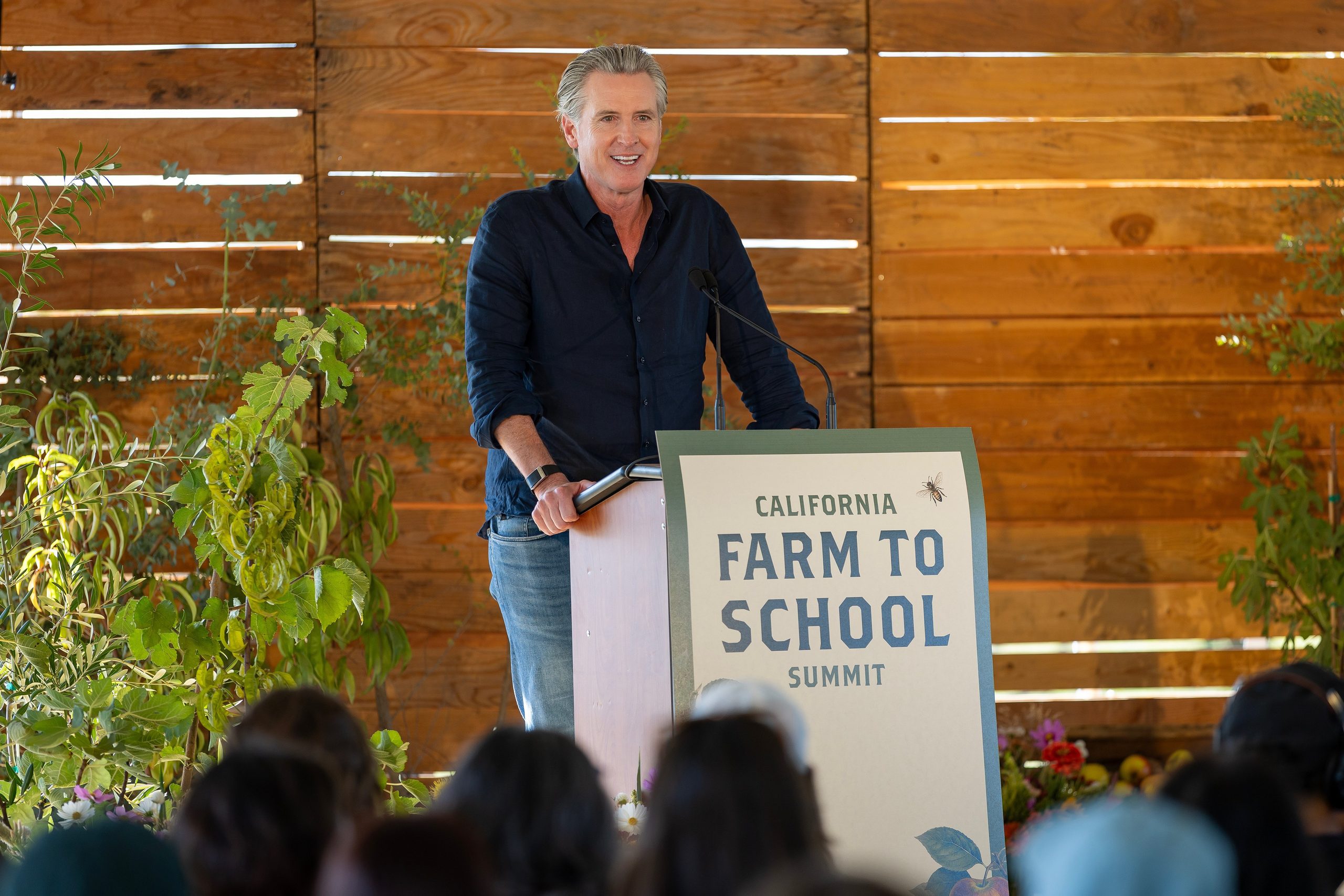
Five years ago, I was proud to sign universal school meals into law and make California the first state in the nation to guarantee every public school student a free breakfast and lunch.  Today, with nearly one billion meals served each year, we’re seeing exactly what we hoped for: healthier kids, more resilient families, and expanded opportunities for every child across the state.

Governor Gavin Newsom

California’s School Meals for All program continues to be a vital investment in our children and their future. When every child starts the school day nourished and ready to learn, we are investing in their health, their academic success, and their ability to thrive. This critical program has expanded access to basic needs and demonstrated that universal school meal programs can create real, lasting change for students and their families in the classroom and beyond.

First Partner Jennifer Siebel Newsom

California leads the nation in protecting student health, ensuring access to food

In 2021, Governor Newsom signed a landmark budget agreement with the Legislature to launch a universal school meals program for the 2022-2023 school year. This law required local education agencies — school districts, charter schools, and county offices of education — to provide one free breakfast and one free lunch per school day to any student requesting a meal. Over the course of the past four years, there have been approximately 3.5 billion breakfasts and lunches served under the School Nutrition Program since the Universal Meals Program implementation — of which nearly 3.45 billion have been eligible for universal meals reimbursement.

Since taking office, Governor Newsom and First Partner Jennifer Siebel Newsom working with legislative champions have advanced a series of first-in-the-nation reforms to eliminate toxic additives, strengthen nutrition standards, and expand healthy food access in schools statewide. Here are key investments the Newsom administration has made to support the well-being and nourishment of students:

  • Last summer, more than 4 million California children received SUN Bucks food benefits via EBT cards, with each eligible child receiving $120 in food benefits.
  • In October 2025, Governor Newsom signed AB 1264 (Gabriel, 2025), the first-in-the-nation law to ban ultra-processed foods from school meals — banning dangerous food dyes and chemicals that harm and interfere with children’s ability to learn.
  • Governor Newsom previously signed AB 418 (Gabriel, 2023) and AB 2316 (Gabriel, 2024), banning four potentially harmful chemical food additives from products sold statewide, including red dye 3 and brominated vegetable oil, which is often used as a stabilizer in citrus-flavored beverages, and prohibiting schools from serving and selling foods containing synthetic food dye additives associated with risks to health harms in children, including cancer, damage to the immune system, and neurobehavioral issues. The federal government and numerous states have taken similar actions following CA’s lead.
  • In 2024, Governor Newsom signed a legislative package to increase enrollment in state food assistance programs, reduce youth consumption of processed foods, and increase access to healthy, locally grown food in all California communities.
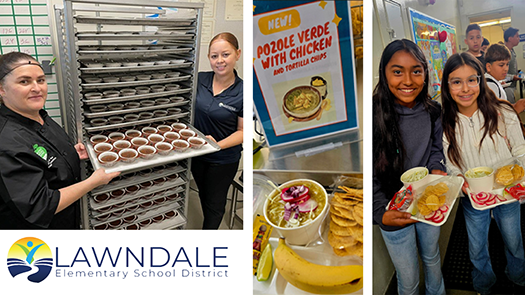
  • California’s Farm to School program, championed by First Partner Jennifer Siebel Newsom, works in tandem with universal school meals to ensure more California students have access to two free school meals that are locally-sourced, delicious, and nutritious.
  • In 2023, California became the first state to codify President Biden’s  updated federal guidelines on school nutrition standards to reduce sugar and salt in school meals, and established a process for California to maintain those standards should a different federal Administration lower the standards via SB 348 (Skinner, 2023)

Together, these investments embody a bold vision for school nutrition — one that supports student learning and health, strengthens local economies, and lightens the burden on families’ grocery budgets. Five years in, California’s transformational approach to school meals is delivering results, inside and beyond the classroom.

Nutritious meals for all students

With 1-in-6 children facing hunger in the U.S., California became the first state to guarantee every public school student — nearly 6 million of them – free school meals regardless of income. California is paving the way for the country to make healthy school meals a part of every child’s educational day. The benefits of the program have extended far beyond the cafeteria. Research has shown that students who participate in school meal programs are more likely to consume nutritious foods, less likely to experience nutrient deficiencies, and show improved attendance, better academic performance, fewer visits to the nurse’s office, and reductions in behavioral issues, anxiety, and depression.

Over 2 million children in California do not have access to healthy whole foods, with Black and Latinx children reporting food insecurity twice that of children in white households. Schools are a key source of food for children and access to nutritious foods are essential to children’s health and preventing diet-related chronic diseases such as type 2 diabetes and cardiovascular disease. Approximately 3.9 million California students were eligible for free or reduced lunch during the 2019-2020 school year —- since the state’s creation of the universal school meals program nearly 3.5 billion meals have been served. 

First Partner’s farm to school initiative

The First Partner spearheaded California’s Farm to School Program to expand access to healthy, locally grown food for students. The initiative works alongside California’s universal school meals program to bolster childhood nutrition while promoting economic growth in local communities and incentivizing climate-smart agriculture practices. 

Under the leadership of the Governor, the First Partner, and the Legislature, allocated $60 million over two years in the 2021-2022 state budget to sustain and expand the California Farm to School Incubator Grant Program, which connects local producers and school food buyers; increases food education in classrooms, gardens, and on farms; and engages schools and students with the agricultural community.

The 2022-2023 state budget strengthened this investment with an additional $30 million in funding for farm to school demonstration projects at priority, high-need schools, and includes $600 million in funding available over three years for school kitchen infrastructure upgrades and equipment, food service employee training, and compensation for work related to serving universal meals using more fresh, minimally processed California-grown foods.

Posted in Farm to School, Food Access | Leave a comment

Secretary Ross celebrates biological alternatives in agriculture at 2026 Salinas Biological Summit

CDFA Secretary Karen Ross joins Salinas Mayor Dennis Donohue to conclude the 2026 Salinas Biological Summit. (Inset) Secretary Ross accepts a resolution from Mayor Donohue for her work in advancing biological alternatives to traditional chemicals in agriculture.  

CDFA Secretary Karen Ross and CDFA staff attended the 2026 Salinas Biological Summit in Salinas June 23-24, joining attendees from around the world to discuss the transition of agriculture from traditional chemicals to biological alternatives, such as for pest management and fertilizing materials.

In her opening remarks, Secretary Ross welcomed participants and highlighted the power of partnerships and shared purpose.

“This summit is about people coming together to make things happen for the good of others,” Secretary Ross said.

During the summit, Secretary Ross met with delegations from the United Kingdom and Brazil. California State Board of Food and Agriculture President Don Cameron moderated a discussion on California’s approach to sustainable pest management. CDFA Fertilizing Materials Inspection Program Manager Nick Young discussed the evolving biostimulant landscape.

To conclude the event, Secretary Ross joined Salinas Mayor Dennis Donohue for a fireside chat discussing the past, present and vision for the future.

“Climate change is increasing pest and disease pressure on agriculture worldwide with limited resources registered to counter it,” Secretary Ross said. “California agriculture is known for quality and innovation at scale. The Salinas Biological Summit has grown to global significance in response to the growing interest of California growers to integrate biological solutions into plant and soil health management. This is the next chapter of agricultural resilience.”  

Posted in CDFA Inspection Services, Climate Change, Climate Smart Agriculture, Environment, Fertilizer, Integrated Pest Management (IPM), State Board of Food and Agriculture | Tagged , | Leave a comment

What’s in Season at U-Pick Farms Across the State? 

Pictured: Jerry James Stone visiting Sweet Thistle Farms – Clovis, CA – flower, vegetable and pumpkin farm co-located with Rocky Oaks Goat Creamery

California is a beautiful patchwork of mountains, beaches, valleys, and deserts. This remarkable diversity not only draws visitors from around the world but also makes California the most productive agricultural state in the nation. It’s the reason there’s always something fresh and delicious in season.

Seasonal produce is always spectacular, but you can’t beat a just-picked berry, still warm from the sun – and there’s certainly no substitute for a perfectly ripened mandarin, plucked straight from the tree. When you visit a U-pick farm, you not only enjoy the freshest, most nutritious (and delicious) produce possible, but you also get an up-close and personal look at where your food really comes from. 

Here’s a general guide to when some of California’s most popular U-pick crops are in season, along with a few of our favorite farms to visit. Start planning your weekends accordingly!*

*Be sure to check each farm’s website to see what’s in season before planning your U-pick adventure, as available berry varieties and U-pick dates are subject to change.

Citrus – November through March 

Need proof that there’s always something in season in the Golden State? Look no further than California citrus! Mandarins, lemons and grapefruit are at their peak all winter long. If you’re in Northern California, Sunset Ridge Fine Fruits offers some of the juiciest sun-ripened citrus we’ve ever tasted. Southern California natives should check out the U-pick citrus offerings at Cal Poly Fruit and Crops  – the San Luis and Pomona locations both offer U-pick at the campus farm. 

Heritage Park

Quixote Farm 

Sunmist Estate

Cal Poly Fruit and Crops

Sunset Ridge Fine Fruits

Berries – March through October

U-pick berries are the OG agritourism experience. California’s U-pick berry season runs from March through October, with different varieties of berries ripening at different times throughout the state. Southern California farms, like Carlsbad Strawberry Company, kick off the fun with strawberries in March, while Northern California farms like Gizdich Ranch don’t start their season until closer to May. 

Granny May’s Strawberry Farm in Granite Bay, CA with owner Elisabeth Saechao | Placer County

Strawberries – March through August 

Granny Mays

Carlsbad Strawberry Company

Gizdich Ranch

Halcyon Farms

Tanaka Farms

Prancer’s Farm

Blueberries – June through July 

Santa Barbara Blueberries 

Underwood Family Farms

Boysenberries – July through August

Gizdich Ranch

Raspberries – June through October 

Fort Cross

Halcyon Farms

Santa Barbara Blueberries 

Blackberries – June through October

Halcyon Farms 

Santa Barbara Blueberries

Granny Mays

Pineberries – July through September 

Fort Cross

Ollalieberries – June through July 

Avila Valley Barn

Gizdich Ranch

Cherries on tree in Modesto, California

Stone Fruits –  May through October

Plump peaches, sweet tart cherries and honey-scented apricots are synonymous with summer – and they’re even sweeter when you pick your own. Head to these U-pick farms to see for yourself. 

Cherries – May through June

Chinchiolo Farms

Peaches – July through October

Avila Valley Barn

Noble Orchards

Apricots – June through August

Avila Valley Barn

Apples – August through March 

Apple picking is the quintessential wholesome fall activity. Apples thrive in the California foothills and the cooler coastal areas, which makes a trip to your favorite U-pick apple farm the perfect excuse for a quick weekend getaway. 

Apple Ridge Farms

Gizdich Ranch

Avila Valley Barn

Noble Orchards

Pumpkins – September through November

Not all pumpkin patches are created equally. While most offer the chance to pick the perfect pumpkin, not all offer the opportunity to actually pick your own pumpkin. If you want a true U-pick, straight-from-the-vine pumpkin experience, here’s where you need to head.

Avila Valley Barn

Julian Farm and Orchard

Sweet Thistle Farms

Hillcrest Tree Farm

Prancer’s Farm

Tanaka Farms

Dutch Hollow Farms

Dutch Hollow Farms – U-Pick Flower Farm in Modesto

Flowers – Always in Season

Is there anything more romantic than strolling through a California U-pick flower farm, gathering a bouquet of freshly cut blooms? Thanks to the Golden State’s temperate climate, you can get your U-pick flower fix virtually all year long. 

Dutch Hollow Farms

Avila Valley Barn

DeBellis Ranch

Julian Farm and Orchard

Lavineyard

Sweet Thistle Farms

Article by Hilary Rance and photography by James Collier + Hilary Rance for CA GROWN.

Resources:
Video – U-Pick Farm – Davis Ranch in Sloughhouse
Video – U-Pick Farm – Davis Ranch in Sloughhouse (Spanish/español)

Posted in Agricultural Education, Agricultural Marketing, Food Access, Growing California, Nutrition, Specialty Crops, Uncategorized | Leave a comment

June is Dairy Month! From Cow to Cup: The Food Safety Journey of Your Glass of Milk

CDFA Milk and Dairy Food Safety Environmental Scientist Ann Slama pictured on site at a California dairy farm.

Whether you’re pouring it over cereal, stirring it into coffee, or enjoying a slice of California cheese, the journey your milk and dairy food took was carefully monitored from the farm all the way to your table.

For CDFA’s Milk and Dairy Food Safety Branch (MDFS), that journey is a primary focus. Our mission to protect California consumers starts by ensuring milk and dairy products are safe, wholesome, and accurately labeled.

To do this, the MDFS team stays busy across the entire state, conducting food safety inspections at every critical step in the supply chain.

Step 1: On the Farm

Safety begins exactly where the milk does: on the dairy farm. Inspecting the dairy and the milk produced there helps ensure a safe and high-quality finished product. Annually, MDFS conducts over 1,200 food safety inspections on dairy farms, and collects and tests approximately 4,400 farm samples across California, to help ensure health, safety, and quality standards are maintained at the point of origin.

Step 2: Safety on the Road

MDFS Environmental Scientist Carlie Hughes conducts a farm sampling and bulk milk tanker inspection.

Once milk leaves the farm, it must remain protected during transit. We don’t just inspect those vehicles; we evaluate the procedures and protocols used when transporting milk to ensure no contamination occurs.

Annually, our team performs more than 1,400 bulk milk tanker truck inspections to verify transportation equipment meets California sanitary standards. We also conduct more than 950 drive evaluations each year to confirm the professionals moving our milk are maintaining a clean, safe, and secure supply chain.

Step 3: At the Processing Plants

The processing plant is where more heavy lifting happens. Everything from milk receiving to final packaging must be inspected and checked for compliance. Safe finished products are our top priority. 

Annually, MDFS carries out more than 5,000 food safety inspections at processing facilities throughout California, including more than 2,100 separate checks on pasteurizer equipment to ensure this critical safety step is working properly. Finally, we collect and test over 12,000 samples of milk and milk products each year to help ensure the dairy foods arriving in your fridge are safe and wholesome.

Step 4: On the Label 

CDFA’s Milk and Dairy Food Safety Branch works quietly behind the scenes helping ensure the milk and dairy foods delivered to your local supermarket are checked for quality, safety, and proper labeling.

Correct labeling of dairy products on store shelves is another important part of food safety, and accurate information is vital to consumer protection and nutrition. We work hard to help California’s dairy industry offer its high-quality products to the state, across the nation, and around the world. Throughout the year the MDFS team will review more than 1,400 labels to ensure that the information provided to the consumer is accurate, truthful, and not misleading.

A Commitment to Quality

CDFA’s Milk and Dairy Food Safety Branch continues to work quietly and tirelessly behind the scenes to help ensure the milk and dairy foods you enjoy stay safe. From the milk collected on the farm to the labels you read in the grocery aisle, CDFA is proud to have a key role in providing California dairy you can trust to be safe and delicious.

CDFA’s Milk and Dairy Food Safety Branch is part of the Animal Health and Food Safety Services Division.

Posted in Animal health, Biosecurity, Dairy, Food Safety | Tagged , , | Leave a comment

From Orchard to Classroom: Clendenen’s Cider Works Cultivates Community Through Local Food

For more than a century, Clendenen’s Cider Works has been rooted in Humboldt County agriculture. Today, Clif Clendenen carries on his family’s legacy by growing fresh apples, producing local cider, and embracing sustainable farming practices on his five-acre orchard.

Through a California Department of Food and Agriculture (CDFA) Farm to School grant, Clif is also helping bring locally grown, nutritious food to students in his community — creating meaningful connections between young people and the farmers who grow their food.

Meet the farmer behind one of Humboldt County’s longest-standing apple farms and learn how tradition, stewardship, and innovation continue to shape the future of California agriculture.

Resources:
California Department of Food and Agriculture
California Farm to School Program
CDFA Farmer Resource Portal
CDFA Grant Programs
Video: Visiting Apple Hill

Posted in AG Vision, Agricultural Education, Agricultural Marketing, Biodiversity, Climate Change, Climate Smart Agriculture, Conservation, Drought, Environment, Farm Labor, Farm to School, Food Access, Growing California, Healthy soils, Nutrition, Specialty Crops, Uncategorized | Leave a comment

Celebrating National Lettuce Day – California leads the US in lettuce production

CDFA is proud to collaborate on this post with USDA’s National Agricultural Statistics Service and California Grown.

June 17 is National Lettuce Day, a chance to recognize California’s lettuce growers and farmworkers who help produce one of the state’s most important vegetable crops.

According to the U.S. Department of Agriculture’s National Agricultural Statistics Service (USDA NASS), California leads the nation in the production of all three major lettuce categories: head, leaf, and romaine lettuce.

In California, growers produce:

Head lettuce: 2.8 billion pounds with a value of $1.2 billion
Leaf lettuce: 1.4 billion pounds with a value of $1.17 billion
Romaine lettuce: 3.8 billion pounds with a value of $2.2 billion

Romaine is California’s largest lettuce crop by both production and value, with 3.8 billion pounds grown and a value of $2.2 billion.

This National Lettuce Day, we celebrate the dedication of California’s lettuce growers and farmworkers whose work helps make California the nation’s leading producer of head, leaf, and romaine lettuce.

Learn more about California’s lettuce production on California GrownEverything You Need To Know About How Leafy Green Vegetables Are Grown In California

Additional Resources:

Lettuce Production in California

Integrated Pest Management (IPM): Pest Management Guidelines for Lettuce

Posted in Uncategorized | Leave a comment

CDFA Joins State Agencies in Celebrating Pride Month at Sacramento March

With signs raised that said, “Y’all means y’all,” approximately 25 California Department of Food and Agriculture (CDFA) employees proudly joined several state departments and agencies at the annual Pride March this past Sunday, and associated activities in Sacramento.

The event brought together employees, community members, and partner organizations to recognize and celebrate the diversity that defines California.

For Dahmoon “D” Maeesomy, who represents CDFA’s Diversity, Equity, and Inclusion Committee as co-chair, this event has encouraged other state departments and agencies to join. “We were the first state of California agency to participate in the annual Pride March in Sacramento, and for me, it represents California and everyone we serve,” said Maeesomy.

CDFA staff participated alongside colleagues from across state government, demonstrating a shared commitment to fostering an inclusive environment for all who live and work in our state.

The march saw a strong turnout, with participants lining the streets to show support for California’s diverse communities and to recognize the importance of belonging, visibility, and community engagement.

As part of the day’s activities, CDFA team members connected with fellow state employees, highlighted the department’s ongoing efforts to support an inclusive workplace culture, and engaged with attendees from across Sacramento and beyond. The event reflected the strength and unity of California’s public workforce and underscored the value of collaboration across departments.

Thank you to all CDFA employees who participated, volunteered, or supported the event. Your involvement helps affirm our department’s commitment to serving all Californians with respect and integrity.

Posted in Uncategorized | Leave a comment

🟤 Happy National Prune Day – June 15! 🟤

CDFA is proud to collaborate on this post with USDA’s National Agricultural Statistics Service, California Prunes, and California Grown.

California leads the nation in prune production, with Golden State growers producing 73,210 tons of prunes valued at $153 million.

Today, we celebrate California’s prune industry and thank everyone who helps bring this nutritious fruit from orchard to table. From the farmers and farmworkers who carefully harvest plums, to those who safely dry, process, package, and transport them.

Prunes are a delicious and versatile food that can be enjoyed as a snack, blended into smoothies, mixed into trail mix, baked into muffins and breads, or incorporated into savory recipes for a touch of natural sweetness. For more on prunes, check out California Grown’s blog on Prunes are What???

Thank you to the dedicated people throughout the supply chain who help turn fresh plums into the delicious prunes we enjoy every day.

Read more about California’s delicious and nutritious prunes, below:

Facts: Everything you need to know about dried prunes

History: The Valley of Heart’s Delight (In Silicon Valley – where prunes began)

How National Prune Day got started

Recipe to try – the state birthday cake

Posted in Uncategorized | Leave a comment

From Protecting California’s Agriculture to Protecting Lives: Three CDFA Employees Receive Governor’s Medal of Valor

CDFA Medal of Valor Recipients Eduardo Guerrero (third from left); Bailey White (ninth from left), and Felix Salas (eight from right) — pictured with Secretary Karen Ross, Deputy Secretary Arima Kozina, Victoria Hornbaker, Plant Health and Pest Prevention Services Division Director (second from right), including relatives, and CDFA management staff.

Every day, California Department of Food and Agriculture (CDFA) Pest Exclusion employees stand on the front lines of protecting California’s agriculture from invasive pests and diseases. But on two separate days in 2024, three employees faced emergencies where their commitment to public service extended far beyond their normal duties.

Today, three CDFA employees with the Plant Health and Pest Prevention Services (PHPPS) Branch’s Pest Exclusion Program were recognized with the Governor’s State Employee Medal of Valor for demonstrating courage, quick thinking and selfless service during dangerous situations:

  • Eduardo Guerrero, Agricultural Technician III (Seasonal)
  • Felix Salas, Plant Quarantine Supervisor I
  • Bailey White, Plant Quarantine Inspector
Pictured: Eduardo Guerrero; Secretary Karen Ross, Bailey White, Felix Salas, Deputy Secretary Arima Kozina.

The awards were presented during the 2026 Governor’s State Employee Medal of Valor Award Ceremony at the California Highway Patrol Academy in West Sacramento, where 36 state employees from six departments were honored for heroic actions that protected the lives and safety of others. The award, given on behalf of Governor Gavin Newsom, is the state’s highest honor for heroism.

CDFA Deputy Secretary Arima Kozina participated as the department’s medal presenter.

“CDFA employees work every day to protect California’s food safety, strengthen agricultural communities and safeguard our natural systems, often in remote locations and under challenging conditions,” said CDFA Secretary Karen Ross. “Eduardo, Felix and Bailey represent the very best of public service. Their courage, professionalism and willingness to act in moments of crisis made a profound difference and exemplify the values we hold at CDFA.”

The Governor’s State Employee Medal of Valor is one of the highest honors bestowed upon California state employees and recognizes individuals who have demonstrated extraordinary courage, often placing their own safety at risk to protect the lives of others.

Eduardo Guerrero: Stopping a Wildfire Before It Spread

On September 8, 2024, Eduardo Guerrero was working at the Tulelake Border Protection Station in Siskiyou County when a passing motorist reported a small wildfire burning along the highway near state-owned housing cabins.

While his colleague, Plant Quarantine Inspector Erin Addison, called 911, Guerrero immediately grabbed a fire extinguisher and rushed toward the flames. In the hot, dry conditions of a remote area near the Modoc National Forest, the fire had already begun spreading through dry grass and threatened to become a larger wildfire.

After knocking down most of the flames, Guerrero noticed embers still burning. The fire reignited and he had to use a shovel and use dirt to put it out completely—working tirelessly for an hour at night. Knowing emergency responders could take time to arrive due to the station’s remote location and limited cell service, he returned to retrieve a shovel and continued working alone to extinguish the remaining hot spots.

His decisive actions prevented the fire from spreading, protected nearby state housing and helped ensure the safety of travelers and residents.

Felix Salas and Bailey White: Running Toward a Burning Vehicle to Save a Life

At approximately 2:40 a.m. on December 8, 2024, Felix Salas and Bailey White were working at the Blythe Border Protection Station in Riverside County when a vehicle traveling at a high rate of speed crashed into a safety barrier and became engulfed in flames.

Without hesitation, the two employees grabbed fire extinguishers and ran toward the burning vehicle. Working together, they extinguished the flames and discovered the driver trapped inside the heavily damaged cab, unable to escape because his leg was pinned.

With smoke filling the vehicle, Salas and White pried open the door to allow the driver to breathe. They remained with him, offering reassurance and keeping him calm until emergency medical personnel arrived.

Their bravery, teamwork and willingness to put themselves in danger saved the driver’s life.

CDFA congratulates Eduardo Guerrero, Felix Salas and Bailey White for their remarkable service and for representing the very best of California public service.

Posted in Uncategorized | Leave a comment